















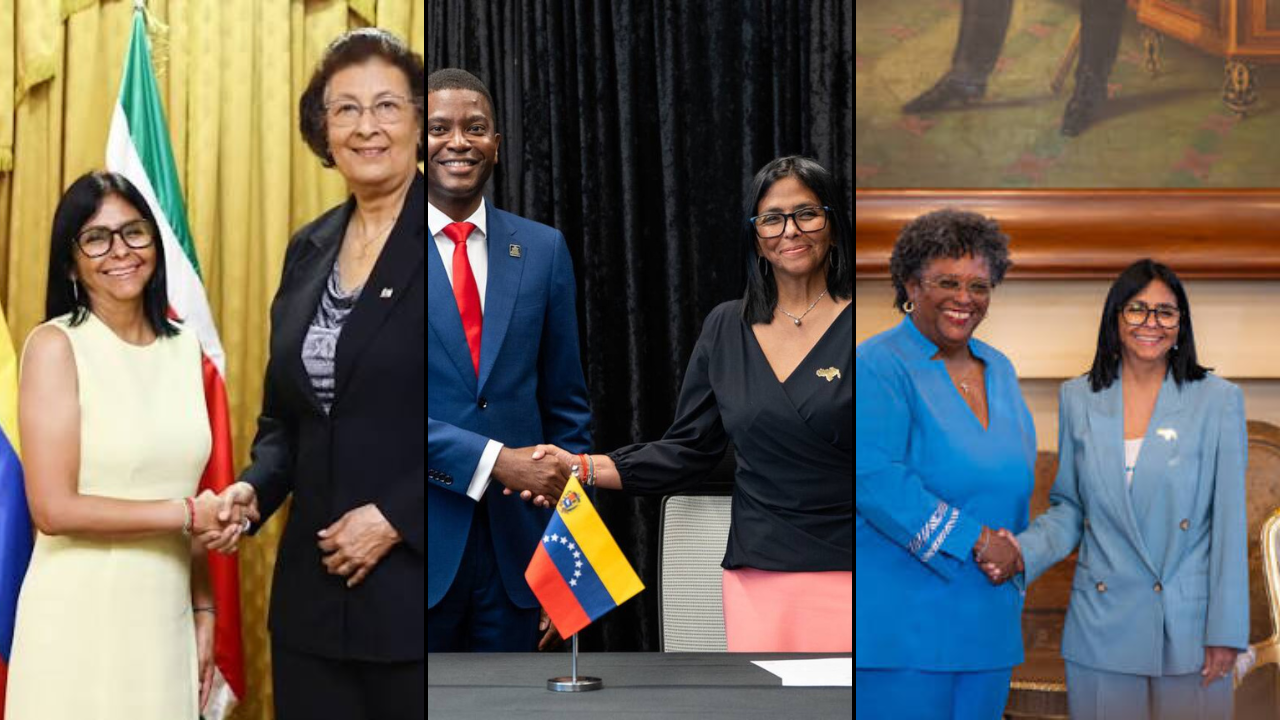
Venezuela’s acting President Delcy Rodríguez has spent much of 2026 rebuilding high-level ties with CARICOM governments, with visits to Grenada, Barbados and, most recently, Suriname followed by return engagements and new cooperation agreements.
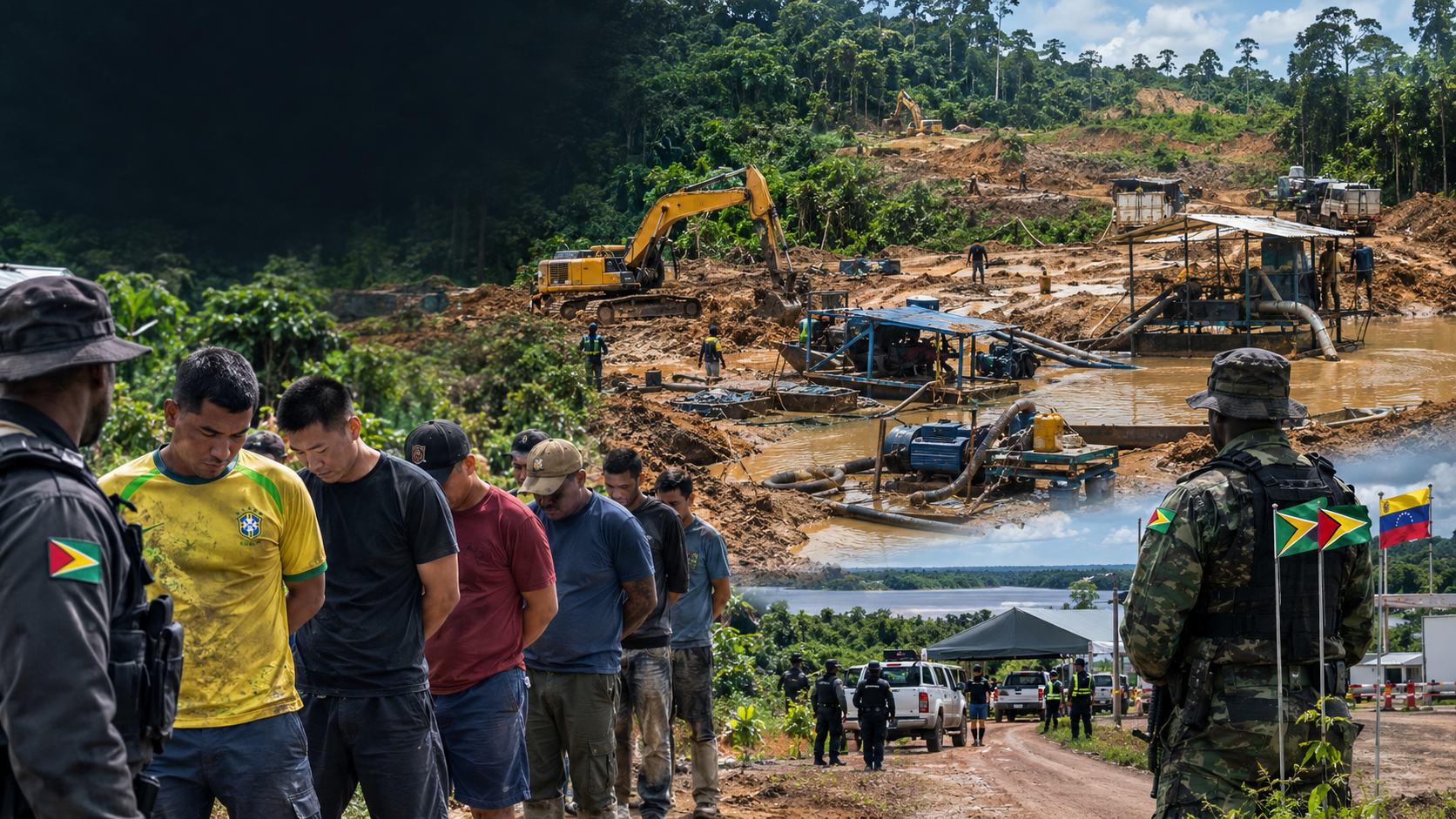
The outreach is taking place as Venezuela continues to maintain its claim to Guyana’s Essequibo, even as President Irfaan Ali says the rhetoric from Caracas has eased substantially since Nicolás Maduro was removed from power.
Rodríguez made Grenada her first foreign visit after assuming the presidency in January, travelling there in April before continuing to Barbados later that month.
Her engagements in both countries drew concern from Guyana after Rodríguez was seen wearing a map depicting Essequibo as part of Venezuela.
Ali subsequently wrote to the CARICOM chairman expressing concern over the use of the imagery during official engagements.
CARICOM responded by reaffirming that member states have the sovereign right to conduct bilateral relations with external partners, while maintaining its support for Guyana’s sovereignty and territorial integrity.
Since then, the engagement has become more substantive.
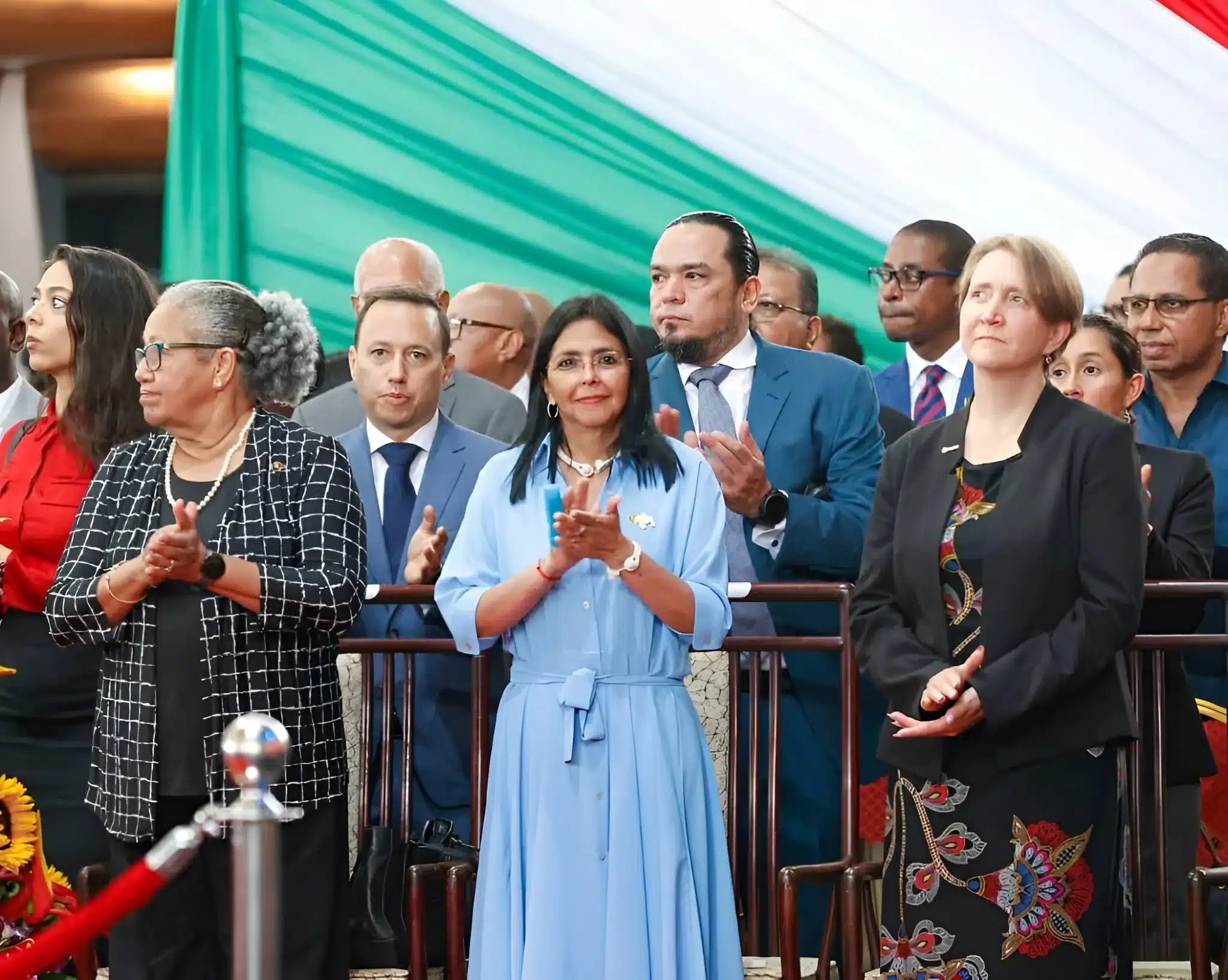
Barbados Prime Minister Mia Mottley later travelled to Caracas for talks with Rodríguez, while Suriname hosted the Venezuelan leader this month for an official visit.
The Suriname visit produced a series of agreements covering areas including agriculture, fisheries, tourism, aviation, education, training and oil and gas.
The energy component is particularly significant as Suriname develops its own offshore petroleum industry, with Venezuela offering experience and technical cooperation in oil exploration, production and gas.
Trinidad and Tobago has also maintained engagement with Caracas, with Foreign and CARICOM Affairs Minister Sean Sobers travelling to Venezuela earlier this month for talks covering trade, energy, agriculture, environmental protection, culture and security.
The pattern is therefore moving beyond diplomatic courtesy calls into practical cooperation in areas of direct economic importance to several Caribbean states.
But the developments are unfolding alongside a significant shift in the tone coming from Venezuela.
Speaking to Al Jazeera in Doha on September 14, Ali said Venezuelan rhetoric concerning Guyana’s Essequibo had “reduced substantially” since Maduro’s removal.
Ali nevertheless said Guyana remains conscious of Rodríguez’s position that Venezuela would not accept an eventual ruling from the International Court of Justice.
“We’re prepared for any reaction to the court’s ruling,” Ali said, adding that Guyana was “very conscious” of Rodríguez’s position on not accepting the ruling.
Guyana has asked the ICJ to affirm the legal validity of the 1899 Arbitral Award and the international boundary between Guyana and Venezuela. The court has already determined that it has jurisdiction to hear the case on its merits, and a final judgment is expected in the coming months.
That leaves CARICOM governments navigating two realities at once.
On one side, Venezuela remains a major Caribbean neighbour with which individual states have economic, energy, security and diplomatic interests.
On the other, Guyana maintains that Essequibo is its territory and has relied on the ICJ process to settle the matter.
CARICOM has formally supported Guyana’s sovereignty and territorial integrity while recognising the right of individual member states to conduct their own bilateral relations with Caracas.
The growing frequency of those relations, however, means the distinction between engaging Venezuela and endorsing its claim to Essequibo is becoming increasingly important.
Now, with Rodríguez returning to the region and Caribbean governments signing agreements with Caracas in areas ranging from energy to agriculture and transportation, the issue has moved into a more practical phase.
Ali himself has acknowledged that the tone from Venezuela has changed.
But he has also made clear that Guyana remains alert to what Caracas has said about an eventual ICJ ruling.



.png)