
















ExxonMobil Guyana President Alistair Routledge says outstanding confirmation over land, port location and investment terms is slowing the path from offshore gas to new industries.
Guyana has gas offshore and investors with capital looking for opportunities, but Routledge says a clear roadmap for where and how the new industries will be built is needed sooner than later.
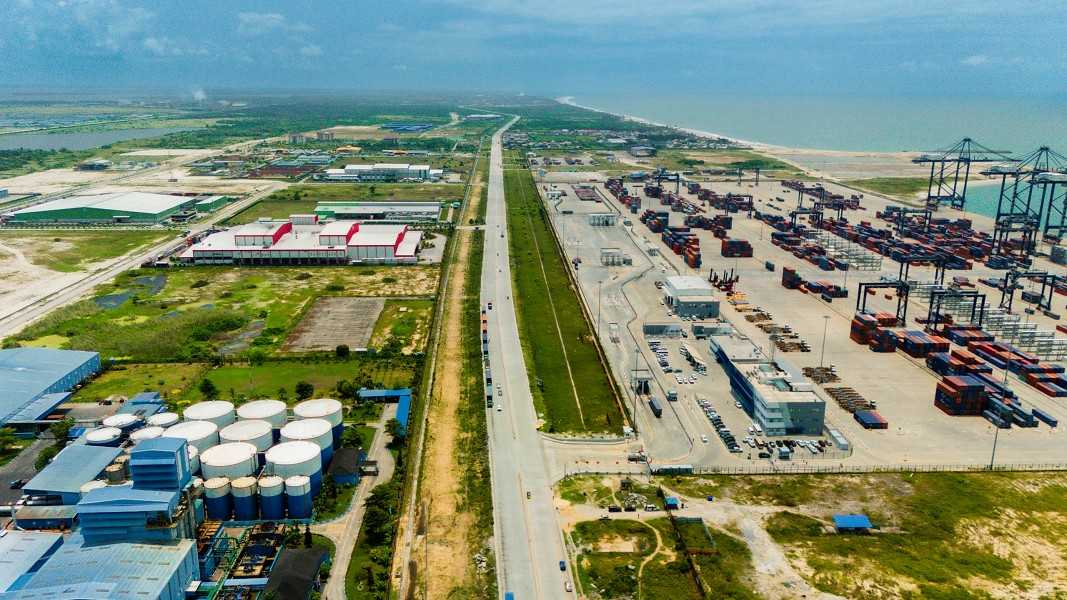
Routledge is calling for faster decisions on Guyana’s proposed economic development zone, particularly in Berbice, warning that investors will be reluctant to commit significant capital without clarity on land, infrastructure, the location of a deep-water port and the terms under which they would operate.
Speaking at the Georgetown Chamber of Commerce and Industry’s 2026 Energy Luncheon on Thursday, Routledge said the country is now at a critical stage in trying to turn its offshore gas resources into a broader industrial economy.
He said the opportunity is significant, but investors need to know exactly what they are investing in.
“There are a lot of discussions ongoing around where should the development zone be,” Routledge said.
He argued that the decision cannot be left open-ended.
“Until we can say here is the land where everything will be built and here's where the deep-water port will be, there's not a lot of belief externally that there is a roadmap as to how this is going to happen,” he said.
Routledge said government will have a leading role in making those decisions, but he also wants businesses and industry groups to have a greater say.
He said decisions about the size and location of the development zone should take into account the industries Guyana wants to attract, the amount of land they will require and the wider social and economic impact on surrounding communities.
“What is the industry that could be coming in? Well, that establishes some criteria for what kind of land do you need, how much land do you need?” he said.
Routledge said Guyana also needs to establish the “rules of the game” for investors, including the fiscal arrangements and other terms under which companies would be expected to operate.
That matters because companies and financial institutions have a limited pool of capital and are comparing investment opportunities across countries, he said.
“It’s a competitive world,” Routledge said.
The call for greater clarity is directly connected to Guyana’s plans to bring more natural gas onshore.
Routledge said ExxonMobil is working with government to bring gas to shore at Wales and eventually Berbice, but the pipeline investment cannot happen simply because the gas is available offshore.
There must also be enough demand onshore to justify the infrastructure.
“You can’t just open the taps and flow the gas through the pipeline if there’s nobody at the other end to take it out and use it,” he said.
Potential anchor customers could include data centres, alumina-related industries and additional power generation.
But those investors, he said, also need certainty that the gas supply will be available and clarity on where they can locate their operations and what the investment terms will be.
That creates what Routledge described as a cycle of uncertainty: gas users want to know that the pipeline will be built, while the pipeline investment requires enough committed demand to justify construction.
He said the technical requirements of the pipeline also mean ExxonMobil needs sufficient volumes flowing through the system.
“We need some significant gas demand in order to make the foundational investment in the pipeline to bring the gas to shore, and all the associated infrastructure that goes with it,” Routledge said.
He believes local business organisations have an important role in helping to break that cycle.
Routledge singled out the GCCI, Private Sector Commission and chambers in Berbice as organisations that can help connect international investors with local companies and expertise.
The objective, he said, is not simply to bring foreign capital into Guyana but to ensure local businesses are positioned to participate.



.png)