

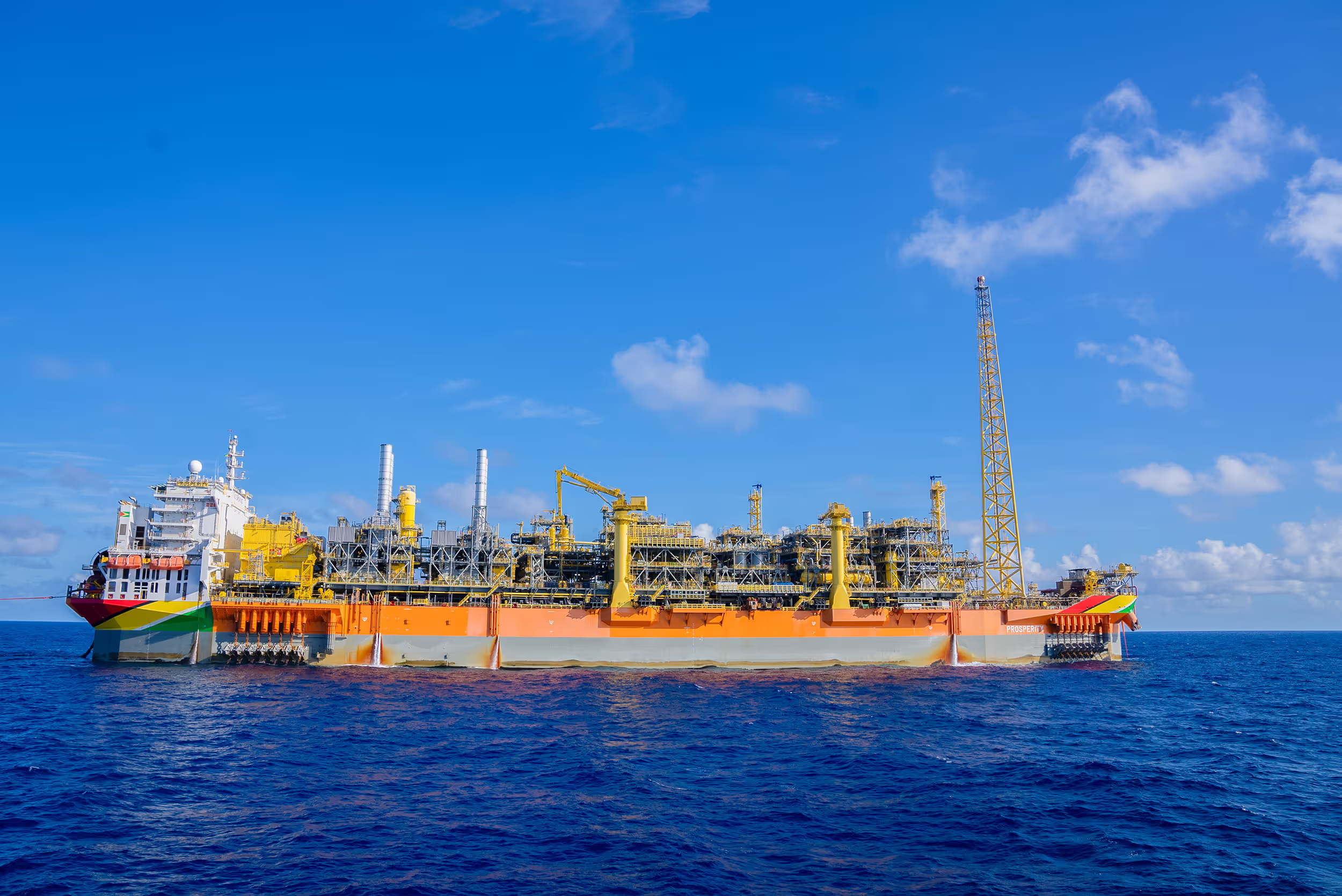














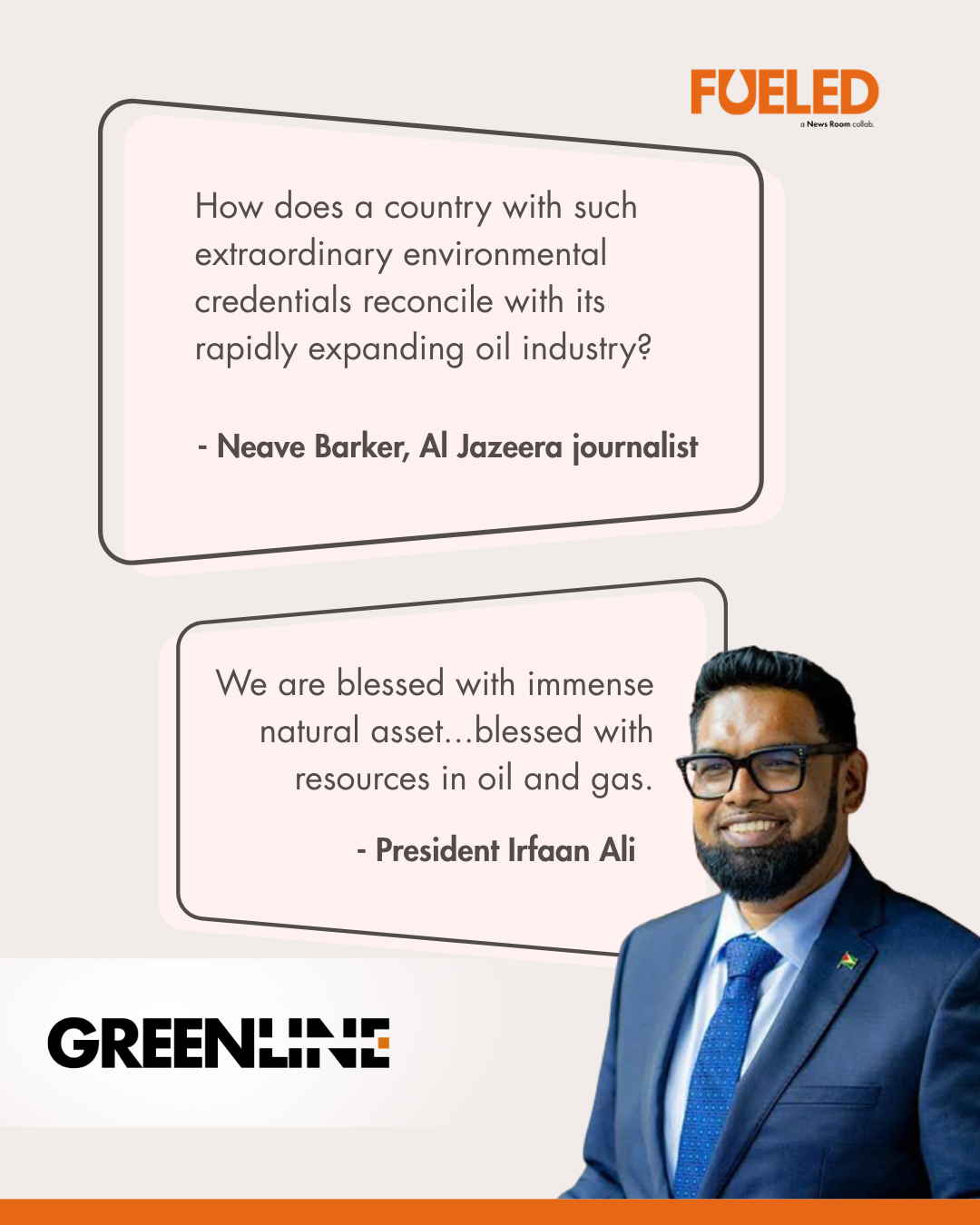
In a sit-down with NeaveBarker, aired this week on Al Jazeera, President Irfaan Ali was asked aquestion that Guyana has become increasingly accustomed to answering: how doesa country with such extraordinary environmental credentials reconcile with itsrapidly expanding oil industry?
President Ali’s responsewas straightforward: “We are blessed with immense natural asset,” he said,pointing to Guyana’s forests, low deforestation rate and biodiversity. ButGuyana is also “blessed with resources in oil and gas” that can help thecountry realise its aspirations and support regional development.
It is a response worthconsidering beyond the usual debate about whether oil and environmentalprotection can coexist.
This is not the firsttime the nation has had to defend Guyana’s oil industry against itsenvironmental credentials. In December 2022, in a Talk to Al Jazeera interview,President Ali was asked whether Guyana’s new oil discoveries could become a“curse” and whether it was fair for a developing country to pursue itspetroleum wealth as the world moved toward greener energy. Then, in 2024, BBCHARDtalk’s Stephen Sackur pressed the president on the contradiction betweenGuyana’s expanding oil production and its environmental claims. Now in 2026 weare once again asked how we “square the two”.
Why, exactly, doesGuyana have to keep defending itself?
Guyana has spent yearsbeing told that its forests matter to the world. We have maintainedextraordinary forest cover while developing mechanisms to place economic valueon keeping those forests standing. Our Low Carbon Development Strategy linksforest conservation with development, climate resilience and economicopportunity.
Now that Guyana has oil,however, its environmental credentials often seem to require an explanation. Theassumption appears to be that producing oil somehow disqualifies Guyana frombeing an environmental leader.
Why?
Is Guyana expected toleave its oil underground while countries that built their economies throughdecades of fossil fuel consumption continue to consume it? And why shouldGuyana's decision to use a resource that can finance development automaticallymake its commitment to protecting its forests less credible?
President Ali highlightedthis discrepancy during the Al Jazeera interview: Guyana needs sea defences,drainage and irrigation, flood protection and major infrastructure investment.These are not abstract needs. They are tied directly to the country’s geographyand its vulnerability to climate change.
“Who will bring thoseresources? Where would you get those resources?” President Ali asked.
That does not meanGuyana's oil industry should be beyond scrutiny. Questions about emissions,offshore impacts, revenue management and the country's long-term economicfuture are legitimate. But scrutiny is different from repeatedly asking Guyanato justify the fact that it has oil and has chosen to use it towards thenation’s development.
Perhaps the more importantquestion is not whether Guyana can be both an oil producer and a country withextraordinary forests, but why Guyana is being held to a seemingly differentstandard that assumes we are incapable of managing our forests and oil? Anotherquestion might be: why should Guyana, a country that contributes relativelylittle to global emissions and has preserved such a significant portion of itsnatural environment, be expected to bear the economic costs of leaving its oilunderground while wealthier countries continue to consume fossil fuels?



.png)
.jpg)


.png)