
















As Guyana races toward a future powered increasingly by renewables, the country is first building a bridge, and that bridge is natural gas.
Stretching across rivers, communities and industrial corridors, Guyana’s Gas-to-Energy transmission network is now 99 per cent complete, bringing the country a major step closer to delivering cheaper, more reliable electricity to homes and businesses.
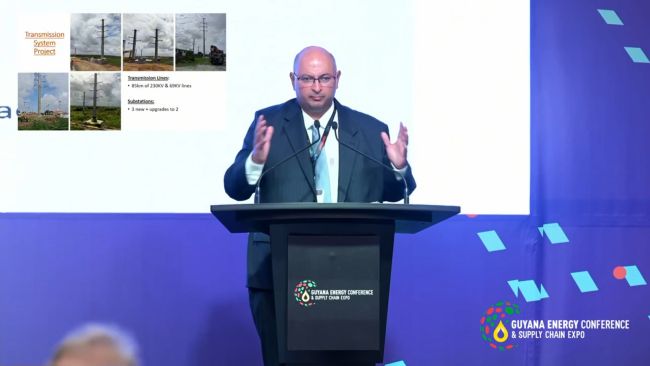
The update was provided exclusively to the Department of Public Information (DPI) by the Head of the Gas-to-Energy Taskforce and Consultant at the Ministry of Natural Resources, Winston Brassington.
The transmission network can be thought of as the nation’s electrical highway system, designed to move power generated in Wales across the Demerara River and into communities and industries that depend on a stable supply.
Currently, the Guyana Power and Light Incorporated (GPL) imports a type of fuel known as Bunker C to generate electricity for the national grid.
Once the Gas-to-Energy project becomes operational, electricity generated from natural gas will begin replacing expensive heavy fuel oil, which means less money out of consumers’ pockets.
President Dr Mohamed Irfaan Ali has repeatedly described the Gas-to-Energy project as more than an energy investment, saying it is the foundation for Guyana’s transformation into a competitive, industrialised and low-carbon economy.
“This is not simply about electricity; this is about creating opportunities, lowering costs and building prosperity,” the president had said previously while outlining the project’s national importance.
The infrastructure now standing across Demerara gives a visible sense of that ambition.
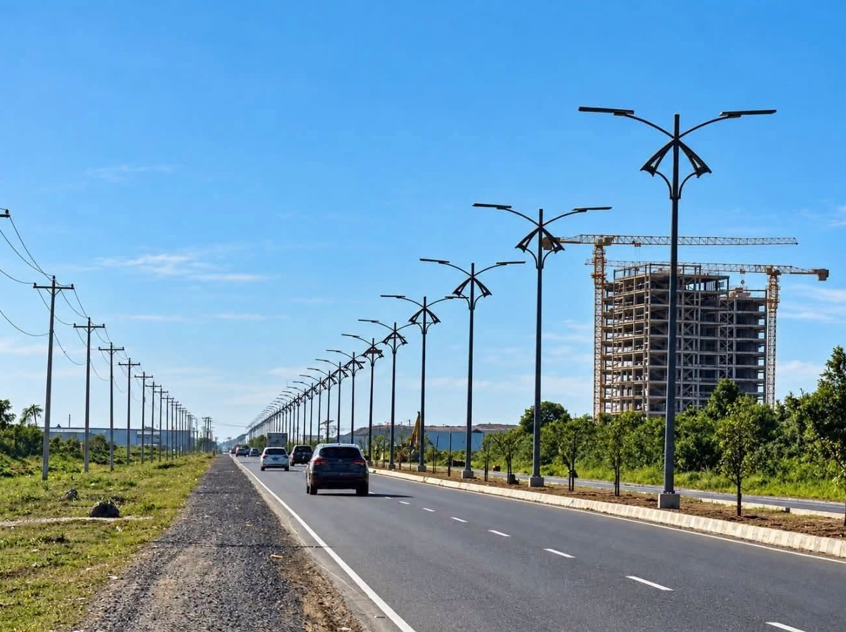
According to Brassington, crews have erected 370 transmission towers and poles and strung approximately 82 kilometres of power lines.
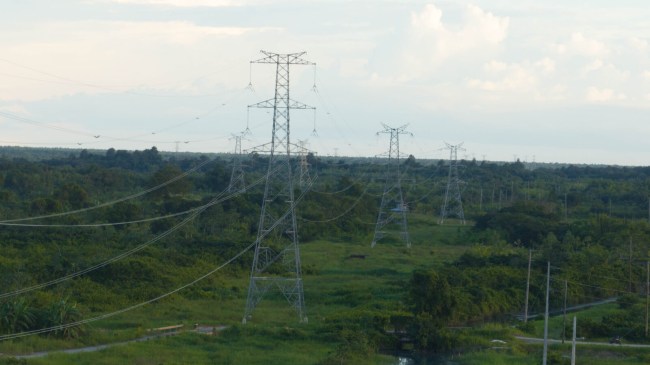
Among the most striking structures are four river-crossing towers spanning the Demerara River.
Standing as high as 150 metres, these towers rise taller than many city skylines, roughly equivalent to stacking more than 40 storeys into the air, carrying electricity across the river through a double-circuit transmission system.
The completed network includes a 230-kilovolt (kV) transmission backbone running from Wales to Goedverwagting, supported by additional 69 kV corridors extending across the West Bank, Georgetown, and the East Coast.
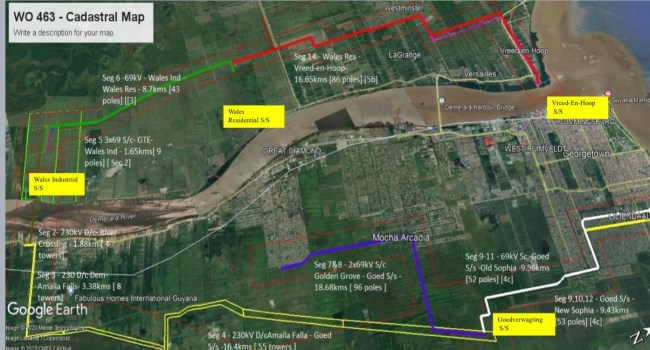
Rather than each community generating electricity separately, the system functions like one connected circulatory network, carrying energy from a central source to where it is needed most.
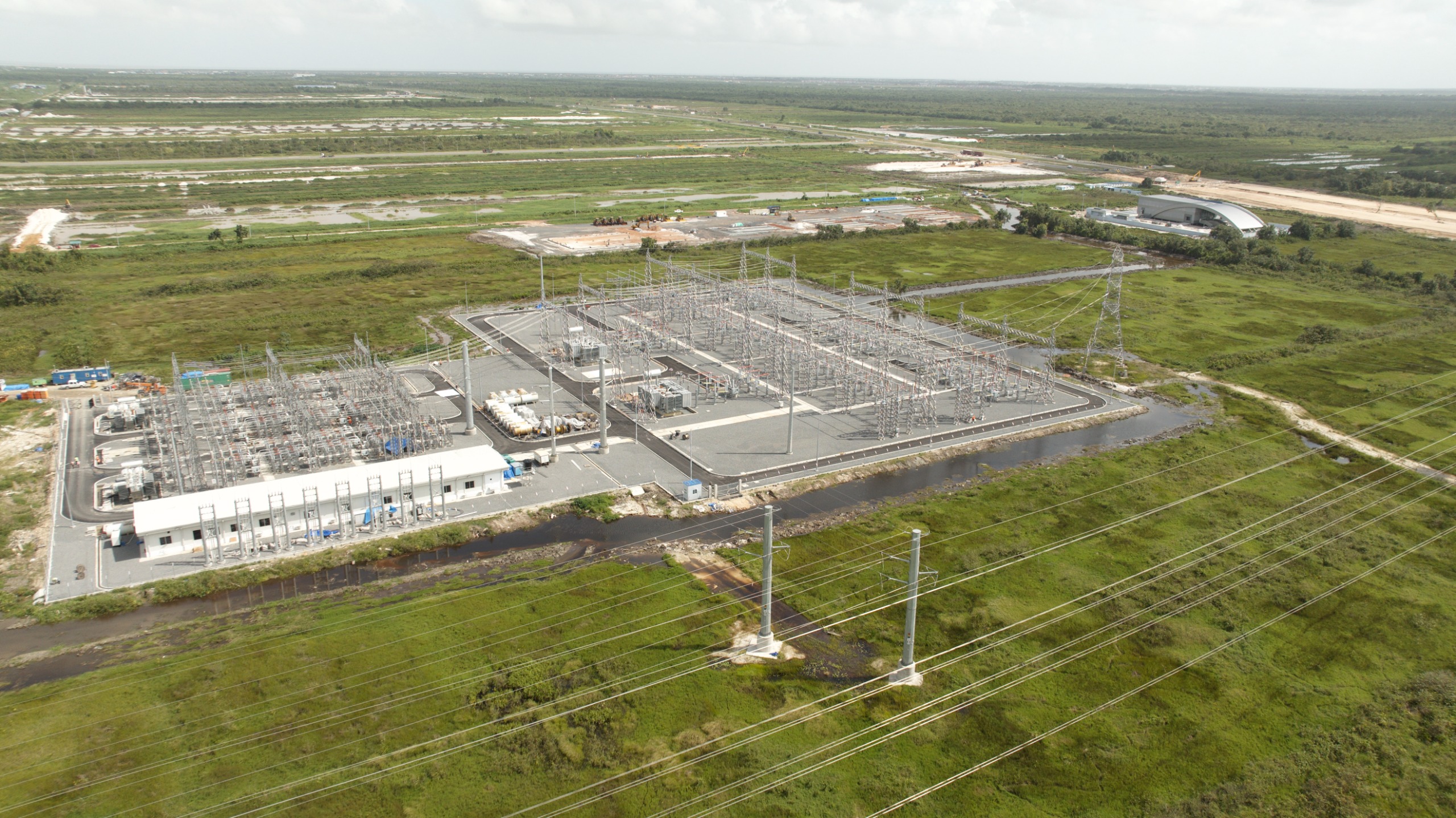
Three new substations and upgrades at Vreed-en-Hoop are also substantially advanced and will help distribute electricity efficiently across the Demerara-Berbice Integrated System.
Brassington noted that procurement of transmission materials is completed, and the project has recorded more than two million safe man-hours without a fatality.
When energised, the network will carry electricity from the new 300-megawatt power plant being developed in Wales.
The government projections indicate the first gas turbine is expected to come online by the end of 2026, with all turbines commissioned by the first quarter of 2027 and full combined-cycle operations targeted by June 2027.
The Gas-to-Energy project is expected to cut electricity costs by around half, reduce dependence on imported fuel and unlock new industrial opportunities [Republished from the Government of Guyana's Department of Public Information]



.png)




.png)