
















Last week, Guyana celebrated Mining Week 2026 and the industry’s awards highlighted the contribution of local miners and businesses, even as foreign-owned companies control some of the country’s largest mining operations and their parent companies report billions of dollars in profits globally.
This year’s Mining Week awards recognised local operators across several areas of the sector, including gold, diamonds, sand, quarrying and gold trading.
Adamantium Holdings was named Top Gold Producer, Innovative Mining received the Top Gold Trader Award, while El Dorado Trading was named Top Gold Dealer. New Thriving Quarry was recognised as the Top Producer in quarrying, while local operators also received awards for diamond and sand production.
The recognition comes as Guyana’s mining sector continues to expand, but with a growing divide between locally driven small and medium-scale operations and large-scale projects backed by international capital.
.jpg)
Gold provides one of the clearest examples.
Guyana is targeting 510,450 ounces of gold production in 2026, following declarations of 484,321 ounces in 2025.
A significant portion of that production continues to come from Guyanese miners.
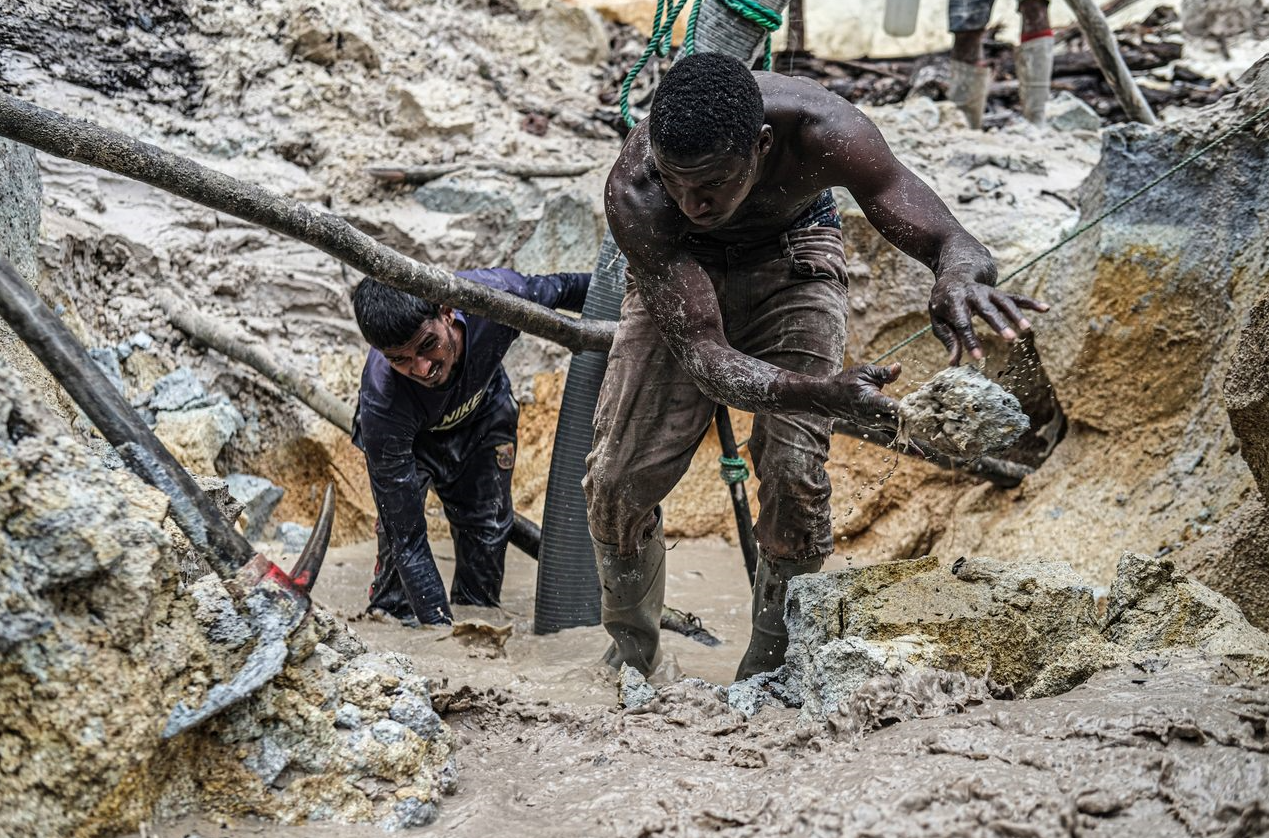
In Region Seven alone, small and medium-scale miners declared more than 105,400 ounces of gold in 2025, accounting for about 41 percent of Guyana’s total gold production.
But at the large-scale end of the industry, foreign ownership is dominant.
The Aurora Gold Mine in Region Seven is 85 percent owned by China’s Zijin Mining Group, which acquired its stake in the operation in 2020.
Aurora produced approximately 145,480 ounces of gold in 2025, or about 4.5 tonnes. Of that amount, approximately 139,180 ounces were attributable to Zijin, based on its 85-percent ownership.
For 2026, Zijin is targeting approximately five tonnes of gold production from Aurora, up from about 4.5 tonnes in 2025.
Zijin Mining reported US$49.7 billion in revenue and US$7.4 billion in net profit attributable to shareholders in 2025.
Those figures are for the Zijin Group globally, not for its Guyana operation. The company owns and operates mining assets in several countries.
Still, the figures demonstrate the financial strength of the international companies now operating in Guyana.
Aurora itself has become a significant contributor to Zijin’s gold portfolio.
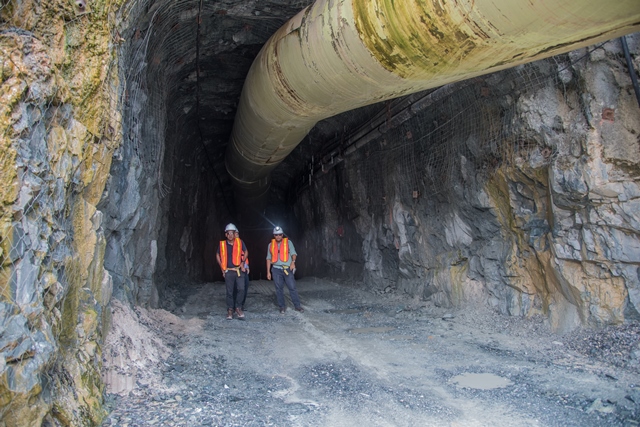
The company says it is continuing to expand the operation, including underground mining and processing capacity, with longer-term plans expected to increase annual production capacity.
Aurora is not the only foreign-backed gold project being developed in Guyana.
Canadian-listed G Mining Ventures is advancing the Oko West gold project, one of the country’s major emerging large-scale mining developments.
The project has a resource of more than seven million ounces and is expected to have a mine life of about 14 years. Commercial production is targeted for 2028.
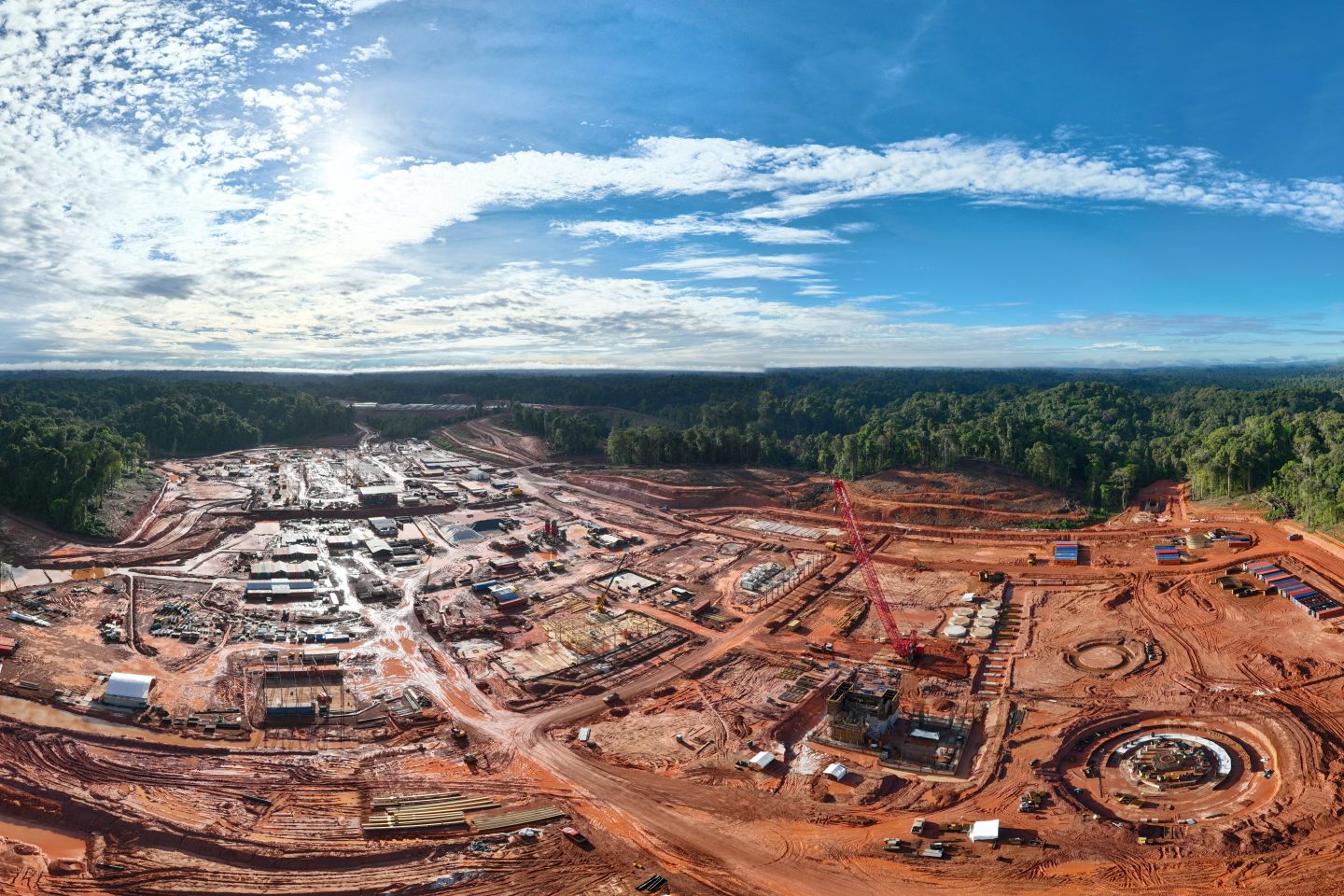
Other foreign-backed projects are also advancing, including developments involving Omai Gold Mines and other international investors.
This means the composition of Guyana’s gold industry is likely to change significantly in the coming years.
While thousands of Guyanese miners currently contribute substantially to national production, a larger share of future large-scale output is expected to come from companies with international ownership and access to much larger pools of capital.
The contrast is also visible in bauxite.
Guyana’s bauxite production increased sharply in 2025, reaching approximately 3.9 million tonnes, with the largest producer accounting for almost 3.7 million tonnes.
For 2026, Guyana is targeting more than 4.8 million tonnes of bauxite production.
The industry’s largest operations are foreign-controlled, with Chinese company Bosai Minerals Group playing a major role in Guyana’s bauxite sector.
Bosai has also announced plans for a proposed US$470 million aluminium refinery investment in Guyana.
Again, the scale of the investment illustrates the difference between the capital available to major international operators and that available to many local miners.
But foreign ownership does not mean local participation has disappeared.
Far from it.
Guyana’s small and medium-scale mining sector remains an important source of gold production, employment and economic activity.
Local businesses are also active in gold dealing and trading, quarrying, sand extraction and diamond mining.
The Mining Week awards put some of those businesses directly in the spotlight.
Government is also trying to strengthen that domestic sector.
Measures announced for 2026 include efforts to improve monitoring of gold dealers and miners, strengthen gold declaration systems and expand access to Guyana Gold Board purchasing services in mining communities.
The objective is to bring more activity into the formal economy while ensuring that Guyana benefits from the growing value of its mineral resources.
And that is where the foreign-versus-local debate becomes important.
International companies bring capital, technology, exploration expertise and the ability to develop deposits that require hundreds of millions of dollars in investment.
Their operations also generate government revenue through royalties, taxes and other payments and create employment and contracting opportunities.
But because these companies are foreign-owned, their shareholders ultimately own the businesses and are entitled to the profits generated by those businesses.
For Guyanese operators, the situation is different.
Local miners own their operations and participate directly in the production and trading of minerals, but many operate on a much smaller scale and have more limited access to capital, technology and modern mining equipment.



.png)
.png)
.jpg)