













Guyana’s transformation into a major offshore oil producer is often explained by the scale of the Stabroek Block resource.
But the size of the discoveries is only part of the story.
The other part is how quickly ExxonMobil and its partners have been able to turn those discoveries into producing assets.
Since first oil from Liza Phase 1 in December 2019, four developments have entered production — Liza Phase 1, Liza Phase 2, Payara and Yellowtail — with Yellowtail taking Guyana's installed production capacity above 900,000 barrels per day. Exxon said Yellowtail started production four months ahead of schedule.
That pace has been supported by a development strategy that relies heavily on repeatability rather than starting from scratch with every project.
One of the clearest examples is ExxonMobil's use of standardised FPSO designs.
The company describes its approach as “design one, build many”, taking engineering and execution lessons from one development and applying them to subsequent projects.
Exxon says the approach helped it deliver its fourth deepwater development in Guyana with what it describes as industry-leading efficiency.
The advantage is straightforward: once equipment arrangements, engineering solutions and construction processes have been proven, subsequent projects do not have to be developed entirely from a blank sheet.
That can reduce engineering work, shorten decision-making and allow contractors and suppliers to become increasingly familiar with the systems being installed.
The approach is particularly important in Guyana because the developments are being delivered as a series of large projects, rather than as isolated offshore fields.
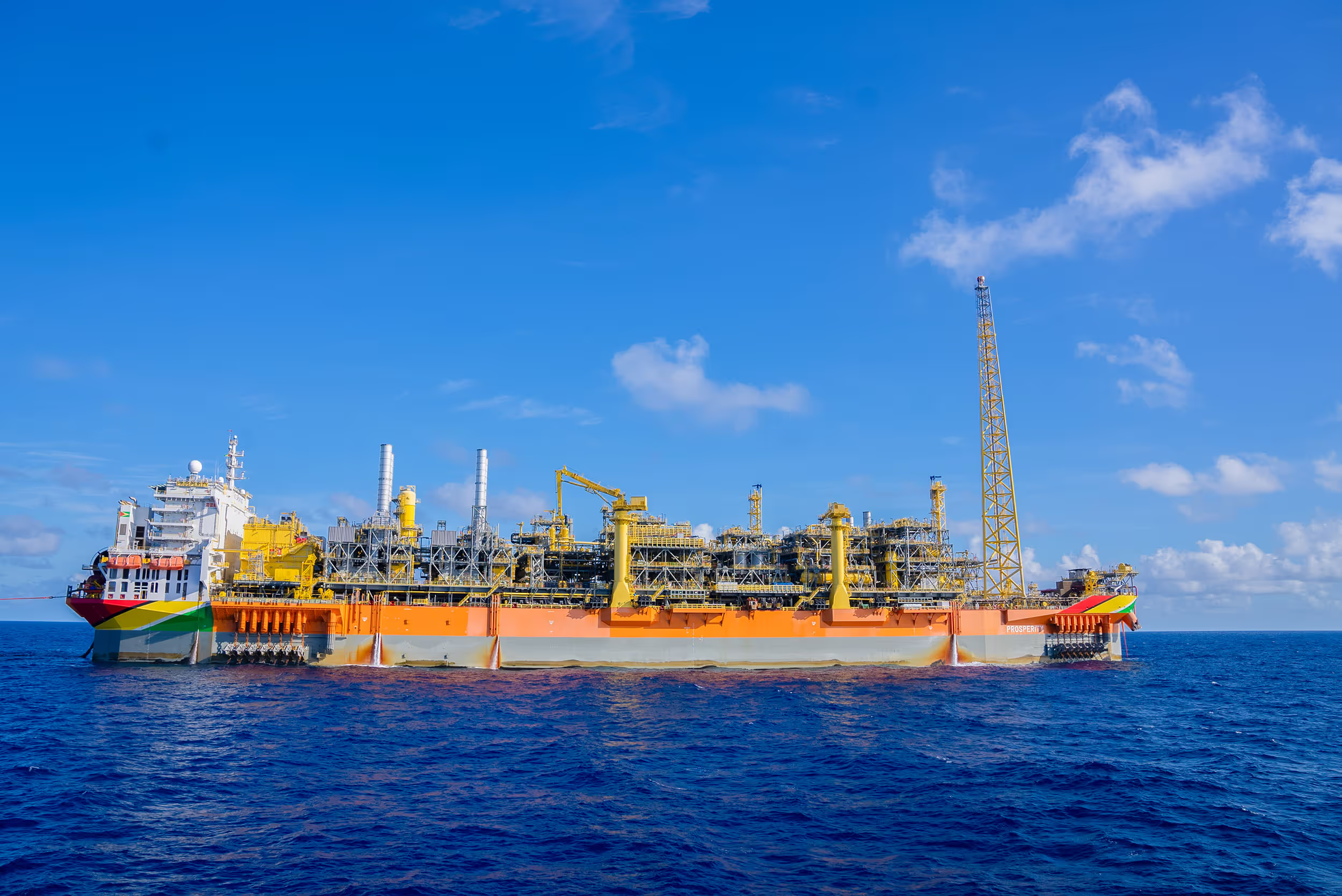
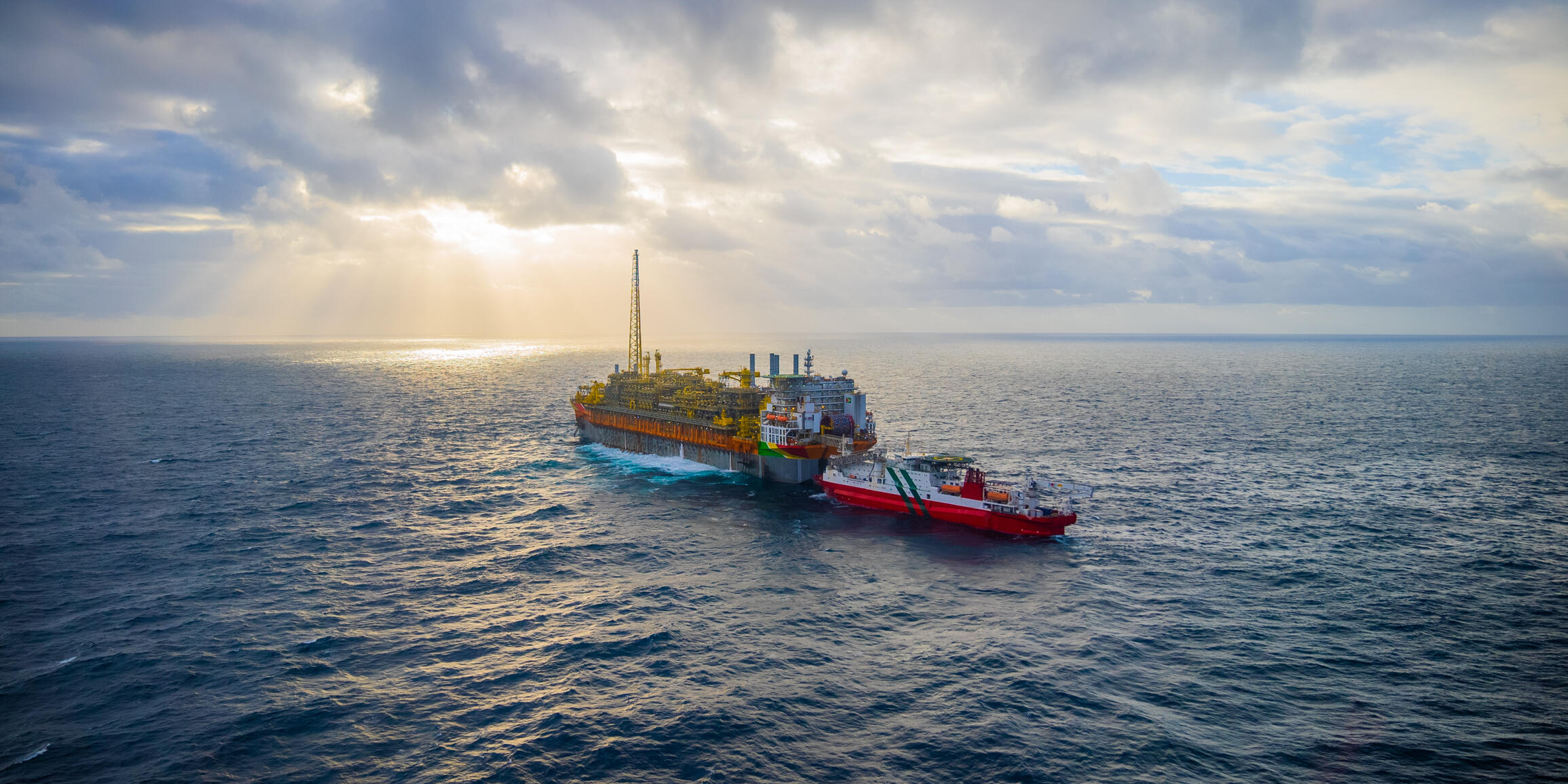
ONE GUYANA, for example, is the FPSO for the Yellowtail development and has an initial production capacity of 250,000 barrels per day. Its arrival brought Guyana's offshore fleet to four FPSOs.
Exxon has said the standardisation strategy is helping it deliver successive large-scale developments efficiently, while applying lessons learned from earlier projects to those that follow.
Exploration remains the foundation
Technology and standardisation cannot compensate for a lack of resources.
Guyana has continued to add to one of the world's most significant offshore discoveries since ExxonMobil announced the Liza-1 discovery in 2015.
The Stabroek Block is estimated to contain more than 11 billion barrels of oil equivalent, and exploration is continuing.
In June 2026, Exxon submitted an environmental application for a further 35-well exploration campaign planned for 2028 through 2033.
That means the development story is still being driven by two parallel processes: finding more resources and finding increasingly efficient ways to develop them.
AI is moving into the drilling operation
Artificial intelligence is no longer simply a future concept in Exxon's Guyana operations.
Exxon says it is using a proprietary AI-enabled drilling advisory system in Guyana to determine drilling parameters and improve rates of penetration while reducing technical problems.
The system can also support closed-loop automation, allowing aspects of the drilling process to be controlled without direct human intervention.
The significance is not that AI replaces petroleum engineers or drilling crews.
Rather, it gives them another tool for processing large amounts of operational information and making more consistent decisions during complex deepwater drilling operations.
Turning data into a development advantage
The digital strategy extends below the drilling floor.
Exxon has also been working to bring disparate subsurface and project data together through the OSDU data standard and platform, with the company saying the technology is already helping shorten evaluation times for deepwater assets and supporting work on Guyana.
That matters because each new well and development generates additional geological, reservoir and operational information.
The faster that information can be organised and applied, the greater the opportunity to use lessons from one development to influence decisions on the next.
In other words, Guyana's successive projects are not being developed in isolation.
Each one adds experience and data to the next.
Reliability becomes critical at scale
The other piece of the model is what happens after the wells begin producing.
A fast development schedule has little value if production is repeatedly interrupted.
Exxon has highlighted the operational performance of its Guyana FPSO fleet, while its broader 2026 reporting says the first four deepwater developments have benefited from the company's standardised development approach.
The scale of the operation makes reliability increasingly important.
With four FPSOs already producing and additional developments being advanced, an interruption on a single vessel can affect hundreds of thousands of barrels of potential daily production.
That makes maintenance, equipment standardisation, operational procedures and rapid troubleshooting increasingly important parts of the economics of the Stabroek Block.
The model is now being stretched further
The next test is whether the same approach can continue working as the projects become more numerous and the offshore infrastructure becomes more complex.
Exxon and its partners have committed more than US$60 billion to seven government-sanctioned Stabroek Block projects, according to Exxon. Uaru and Whiptail are the fifth and sixth developments, while Hammerhead is the seventh approved project.
The company is also pursuing additional opportunities beyond those developments, including Longtail and further exploration.
That creates something unusual in deepwater production: a repeatable project pipeline in which each development can benefit from the experience of the one before it.



.png)
.png)
.jpg)