














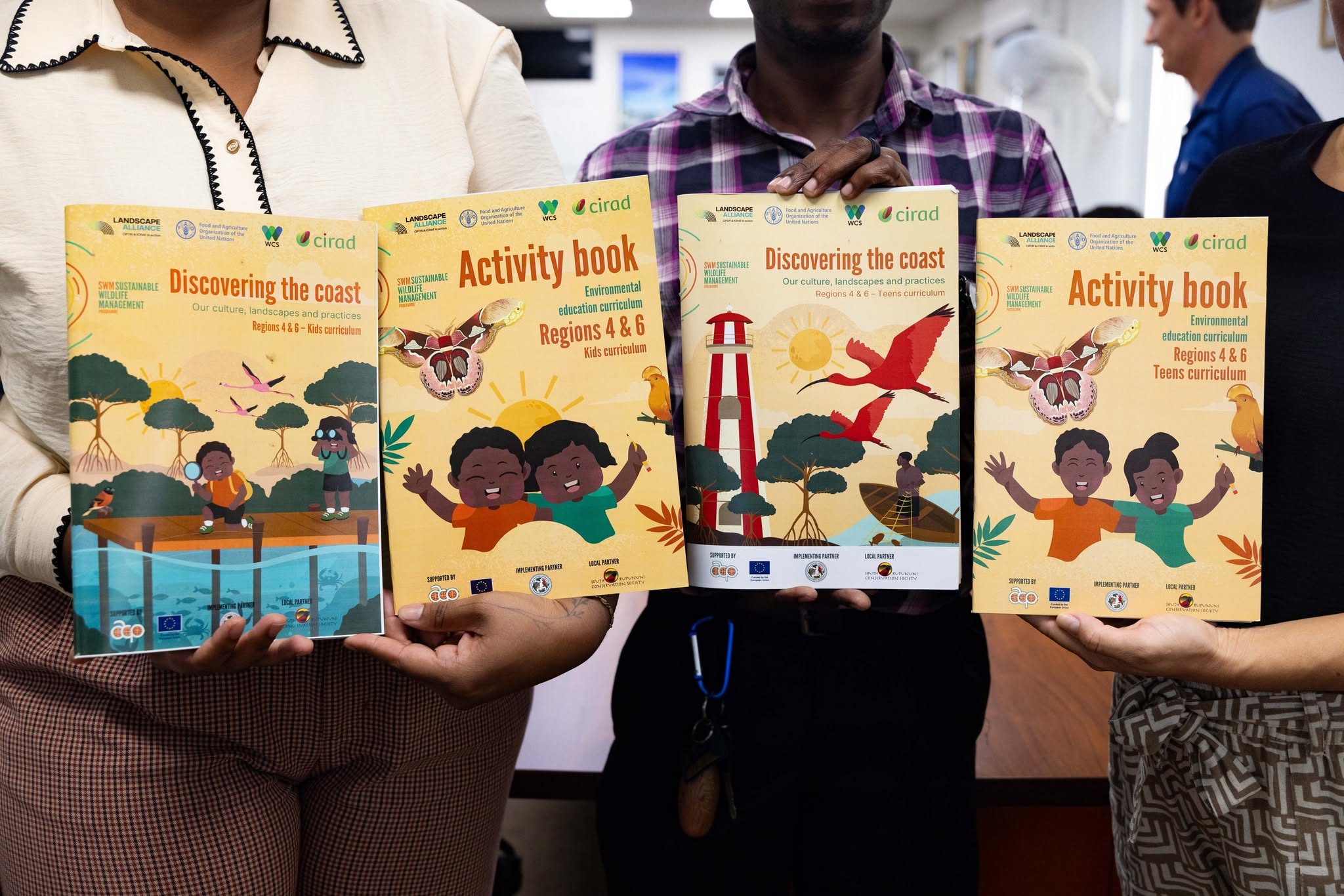
A new environmental education initiative is giving Guyana’s students a closer connection to the country’s rich natural heritage. The Environmental Education Curriculum (EEC) for Regions 4 and 6 was recently launched at the Umana Yana in Georgetown, introducing a locally focused learning resource designed to bring conservation into the classroom.
Developed through the Sustainable Wildlife Management (SWM) Programme with support from local partners, the curriculum was created to reflectGuyana’s own ecosystems, communities, and traditions. It guides students through topics such as native plants and wildlife, habitats, waterways, farming, fishing, and coastal folklore over the course of an academic year.
Maya Defreitas, Executive member for Partnerships with the South Rupununi Conservation Society, noted that the EEC is an important step for Environmental education in Guyana, as it brings together cultures and traditions with education, allowing students to see their environment in a new way and build a stronger connection to it.
The programme includes an activity book, teacher’s handbook, and supporting materials aimed at making environmental education more practical and engaging. For Guyana, building environmental awareness among young people is an important step towards a sustainable future. The curriculum has the potential to inspire students to become advocates for conservation, helping to protect natural resources and preserve traditional knowledge for generations to come.
As part of its introduction, the new curriculum and supporting guidebook were presented to five schools, giving educators and students the opportunity to engage with a resource designed specifically around Guyana’s environmental and cultural landscape.
The initiative was made possible through collaboration between the European Union, the Guyana Wildlife Conservation and Management Commission(GWCMC), the Ministry of Education, and the South Rupununi ConservationSociety.
As Guyana continues to develop, programmes like this highlight the importance of ensuring that growth goes hand in hand with environmental responsibility. By educating young people today, the country is investing in future generations who will help safeguard its natural wealth.



.png)
.png)