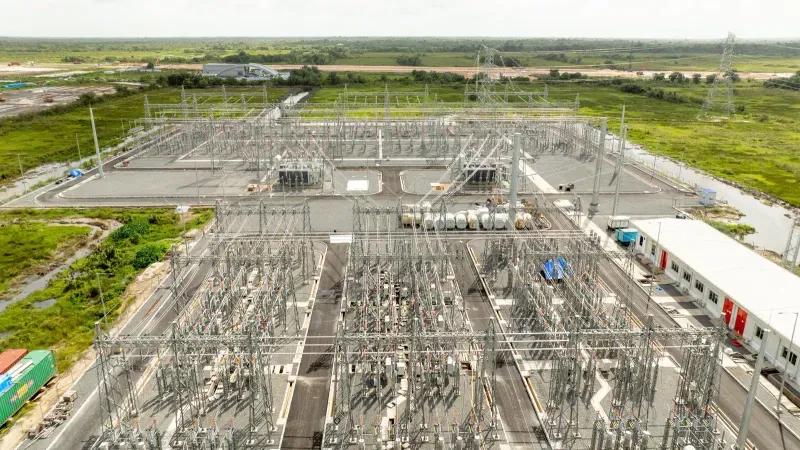


















The single-cycle units of the Wales Gas-to-Energy project, which will add about 220 megawatts (MW) to the national grid, are expected to be operational by the end of the first quarter of 2027, Vice President Dr. Bharrat Jagdeo said on Thursday night.
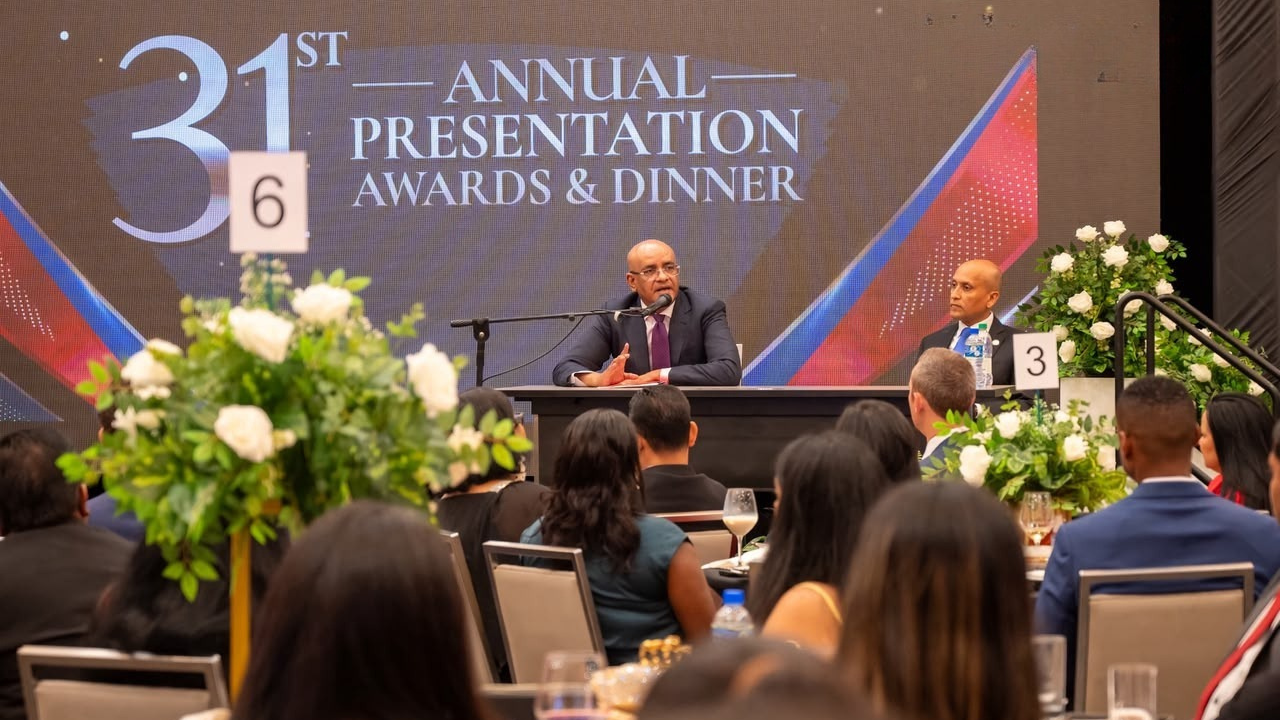
Speaking at the Guyana Manufacturing and Services Association's (GMSA) annual awards and dinner at the Kingston Marriott, Jagdeo acknowledged that the project has been "significantly delayed." However, he stressed how crucial it is to meet the country's growing demand for electricity.
The single-cycle units will reportedly use four gas turbines supplied by Siemens Energy, with natural gas burned to spin the turbines directly. The combined-cycle stage, which captures waste heat from the turbines to generate additional electricity and bring the plant to its full 300 MW, will follow around June, Jagdeo said.
A LONG-DELAYED PROJECT
The highly anticipated project was originally expected to start up in 2024. Government officials say the first turbine, which should deliver about 57 MW, is due by December 2026.
Even so, Guyana's power demand is now running up against the limits of supply though generation is up 20 per cent compared with 2025. Growing communities, homes and businesses, along with about 70,000 streetlights installed in recent years, keep pushing demand higher.
In September, GPL reported a peak demand of 257 MW against generating capacity of 265.6 MW. Jagdeo said the existing grid also lacks redundancy, so damage to a single pole can leave entire areas without power.
FUNDING APPROVED THIS WEEK
The Committee of Supply approved G$24.7 billion (about US$118 million) for the project on Monday, as opposition parliamentarians questioned the request. Phillips said the funds will complete Phase 1 and secure turbines for Phase 2. He listed about G$12.1 billion for the main contractor, Lindsayca, and roughly G$4.25 billion for Siemens Energy's Phase 2 work, among other items.
Phillips said the revised overall cost of the power plant and natural gas liquids facility is US$956 million, up from US$759 million. He said the contractor requested an additional US$200 million, which the government agreed to pay, and that US$130 million has been paid so far. The money is needed to avoid pausing the project or going to litigation, he said, adding that there must be "no more stalling, pausing or holding up."
WHY THE GOVERNMENT SETTLED
Jagdeo said the dispute with the contractor came down to two issues: a road that the contractor claimed was not ready on time and was of lower quality, which the government disputes, and delays in preparing the site.
The government initially wanted arbitration, he said, but decided against it. He explained that this decision was taken because arbitration would have taken several more years and caused further delays. In May, the government announced a settlement that paid Lindsayca an additional 12.8 percent, or US$97.152 million, over the original contract sum. The government has said there was no arbitration ruling and that arbitration remains an option for the parties.
Further, Jagdeo said about 50 million cubic feet per day of gas will be supplied through the pipeline to generate 300 MW. To generate the same power with imported fuel, bunker C (a heavy fuel oil), would cost more than US$300 million a year, he explained, noting that this is the loss the country would be grappling with with further project delays. Even with the increase in the contract cost, he argued, the project will still deliver benefits once it is running.
WHAT POWER COSTS NOW
Jagdeo also highlighted that the government has kept the price consumers pay constant. In 2025, generating power cost about 33 US cents per kilowatt-hour (kWh), he said, while consumers paid 23 cents, a subsidy of about 10 cents on every kWh. This year, global fuel price increases have pushed the generation cost to 34.56 cents per kWh, with fuel alone accounting for more than 20 cents. Consumers still pay 23 cents, which, by Jagdeo's figures, leaves a gap of about 11.5 cents per kWh.
The electricity subsidy is G$33 billion this year, up from G$23 billion in 2024, he said.
The GtE project has been long anticipated, and the government has committed that once the project is running, consumers will get 300 additional megawatts of power at 50 per cent of what they pay now.