















.png)
Guyana’s forest is majestic. It stretches across an enormous landscape between the borders with Brazil and Suriname. There are no paved roads leading us there, no Georgetown traffic, no houses or neighbourhood shops. For many of us, it is a part of Guyana we may never see with our own eyes.
But that does not mean it has nothing to do with us.
As reported by Vishani Ragobeer, The Government of Guyana recently announced at a United Nations 30×30 Leaders Event, plans to designate approximately 3.7 million acres, or 1.5 million hectares, of forest as a permanent conservation area. If the plan moves forward, it could nearly double the amount of Guyana's land under permanent conservation and make a major contribution to the country's commitment to protect 30 percent of its land and waters by 2030.
This demonstrates that our forests are doing a lot for Guyana. The Acarai-Rupununi landscape is one of the country's least explored areas. When scientists and Indigenous experts surveyed the region in 2024, they found more than 30 species that were new to science, along with many others that had never before been recorded in Guyana. The area also contains important waterways, huge stretches of intact forest and habitats that support wildlife and Indigenous communities. That means there is still a lot we do not know about our own country.
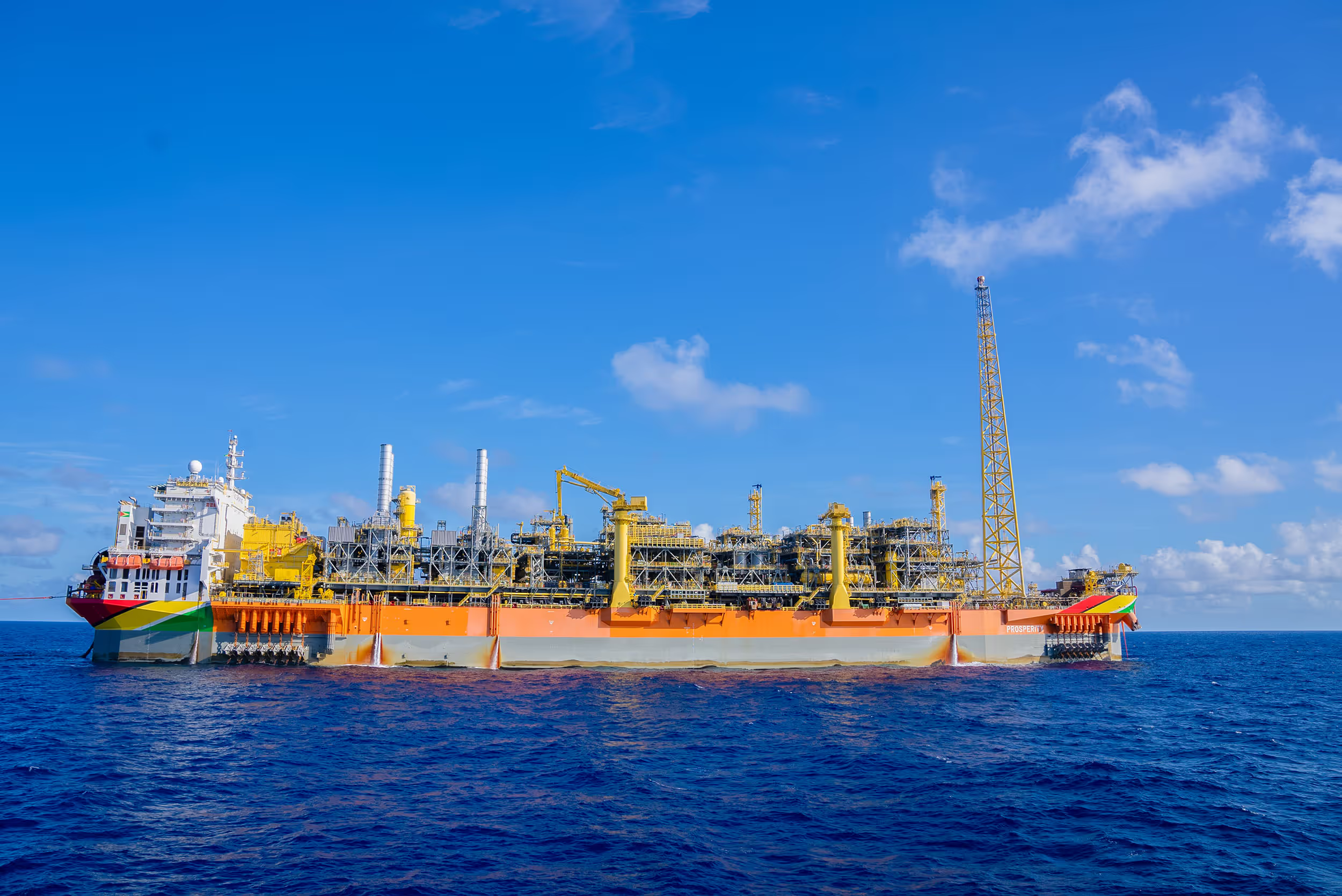
And perhaps that is one of the most interesting things about Guyana right now. We are rapidly changing. New roads are being built. New communities are emerging. Oil and Gas and other industries are expanding. Our towns are becoming more developed and our economy is becoming more connected to the rest of the world. At the same time, there are parts of Guyana where the forest remains largely intact.
These forests help store carbon, protect watersheds, support biodiversity and sustain livelihoods. Guyana's own Low Carbon Development Strategy recognises forests as an important part of the country's climate and development strategy.
As Guyana continues to find ways to turn its natural wealth into economic opportunities without cutting it down or digging it out, the focus on developing our biodiversity and nature-finance agenda, while also promoting sustainable tourism is important. The proposed conservation area has already been identified as having potential for birding and other forms of nature-based tourism. That is an important shift in how we think about the environment.
The 3.7 million acres proposed for conservation is a major step in the right direction. It will support the management, monitoring, financing and meaningful participation of all Guyanese towards the preservation of our land. And sometimes, protecting what we cannot see may be one of the most important things we can do for the Guyana we can see. Our forests continue to sustain us, and Guyana’s government remains committed to its preservation.



.png)