













Chevron Corporation reported adjusted earnings of US$10.4 billion for the third quarter of 2026, with its 30% interest in Guyana's Stabroek Block remaining part of the company's longer-term production and growth strategy, although the oil-rich country was not singled out as a contributor to the latest quarterly results.
The American oil major, which acquired Hess Corporation in a US$53 billion transaction completed in 2025, reported adjusted earnings of US$5.28 per share for the three months ended September 30, compared with US$3.63 billion, or US$1.85 per share, in the corresponding period last year.
Reported earnings reached US$9.9 billion, compared with US$3.54 billion in the third quarter of 2025.
Chevron's total revenues and other income amounted to approximately US$67.8 billion, while cash flow from operations, excluding working capital, stood at US$16.6 billion. The company also generated US$14.2 billion in adjusted free cash flow.
The results were supported by higher crude oil realisations and stronger margins on refined petroleum products. Chevron's downstream segment recorded earnings of US$4.93 billion, compared with US$1.14 billion in the corresponding period last year.
However, upstream earnings declined sequentially from US$8.18 billion in the second quarter to US$5.70 billion in the third quarter, with the company citing lower realisations, lower liftings and unfavourable timing effects.
Total net oil-equivalent production averaged 3.98 million barrels per day, compared with 4.09 million barrels per day in the third quarter of 2025.
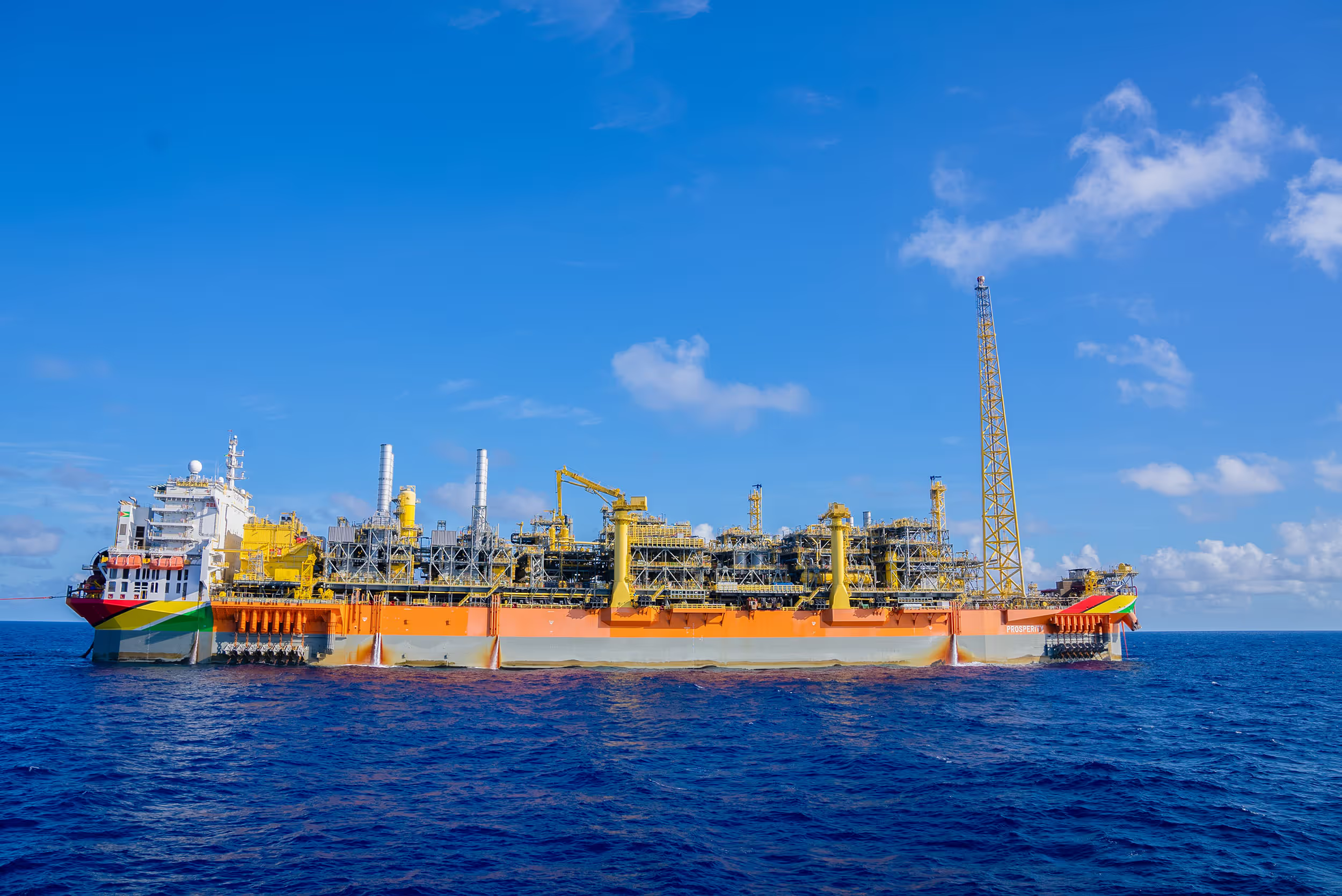
Guyana's importance to Chevron stems from its 30% non-operating interest in the Stabroek Block, which it inherited through the acquisition of Hess.
The block is operated by ExxonMobil, which holds a 45% interest, while China's CNOOC holds the remaining 25%.
Chevron's acquisition announcement identified Guyana as a strategic component of the transaction, highlighting its 30% stake in more than 11 billion barrels of discovered recoverable oil-equivalent resources.
The company said the asset offered high cash margins per barrel, significant production growth potential and exploration opportunities.
In a subsequent assessment of the merger, Chevron again identified Guyana alongside the Bakken oilfield in the United States as important additions to its portfolio, noting that the Stabroek Block could support growth into the 2030s.
However, Chevron did not quantify how much earnings, production or cash flow its Guyana interest contributed during the third quarter of 2026.
Guyana was also not specifically mentioned in the company's October 30 earnings release or its conference-call discussion with analysts. Consequently, the company's US$14.2 billion in adjusted free cash flow cannot be attributed to Guyana without a separate breakdown of the block's financial contribution.
Chevron's third-quarter production averaged 3.98 million barrels of oil equivalent daily, down from approximately 4.09 million barrels daily in the same period last year.
The company attributed the year-on-year production decline primarily to lower entitlement volumes resulting from higher commodity prices and the effects of conflict in the Middle East.
These declines were partly offset by record production at operated assets in Australia, higher output in the Gulf of America and the inclusion of one month of production from its Venezuelan joint ventures following a change in accounting treatment.
Despite the lower production compared with last year, Chevron reported stronger earnings, reflecting improved crude oil realisations and refining margins.
The company also reduced debt by more than US$3 billion during the quarter and increased its cash position by more than US$4 billion.