















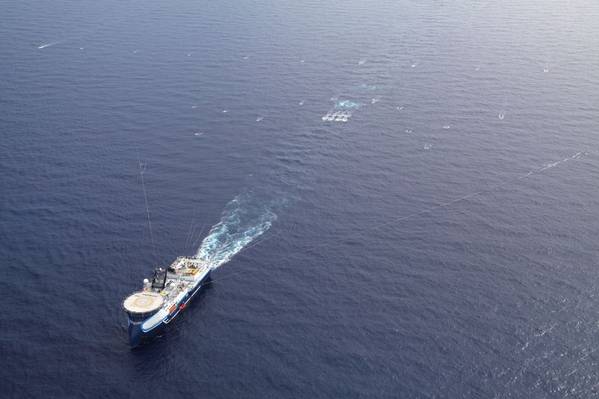
A specialised seismic survey vessel, one of only a handful operating worldwide, will remain in Guyanese waters after completing exploration work for the TotalEnergies-led consortium, giving the government a strategic head start in mapping future offshore oil blocks before its next licensing round.
The vessel is currenty conducting seismic surveys for the TotalEnergies, QatarEnergy and Petronas consortium but will immediately transition to government-commissioned work under a multi-client 3D seismic agreement.
The data collected will help identify prospective hydrocarbon-bearing areas, strengthen future acreage offerings and potentially increase investor interest in Guyana's remaining offshore blocks.
Natural Resources Minister Vickram Bharrat, during an appearance on the Starting Point Podcast, said the significance extends well beyond one exploration campaign.
Globally, seismic acquisition vessels are highly specialised assets equipped with sophisticated sensors and long streamers that create detailed images beneath the seabed. Because only a relatively small number operate worldwide, companies often wait months, or even years, for vessel availability.
Bharrat described Guyana as "fortunate" to have secured one of these vessels.
The vessel is expected to remain in Guyanese waters after completing Total's programme because government has already entered into a multi-client 3D seismic agreement with the operator.
That arrangement allows Guyana to collect high-quality geological data on additional offshore acreage before launching future licensing rounds.
Rather than awarding blocks with limited geological information, government will be able to market acreage backed by modern seismic datasets, potentially increasing investor interest and improving bid values.

Seismic surveys do not drill for oil.
Instead, vessels emit controlled soundwaves into the seabed and record the returning signals, enabling geoscientists to identify geological structures that may contain hydrocarbons.
Companies then analyse the information to determine the safest and most promising locations for exploration wells.
Bharrat explained that drilling without seismic information would be comparable to mining for gold without prospecting first.
The Total-led consortium is expected to complete its seismic programme well before the end of the year.
Should the results prove promising, the consortium would then move into exploration drilling, followed by appraisal wells to determine the size and commercial viability of any discovery before applying for production approval.



.png)

.png)