


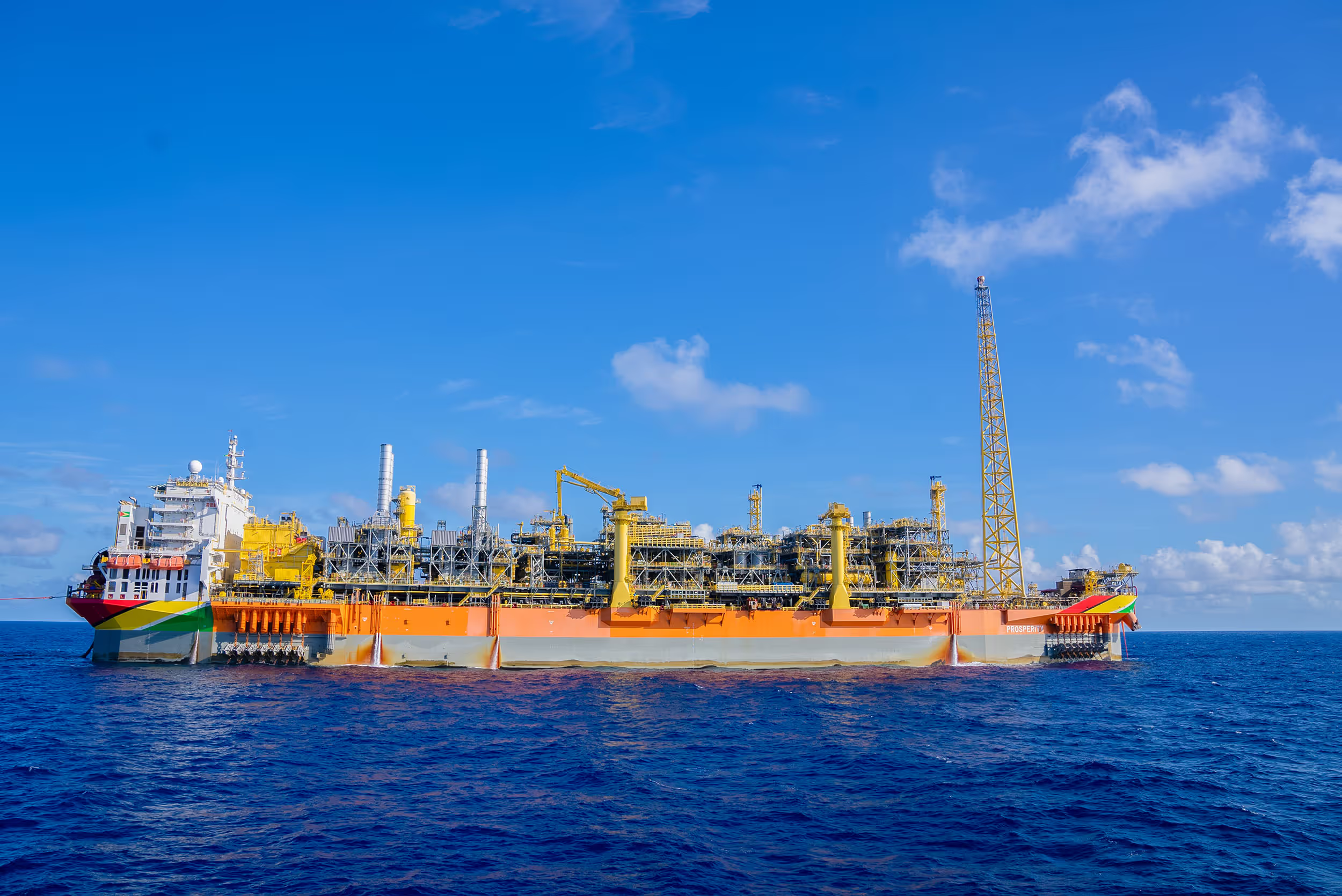
















Guyana's capital imports fell by more than half in the first six months of 2026, largely reflecting the absence of a new floating production, storage and offloading vessel arriving in the country during the period, according to the Ministry of Finance's Mid-Year Report.
Capital imports contracted by 52.5% to US$1.844 billion at the end of June, contributing significantly to an overall 23.4% decline in import payments to US$4.52 billion.
The sharp fall contrasts with the first half of 2025, when the One Guyana FPSO arrived in Guyana in April and generated a substantial wave of capital imports associated with its arrival.
The Ministry therefore links the 2026 decline primarily to the timing of offshore oil development rather than describing it as a broad-based contraction in capital spending.
Mining machinery imports recorded the steepest decline within the capital goods category, falling by 69.2%.
However, other forms of capital goods continued to move in the opposite direction.
Imports of transport machinery increased by US$75.8 million, agricultural machinery by US$51.5 million, building materials by US$40.1 million and other capital goods by US$34.3 million.
The figures therefore present a more complicated picture than the headline 52.5% decline alone suggests.
The overall import bill was also affected by a major shift toward intermediate goods.
Intermediate imports rose by 37.8% to US$1.927 billion, with fuel and lubricants accounting for the largest increase, rising by US$251.8 million. Imports of parts and accessories increased by another US$151.1 million, while other intermediate goods rose by US$110.2 million.
Consumption goods also increased, rising 21.9% to US$747.3 million. Motor cars, other semi-durable goods, and beverages and tobacco were among the main contributors.
The shift in the composition of imports comes as the economy recorded estimated real growth of 33.3% during the first half of 2026. The non-oil economy grew by an estimated 10.1%, with construction, services and mining among the main drivers.
The import figures therefore illustrate the extent to which Guyana's trade flows remain closely tied to the sequencing of major oil projects.
The country produced 163.3 million barrels of crude in the first six months of the year, compared with 115.7 million barrels during the same period of 2025. Average daily production rose to approximately 902,000 barrels per day from about 639,000 bpd.
With the fifth FPSO, Errea Wittu, expected to begin production in the final quarter of 2026, another major change in the import profile could emerge during the second half of the year.
The Ministry is projecting further expansion in oil production as One Guyana continues to ramp up and Errea Wittu comes online.



.png)



.jpg)