

















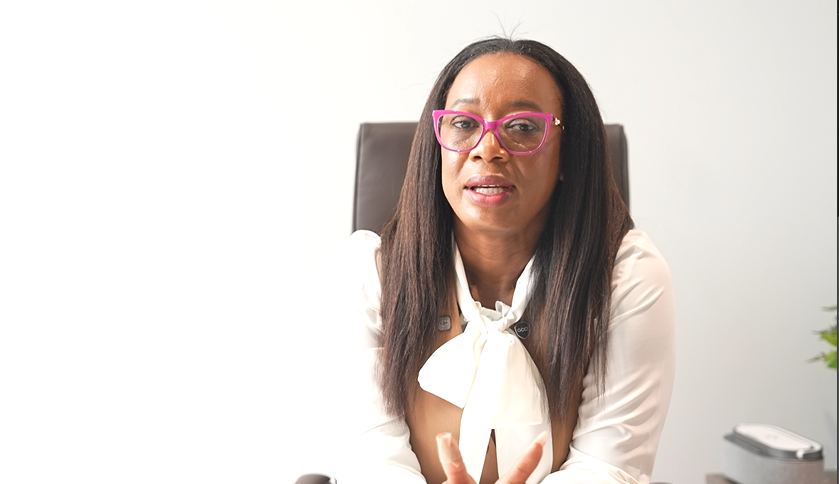
Kathy Smith says Guyana’s proposed Development Bank could finally crack one of the biggest barriers facing small businesses: access to financing. And while critics may scoff at a $3 million cap for startup support, the Georgetown Chamber of Commerce and Industry (GCCI) President insists that kind of “seed money” could be the difference between staying small and scaling up.
“It’s a lot,” Smith declared bluntly. “It might be small for large companies, but for small businesses, it’s a chance.”
The GCCI is backing government’s push to establish the Development Bank, arguing that too many entrepreneurs with solid ideas are being locked out of traditional financing because they lack collateral, formal records or the scale commercial banks usually demand.
Smith said the initiative is not about replacing banks, but creating a pathway for smaller businesses to finally become “bankable.”
“The banks are there to manage risk,” she explained. “We can’t fault them for that. But lots of businesses have ideas and cannot get financing. This Development Bank changes that.”
Under the proposed framework, small businesses could access up to $3 million in startup or expansion financing without traditional collateral requirements. Smith believes that money could then be leveraged to unlock even larger sums from commercial banks and other financial institutions.
“You can take that $3 million and turn it into $10 million or even $20 million from elsewhere,” she said. “That’s the opportunity.”
But Smith warned entrepreneurs that simply having an idea will not be enough. Businesses must now begin preparing themselves structurally and financially if they want access to the funds.
“Register your business. Get your compliance in place. Show a history of selling your product,” she urged. “If you making pepper sauce, show the bank you been making pepper sauce consistently.”
She said the chamber has already seen a growing wave of small contractors and entrepreneurs positioning themselves to tap into Guyana’s expanding economy, particularly in the oil and gas era.
“Finance has arrived,” Smith said. “Now small businesses must position themselves to capitalize.”
The GCCI President also welcomed government’s move to modernize lending laws through the recently passed movable collateral legislation, which allows businesses to use inventory and other assets—not just land or buildings—to secure financing.
For Smith, the bigger picture is about ensuring Guyanese businesses do not remain permanently “small.”
“The government wants private sector businesses to grow beyond survival mode,” she said. “This is about helping them expand, create jobs and compete.”



.png)



.png)