
















Guyana is pressing ahead with plans for a proposed US$1 billion to US$2 billion deepwater port in Berbice, even after Chevron declined to continue financing preliminary engineering and design work inherited from Hess Corporation.
The development raises fresh questions about how the project will be financed and who will ultimately fund the next stage, as Government works towards completing a feasibility study by December and attracting international investors.
Bechtel's Guyana manager, Harry Pastuszek, disclosed the funding setback during a panel discussion at the World Trade Centre Guyana, explaining that Hess had financed the initial pre-front-end engineering and design work before being acquired by Chevron in July 2025.
According to Pastuszek, Hess had funded the preliminary work under an understanding that it would continue supporting the project alongside the Guyana Government as it progressed. However, following the acquisition, Chevron declined to continue financing the subsequent studies.
Hess reportedly spent approximately US$4 million on the initial work, which Bechtel completed around two years ago.
Despite Chevron's decision, President Dr Irfaan Ali has maintained that the project is moving ahead, with Government now relying on its own feasibility work and discussions with potential international financing partners.
Speaking on the sidelines of the Caribbean Shipping Association's 56th Annual General Meeting and Conference in Georgetown, the President said the feasibility study should be completed by December.
He identified the United States Export-Import Bank (EXIM), UK Export Finance and the Qatar Investment Authority among the institutions and partners with which Guyana is engaging.
Ali said that once the feasibility assessment is completed, Government intends to meet with potential investors to determine how the project can advance.
The US EXIM Bank has already issued a letter of interest concerning financing for the engineering design study that would follow the feasibility assessment.
However, that letter should not be interpreted as a financing agreement or approval for construction funding. No final loan commitment, financing structure or disbursement arrangement has been publicly confirmed.
The President has also indicated that the project could cost between US$1 billion and US$2 billion.
The proposed facility is intended to provide Guyana with a port capable of accommodating larger vessels while opening additional trade opportunities with northern Brazil and the wider region.
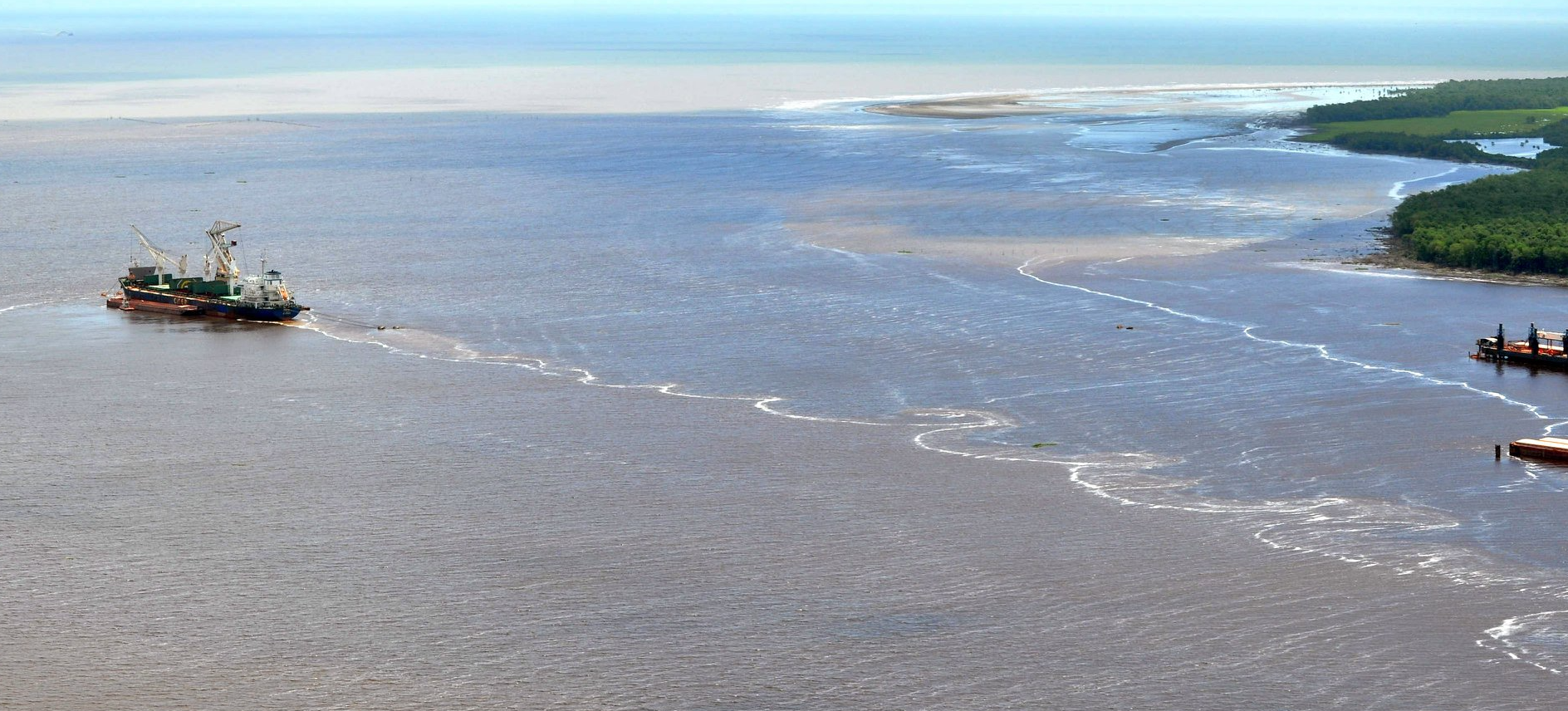
Two potential locations are being considered: Crab Island, at the mouth of the Berbice River, and the site of the former proposed CGX shore base.
Bechtel has been contracted by the Government to undertake the current feasibility assessment, updating earlier work conducted around 2016 by the Inter-American Development Bank.
The assessment is expected to establish the project's viability, including the suitability of potential locations and the commercial considerations associated with developing the facility.
The proposed port is also being viewed as part of a wider development strategy for Region Six, with the potential to support offshore oil and gas operations, industrial development and regional trade.
Beyond providing additional maritime capacity, the deepwater port is being positioned as an important piece of infrastructure for Guyana's economic diversification.
A facility capable of accommodating larger vessels could strengthen offshore logistics, improve cargo-handling capacity and create opportunities for businesses involved in shipping, transportation, warehousing and other port-related services.
It could also support the development of industrial activities in Berbice, including proposals involving data centres, fertiliser production and a possible refinery.
President Ali has previously said the financing structure of the port will influence the pace at which related investments, particularly refinery proposals, can advance.
Government has also linked the project to its plans for a second gas development and broader industrial expansion in the region.
However, the scale of the proposed investment means that questions surrounding construction costs, financing arrangements, commercial viability and the infrastructure needed to connect the port to major markets will be critical.