

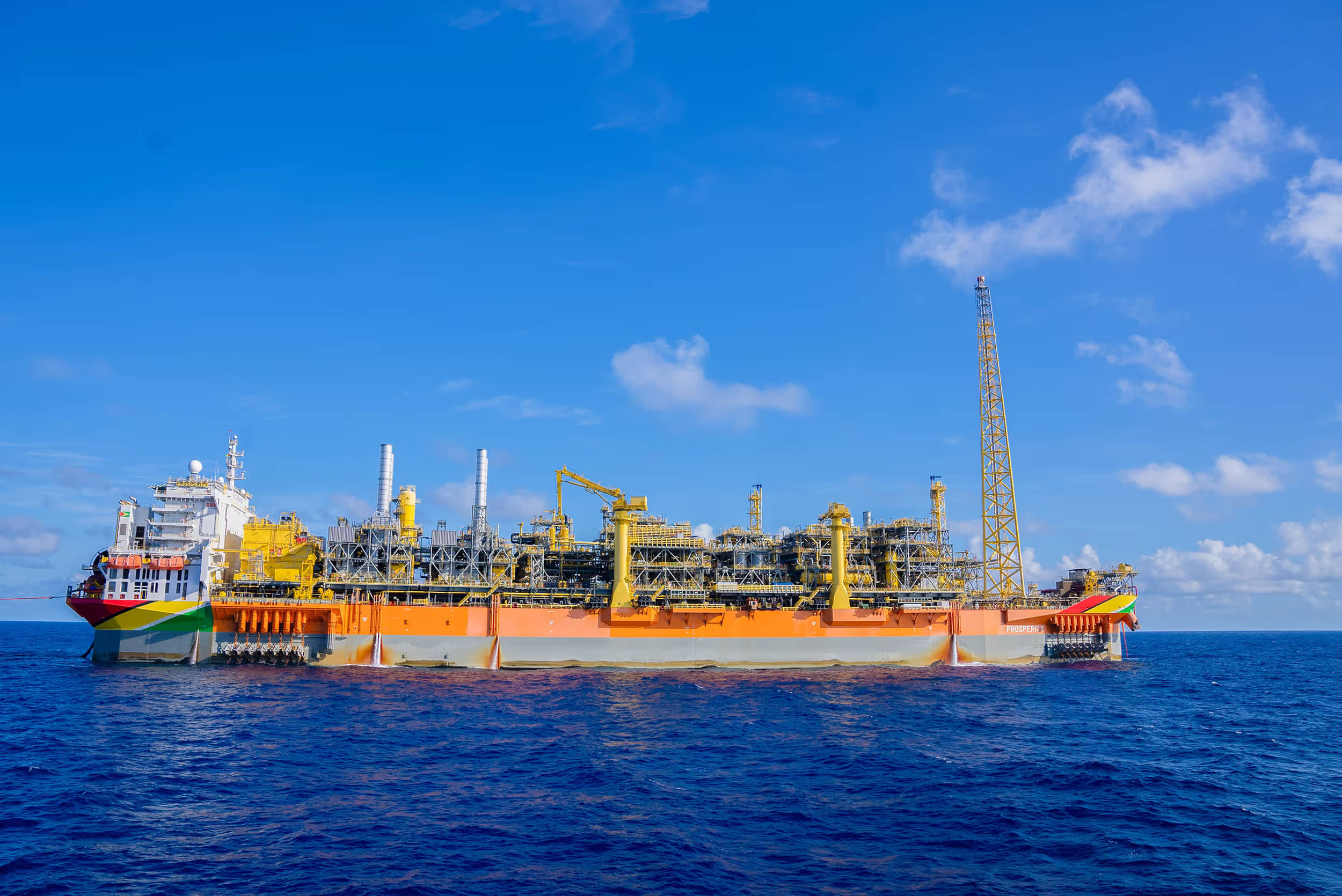














Guyana’s rapidly expanding oil industry is changing the scale of the economy, but the growth story is increasingly being seen beyond the offshore oil fields, with manufacturers, construction companies, farmers, hotels and other businesses expanding alongside petroleum production.
The latest investments by companies such as Demerara Distillers Limited (DDL), Banks DIH and the National Milling Company of Guyana (NAMILCO) offer a window into that broader shift.
It is a significant development for an economy that has become increasingly dependent on petroleum for its headline growth, government revenue and exports.
According to the 2026 National Budget, Guyana’s non-oil economy grew by 14.3% in 2025, while manufacturing expanded by 20% and construction by 31%. Agriculture, forestry and fishing also grew by 11.5%.
The oil and gas sector grew by 21% during the same period.
For 2026, the Government is projecting another 10.8% expansion in the non-oil economy, with manufacturing expected to grow by 12.9%, construction by 25.4% and agriculture, forestry and fishing by 7.6%. Overall economic growth is projected at 16.2%.
The International Monetary Fund has also pointed to growth beyond oil, saying in July that Guyana’s non-oil economy expanded by about 14% in 2025, led by construction and supported by agriculture, mining and manufacturing.
DDL expands across industries
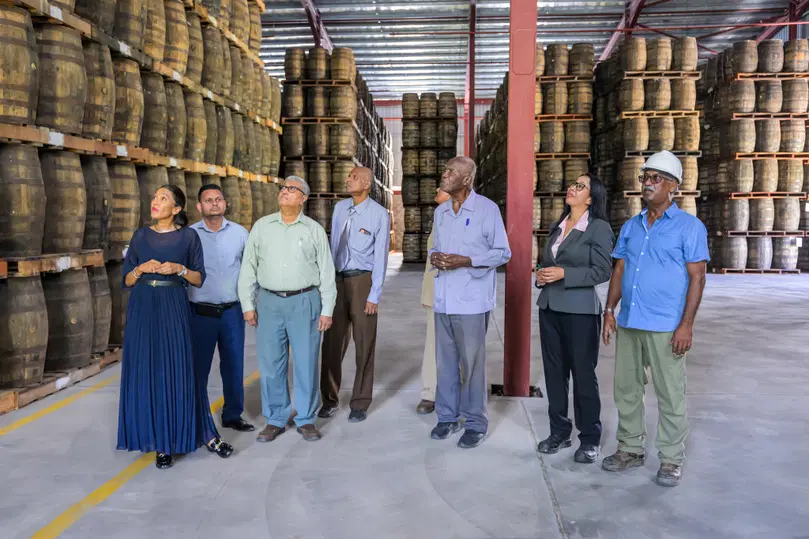
DDL provides one of the clearest examples of how established Guyanese companies are using the changing economic environment to expand into new areas.
The company, best known for its rum and beverage operations, has increasingly diversified into dairy and other areas of food production while continuing to build its regional manufacturing and distribution footprint.
Its Demerara Dairy subsidiary is investing US$30 million in a large-scale dairy operation at Moblissa along the Soesdyke-Linden Highway.
The project has already moved beyond the investment announcement stage. In September, another 473 pregnant heifers arrived in Guyana to expand the herd at the facility, following an initial shipment earlier this year. The project is intended to increase domestic milk production and reduce reliance on imported dairy products.
DDL is also investing outside Guyana.
In August, it broke ground on a US$10 million redevelopment and expansion of its St Kitts and Nevis operations, including expanded bottling, packaging and warehousing capacity. The investment is expected to strengthen the company's manufacturing and distribution presence in the Eastern Caribbean.
That means a Guyanese company is not simply producing for the domestic market. It is investing in production capacity at home while expanding its regional manufacturing and distribution network.
Banks DIH is also investing in production
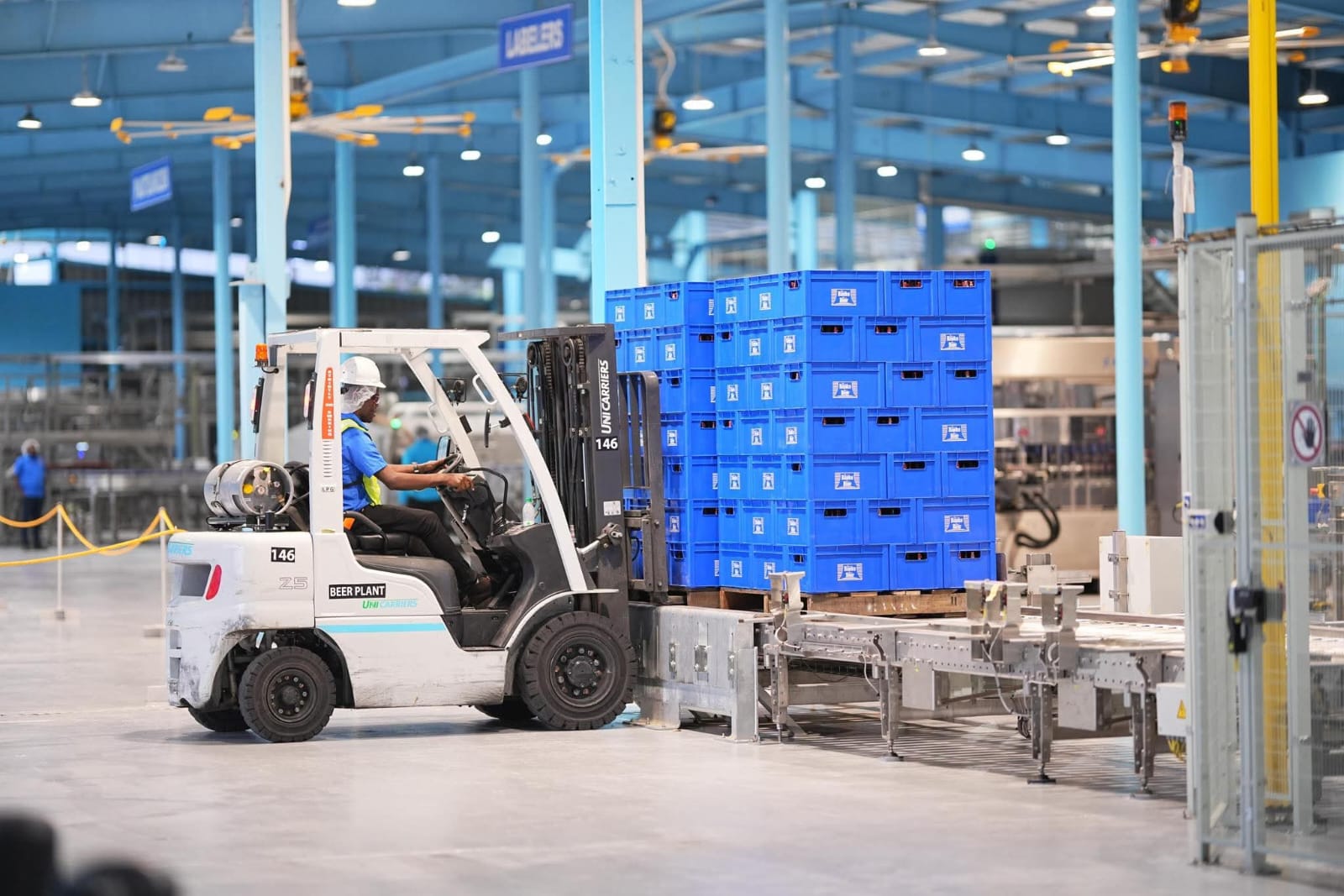
Banks DIH provides another example of an established Guyanese manufacturer investing in productive capacity.
In January, the company commissioned a new Malts Bottling Plant at its Thirst Park headquarters after deciding in 2024 to order the facility.
The plant includes new bottling, packaging, processing and utility equipment and forms part of the company's efforts to increase production capacity and modernise its operations.
The company's latest annual results also showed higher physical sales of its core products in domestic and export markets, while capital expenditure supported improvements in production capacity and efficiency.
And its expansion is not limited to the manufacturing plant. In July, Banks DIH opened its seventh Demico Qik Serv location in Bartica, extending the company's commercial footprint into Region Seven.
NAMILCO bets $10B on food manufacturing
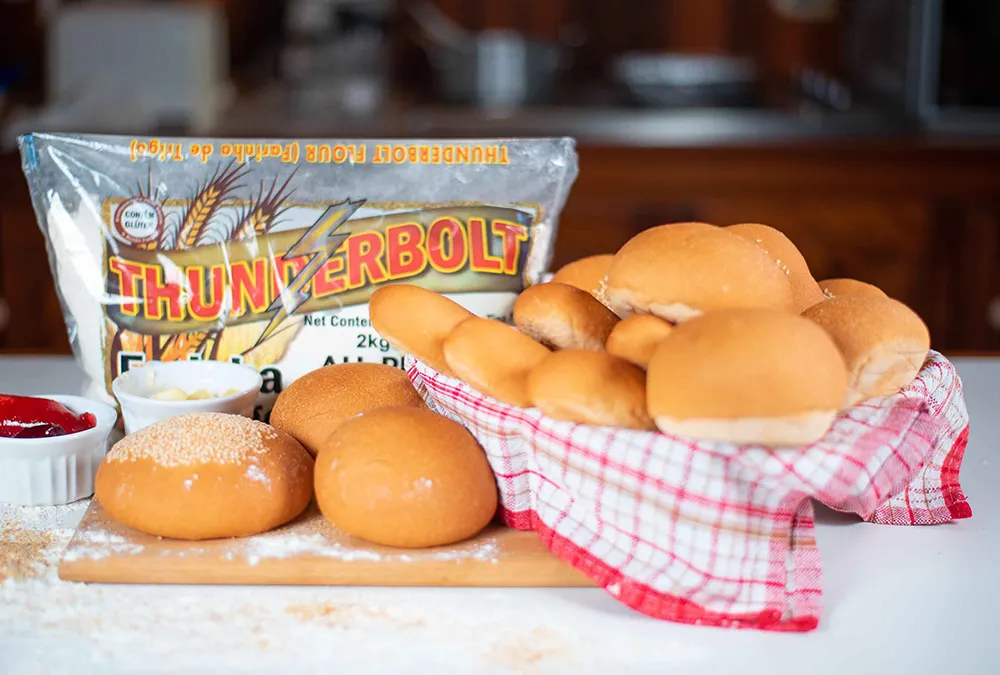
NAMILCO is making an even larger investment in domestic food manufacturing.
The company announced a roughly $10 billion investment in a new processing mill, expanded wheat storage facilities and an enhanced wharf.
Construction was expected to begin in the first quarter of 2026, with commissioning targeted for 2027.
The project is aimed at increasing local flour production and supporting domestic and export demand. NAMILCO is also exploring the commercialisation of locally produced cassava flour, while its parent company Seaboard has said it will conduct due diligence on potential investments in integrated pork production and processing.
The significance goes beyond one flour mill.
It points to an attempt to build more production and processing capacity inside Guyana, potentially creating links between agriculture, manufacturing, transportation and distribution.
Construction is one of the biggest non-oil beneficiaries
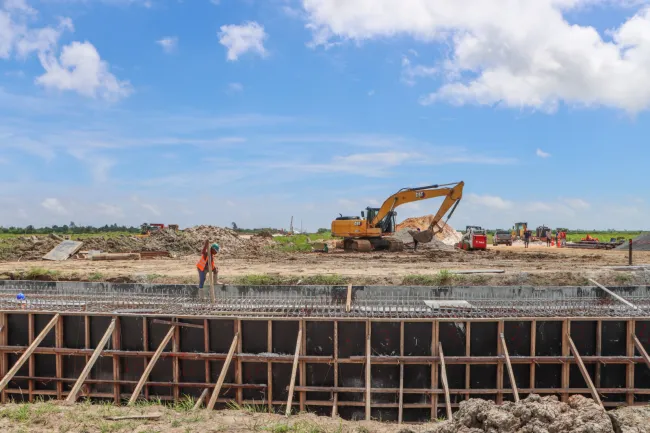
Construction is another major part of the story.
The sector expanded by 31% in 2025 and is projected to grow another 25.4% this year. That expansion is being driven by a combination of public infrastructure spending and private investment.
The effects extend well beyond contractors.
Construction creates demand for cement, steel, aggregates, heavy equipment, transportation, engineering, professional services, hardware and other suppliers.
That is one reason the non-oil economy cannot simply be measured by the performance of companies producing consumer goods.
The wider question is how much of the money flowing through the economy is creating new productive capacity.
Hotels and tourism are growing too
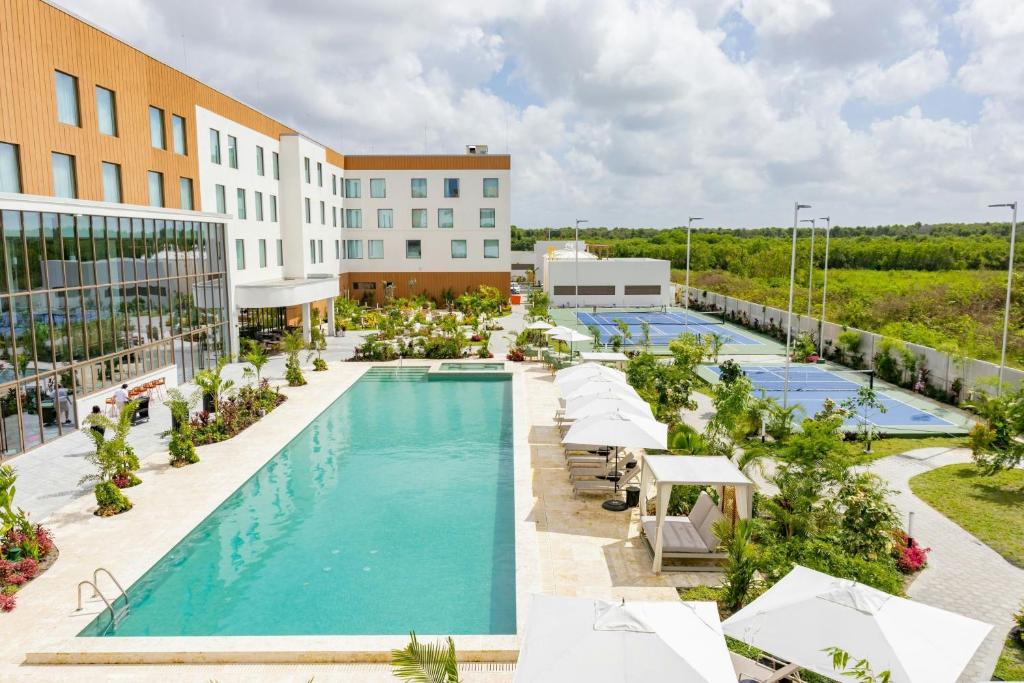
Hospitality provides another example.
Major private investment is being made in hotel and conference infrastructure, including the GYD$63 billion Hilton-branded Georgetown Seafront Resort and Convention Centre.
The 256-room development is expected to expand Guyana's hotel and conference capacity while creating activity across construction, hospitality, transportation, retail and other supporting businesses.
That creates another layer of economic activity around the country's expanding oil and business economy.
More business travel, international events and visitors create demand for hotels, restaurants, transportation, entertainment, retail and other services.
Agriculture and agro-processing
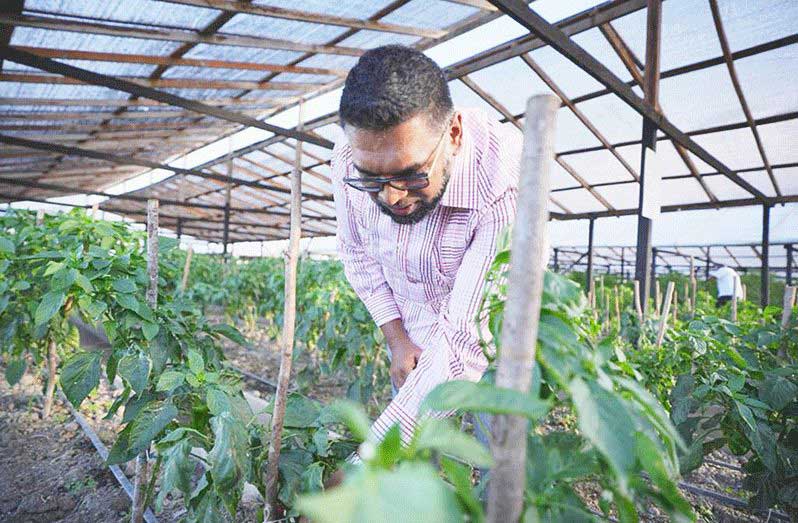
Agriculture is also showing growth, although the sector faces a different set of challenges.
The sector expanded by 11.5% in 2025, with rice, sugar and other agricultural subsectors recording increases. Government expects agriculture, forestry and fishing to grow another 7.6% in 2026.
The more important question is whether Guyana can increasingly move from producing raw agricultural commodities to processing them locally.
That is where investments such as DDL's dairy project and NAMILCO's expanded processing capacity become particularly important.
They potentially create a connection between farmers and larger manufacturing operations, allowing more value to be retained within the domestic economy.
A bigger economy, but a bigger question
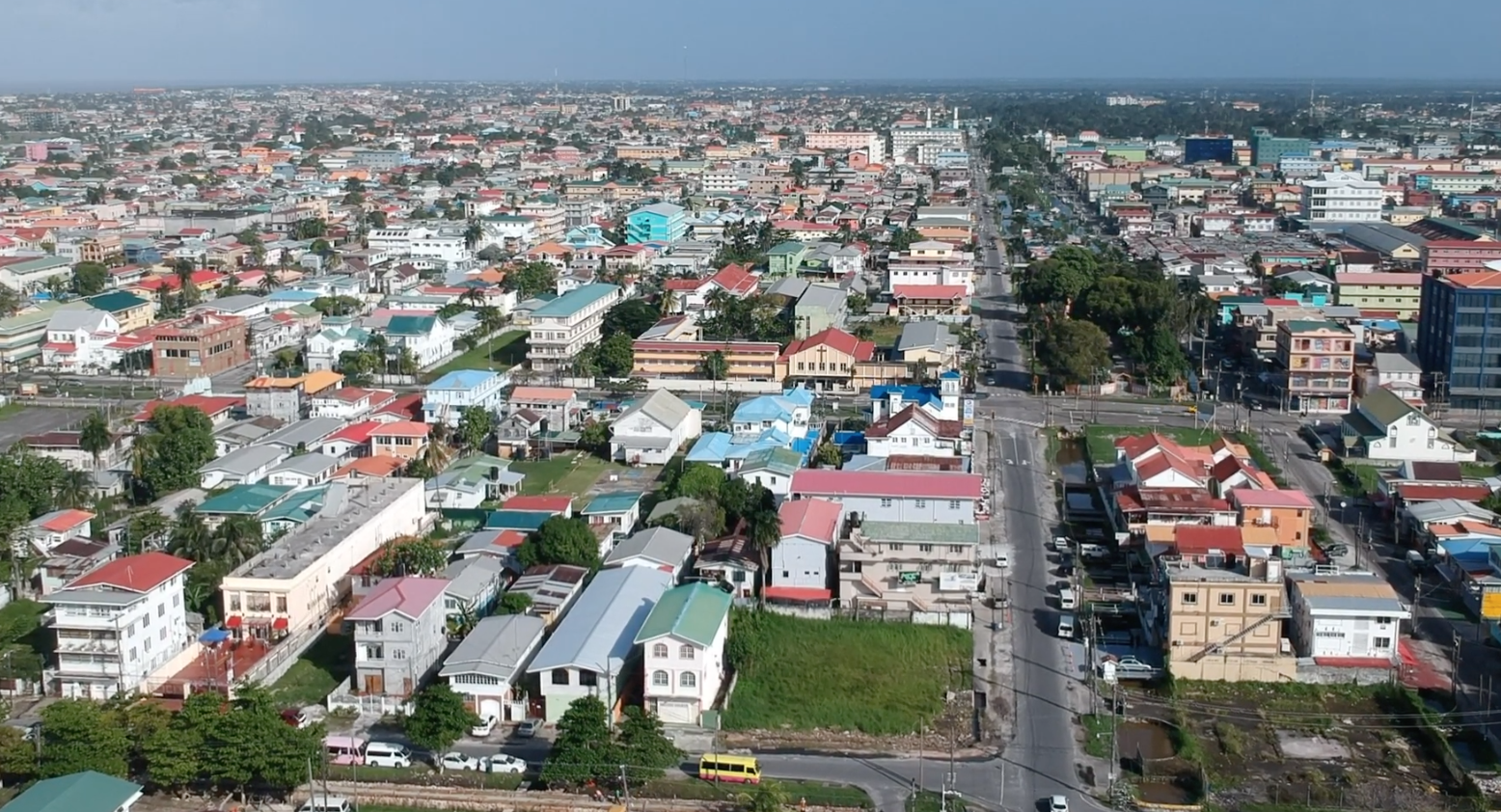
Taken together, these developments suggest that Guyana's economic transformation is not happening exclusively offshore.
Manufacturers are adding capacity. Food processors are investing in new plants. Construction is expanding rapidly. Hotels are being built. Agriculture is growing. Companies are expanding distribution networks and moving into new markets.
But there is an important distinction between non-oil growth and economic diversification.
An economy can have strong non-oil growth because oil revenues are financing more construction, government spending and consumption. Genuine diversification requires the creation of productive businesses and industries capable of generating income, jobs, exports and value even as the pace of oil production eventually changes.
That makes the investments being made by companies
such as DDL, Banks DIH and NAMILCO important beyond their individual balance sheets.
They show established businesses putting money into factories, farms, equipment, distribution networks and regional markets.



.png)



.png)