













The leaders of Suriname and Venezuela met this week and the two South American nations have agreed to collaborate in several key areas, from oil and gas to trade and education.
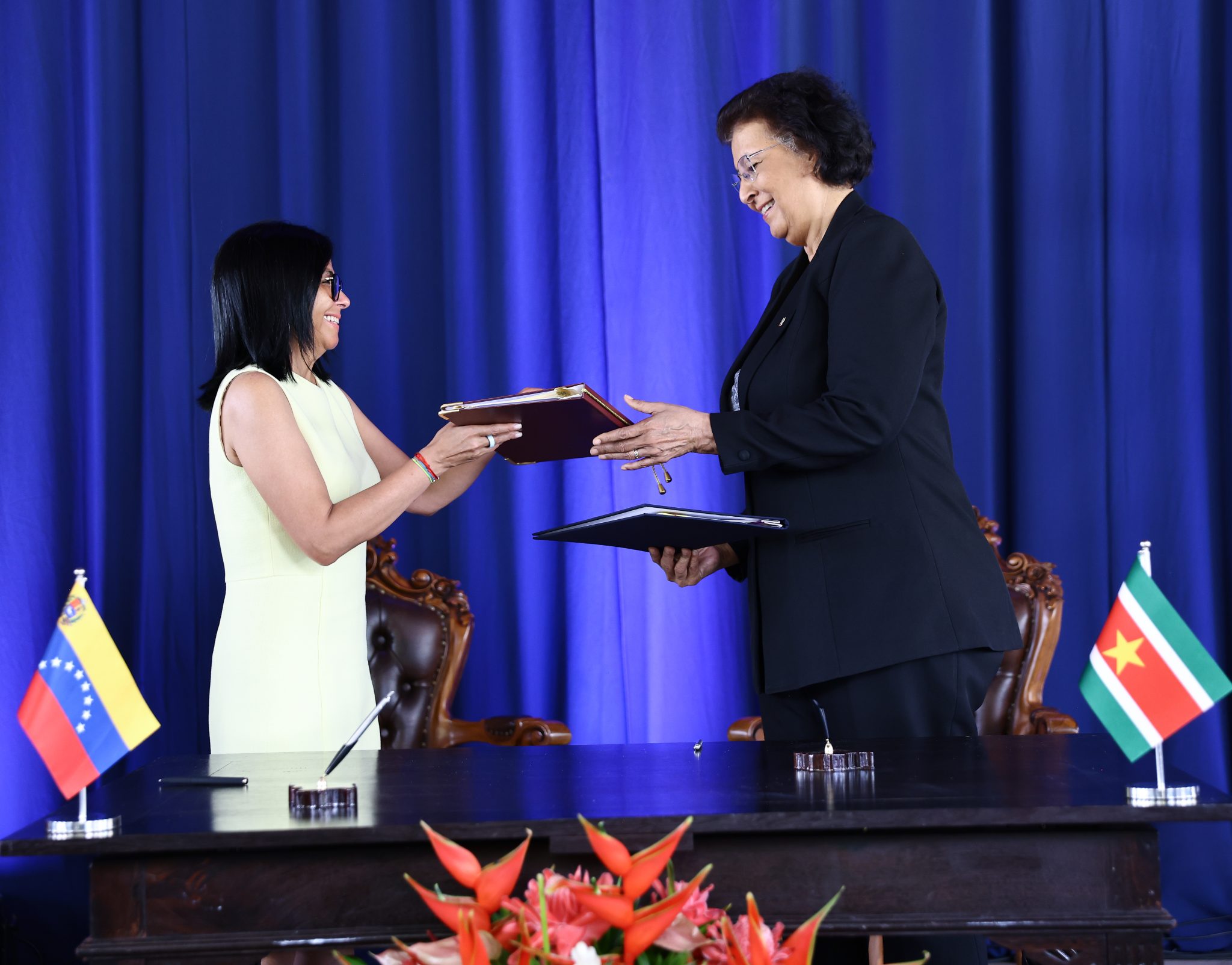
Acting Venezuelan President Delcy Rodríguez met Surinamese President Jennifer Geerlings-Simons in Paramaribo on September 11. The visit resulted in the signing of ten documents — nine cooperation agreements and one joint declaration.
A key area of intended cooperation is the oil and gas sector. A Memorandum of Understanding between the Venezuelan University of Hydrocarbons (UVH) and the Anton de Kom University of Suriname was signed. Through this, the countries aim to exchange knowledge, strengthen the training of highly qualified personnel, conduct joint research, and develop innovative technologies in the hydrocarbon sector.
Additionally, a roadmap for the development of a cooperation agenda in the hydrocarbons sector was signed between the Ministry of People's Power for Hydrocarbons of the Bolivarian Republic of Venezuela and the Ministry of Petroleum, Gas and Environment of the Republic of Suriname.
Agreements were also signed for cooperation in fisheries and aquaculture, agriculture, aviation, tourism, and education and training.
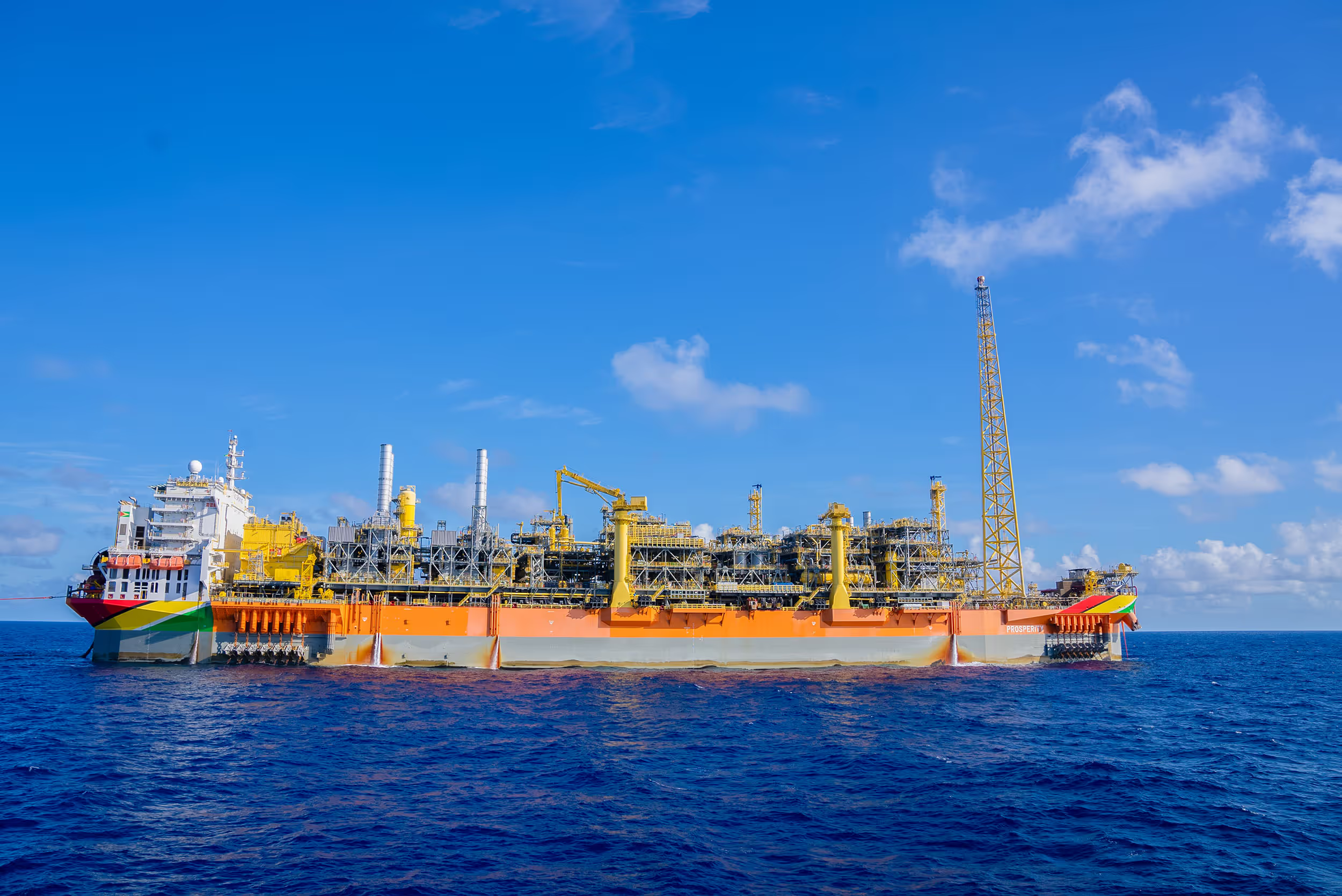
Suriname is preparing to produce oil offshore through its Block 58 project. The TotalEnergies-led project, known as GranMorgu, is expected to start producing oil in 2028. GranMorgu is located about 150 kilometres from the Surinamese coast and holds recoverable reserves estimated at more than 750 million barrels of oil. It will be Suriname's first large-scale offshore oil development. A large floating production, storage and offloading (FPSO) vessel with the capacity to process 220,000 barrels per day of oil and 500 million cubic feet per day of natural gas is being supplied by SBM Offshore.
There are also promising natural gas developments offshore at Block 52.
Suriname also has onshore oil developments, managed by the state-owned national oil company Staatsolie. About 15,000 barrels of oil are produced daily, with the onshore industry anchored by three main fields in the Saramacca District: Tambaredjo, Tambaredjo North-West, and Calcutta.
For its part, Venezuela is home to the world's largest proven oil reserves — an estimated 303 billion barrels. However, a majority of Venezuela's oil fields are not currently producing or are vastly underproducing. The country's political landscape shifted significantly earlier this year following the capture of former President Nicolás Maduro by US authorities in January 2026, after which Rodríguez was sworn in as acting president.
Weeks ago, Venezuela entered into a new agreement with the United States — one described by US President Donald Trump as the biggest oil deal in world history. North American Blue Energy Partners (NABEP), a privately held oil company and the second-largest private Venezuelan oil producer, has been granted 100-year concessions for 17 oil fields with proven reserves of approximately 65 billion barrels.
That deal offers significant benefits for the US, which receives a 35% ownership stake in the company and is guaranteed the right to purchase, at production cost, 20% of the offtake from all current and future fields NABEP will operate.
With developments taking shape in both countries, the cooperation agreements signed this week point to a shared desire to support each other's energy ambitions.



.png)
.jpeg)

.jpg)
%20(2).png)