

















Natural Resources Minister Vickram Bharrat says Guyana’s rapid rise from its first oil production to nearly one million barrels per day is unmatched anywhere in the world, with the country poised to cross the milestone as a fifth offshore production vessel prepares to join its expanding fleet.
Speaking at the opening of the World Trade Centre Georgetown’s International Trade and Investment Conference on Tuesday, Bharrat said Guyana had grown from producing about 80,000 barrels of oil per day when the current government took office in 2020 to more than 900,000 barrels per day today.
“No other country in the world has moved from zero to a million in such a short period of time,” the minister said, pointing to the speed of development in Guyana’s ultra-deepwater oil industry.
According to government figures, Guyana produced an average of approximately 902,000 barrels per day during the first half of 2026, up from about 639,000 barrels per day over the corresponding period in 2025. The increase reflects the contribution of new offshore developments, including the Yellowtail project, which began producing oil in 2025.
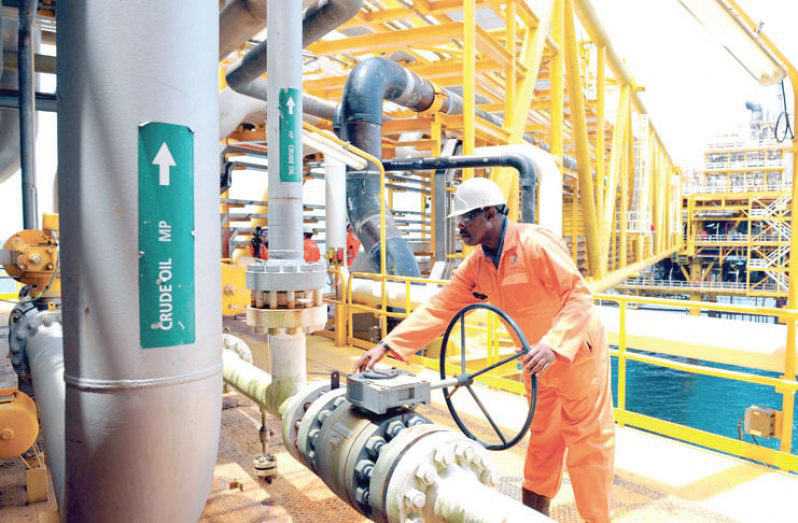
The fifth floating production, storage and offloading vessel, Errea Wittu, is expected to add another 250,000 barrels per day of production capacity when it begins operating from the Uaru development. The vessel is targeting first oil in the fourth quarter of 2026, although its designed capacity should not be confused with the volume it will necessarily produce from the outset.
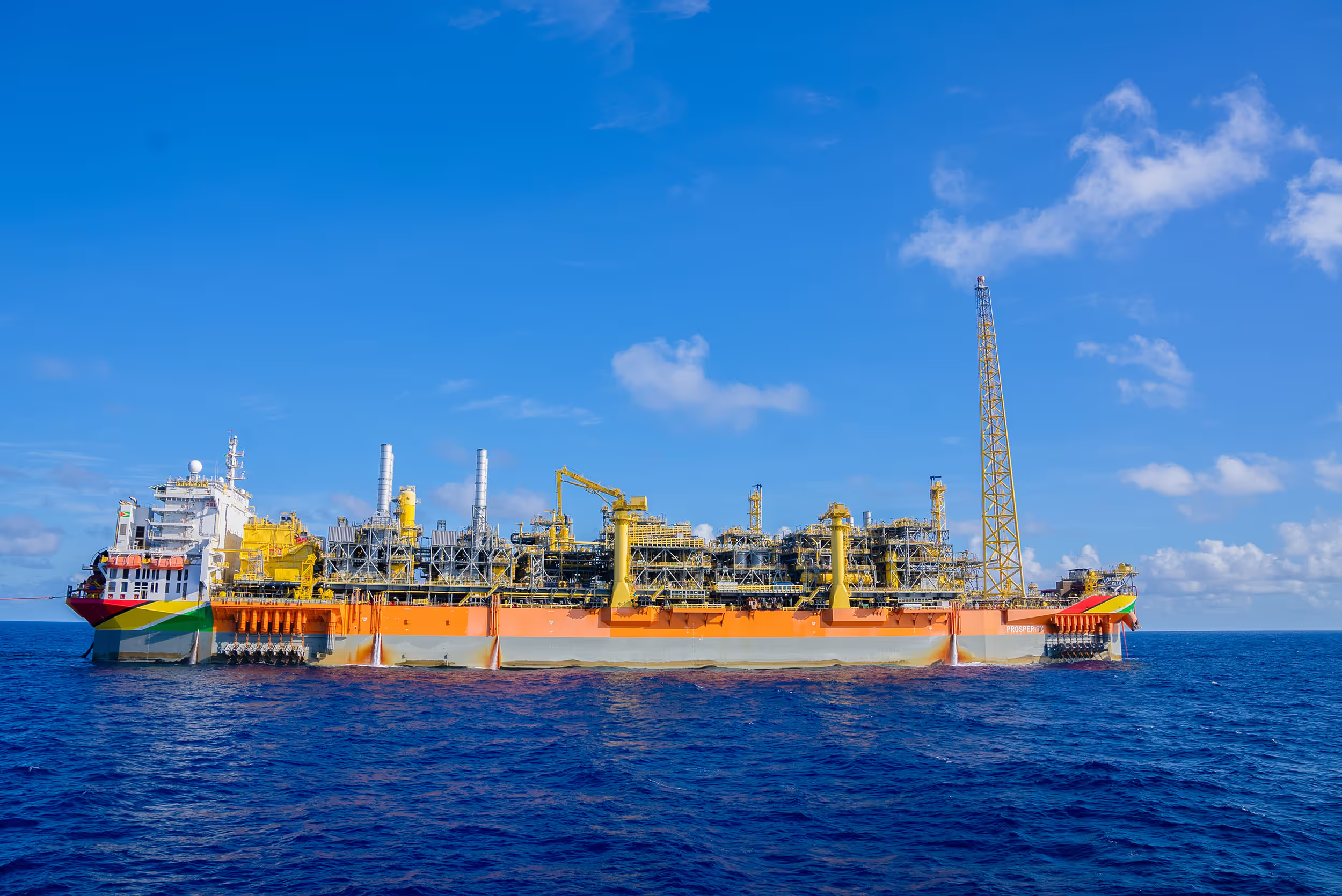
The existing fleet comprises Liza Destiny, Liza Unity, Prosperity and ONE GUYANA, which together have pushed national output beyond 900,000 barrels per day.
The expansion is expected to continue beyond the million-barrel threshold. Guyana has set its sights on production of approximately 1.7 million barrels per day by 2030, with additional offshore projects planned to increase output.
For a country that began commercial oil production less than seven years ago, the speed of that expansion is striking. The first oil flowed from the Liza field in December 2019, after the major offshore discovery announced in 2015. Since then, successive developments have transformed Guyana into a significant oil producer in the region.
But the pace of production growth also raises questions about how the country will manage the increasingly complex business, environmental and economic consequences of an industry expanding at such speed.
Bharrat argued that Guyana’s progress was the result of a partnership between the government and the international companies operating offshore, particularly the ExxonMobil-led consortium in the Stabroek Block.
He said Guyana’s experience was now being discussed internationally as an example for emerging oil-producing countries, while stressing that the industry’s contribution should not be judged by production figures alone.
“What is even more important to us is the 7,000 Guyanese that are employed in the oil and gas sector,” he said, also pointing to more than 1,200 local businesses engaged directly or indirectly in supplying goods and services to the industry.
The minister cited farmers supplying vegetables, chicken and eggs for offshore operations, as well as transport operators, landlords and other businesses benefiting from petroleum-related demand.
Those examples, he argued, demonstrate how oil production can create opportunities beyond the companies extracting crude. However, the number of businesses participating in the supply chain does not, by itself, establish how much they earn, how many jobs are permanent or what share of total industry spending remains in Guyana.
Bharrat also cautioned local businesses against relying on the protection provided by the Local Content Act, insisting that companies must offer competitive prices and quality services if they are to succeed in the sector.
“The local content legislation was never designed to inculcate or encourage mediocrity,” he said, urging local firms to become competitive both regionally and internationally.
His comments come as the industry moves into another phase of expansion, with growing production capacity bringing greater opportunities for suppliers while increasing the importance of skilled labour, reliable infrastructure, effective regulation and oversight.
Bharrat also defended the government’s approach to balancing petroleum development with environmental protection, pointing to Guyana’s forests, protected areas and low deforestation rate.
He said the country was pursuing oil production while maintaining its commitment to forest conservation and low-carbon development, rejecting the idea that economic growth and environmental sustainability must necessarily be opposing goals.