












Guyana’s oil and gas industry is helping to drive economic growth and investment in
infrastructure. As Guyana continues to grow, new roads, buildings and businesses have been a
marker for our development. However, if you have been following Green Line, we have always
advocated for a development framework that centres Guyana’s green. With recent structural
changes in Georgetown, we have an opportunity to witness what the city can become. With its
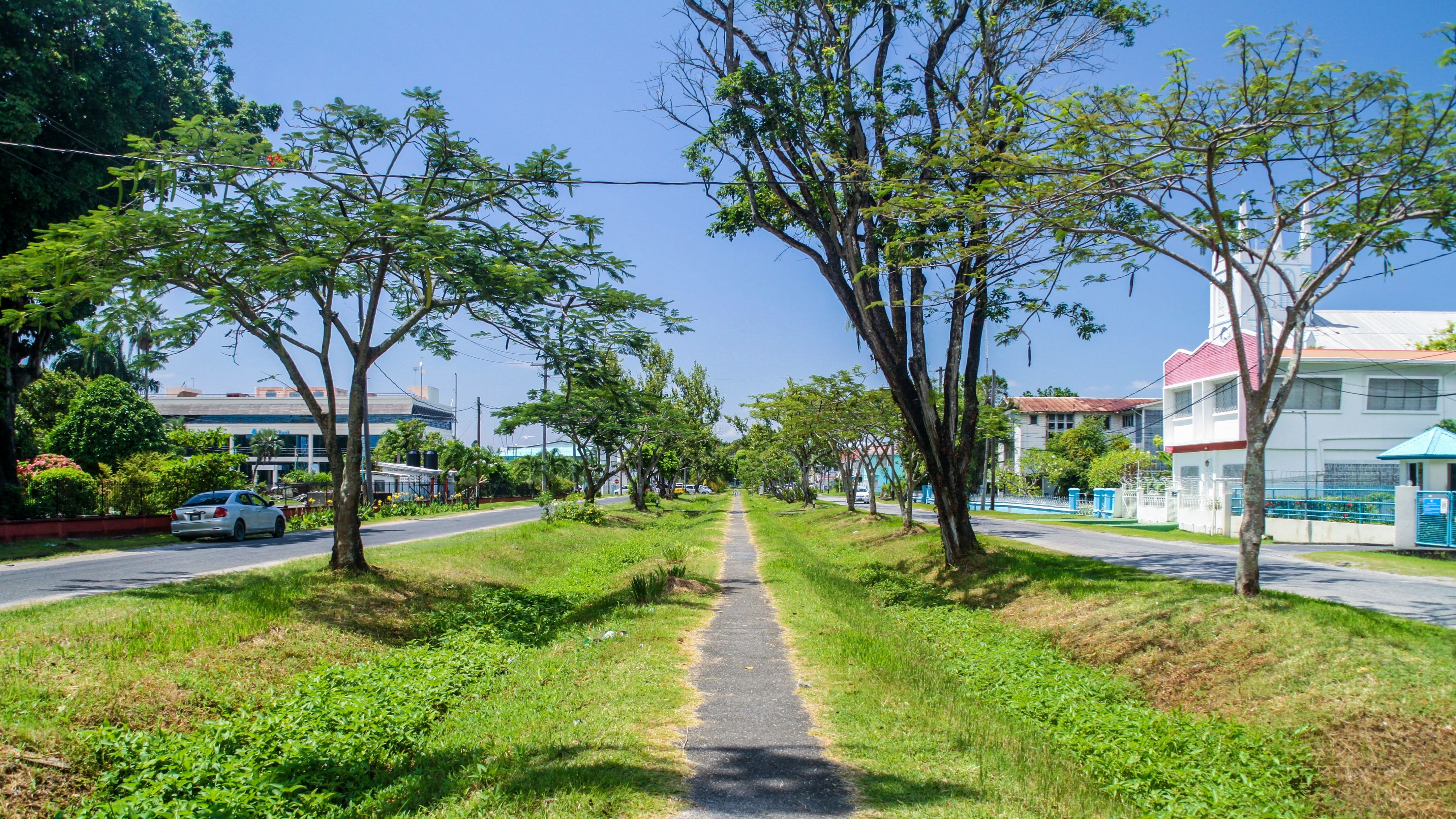
historic avenues, canals and trees, the capital has the potential to be a more comfortable place to
live and work. The construction taking place on Thomas Street under the Healthy Streets
Initiative by President Irfaan Ali offers a glimpse of what this could look like.
The Healthy Streets Initiative, developed in collaboration with The King’s Foundation, aims to
improve streets and public spaces. The Thomas Street project brings together roadworks,
drainage and landscaping, with attention to the needs of pedestrians and cyclists. It is an example
of how infrastructure planning can consider both how a street functions and how people
experience it.
Trees are an important part of Georgetown’s character. They provide shade in the tropical heat,
help cool surrounding areas and offer habitats for birds and other wildlife. The Thomas Street
project has placed emphasis on preserving existing trees while carrying out improvements.
Keeping these natural features in place can help maintain the character of our city as it changes.
Drainage is another key consideration. Georgetown relies on its network of canals and drains to
manage water, particularly during heavy rainfall. The Healthy Streets Initiative commits to
coordinating drainage with road and avenue improvements to ensure that the projects work well
in the long term.
Thomas Street is the first project under the Healthy Streets Initiative, creating an opportunity to
apply lessons from the work to other parts of Georgetown. Future projects could build on this
approach by considering trees, pedestrian access and drainage early in the planning process.
Over time, this could help improve the experience of moving around the capital. One street will
not transform an entire city, but it can be a starting point. If the approach taken on Thomas Street
continues elsewhere, Georgetown can make steady progress towards becoming a more
welcoming and environmentally conscious capital.