
















The cost of importing fuel for use across Guyana increased by 74.8 per cent this year alone, a surge Prime Minister Brigadier (Ret’d) Mark Phillips said the government has been trying to cushion.
Ongoing conflict, including between the United States and Iran, has caused instability in energy markets and driven fuel prices higher. Additionally, the situation has been exacerbated by disruptions to global shipping routes.
Prime Minister Phillips told a National Seminar on Energy Efficiency and Conservation that Guyana has not been spared. While the general cost of importing fuel rose by nearly 75 per cent, PM Phillips said gasoline acquisition costs by 62.4 per cent, diesel by 70.3 per cent and jet fuel by 102.6 per cent.
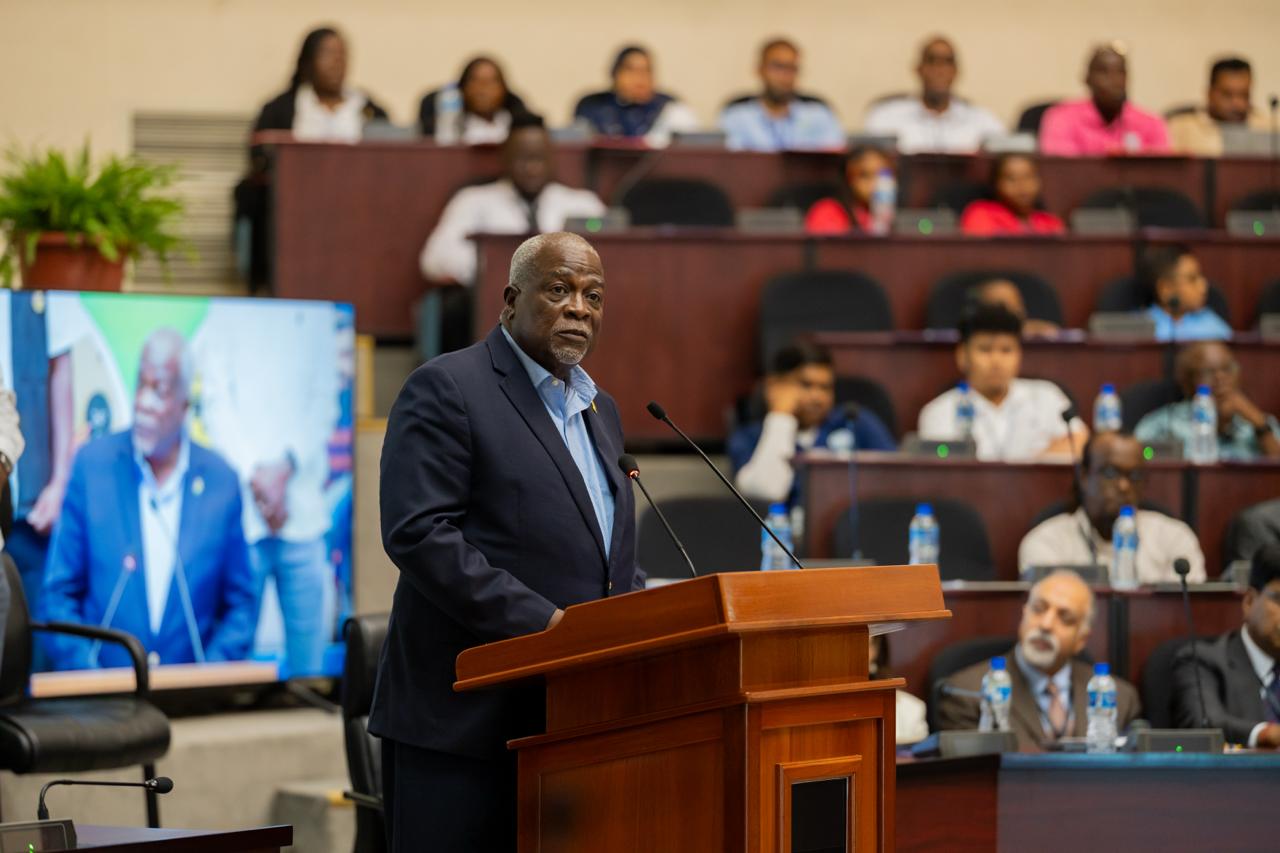
“These numbers translate directly into higher costs for utilities, for businesses and for every household in this country,” the Prime Minister said at the seminar hosted at the Arthur Chung Conference Centre, Liliendaal.
However, he reminded the gathering that the government has taken steps to cushion the impact of the increases. The continued removal of the excise tax on fuel (a move in place since 2022) and engaging local oil companies on mitigation measures are among those measures. Looking ahead, PM said, the government is expanding fuel storage capacity and investing in other infrastructure to reduce the risk of supply chain this disruptions. Though not referenced by the Prime Minister, the Irfaan Ali-led administration is exploring the construction of a local oil refinery to help in this regard.
Guyana is also adopting more environmentally- friendly solutions.
“The strategic answer that addresses the root of our vulnerability is to reduce our dependence on imported energy through the twin pillars of renewable energy supply and energy efficiency,” the Prime Minister said.
Energy efficiency means using less energy to perform the same task or provide the same service, effectively eliminating energy waste. The World Bank is funding a US$131.87 million Caribbean Efficient and Green-Energy Buildings (CEGEB) Project, benefiting Guyana, Saint Lucia, and Grenada to reduce energy consumption in public buildings.
Meanwhile, investments in renewables have been ongoing. The Prime Minister reminded the gathering the Guyana has added over 37 megawatts of new generating capacity from renewable energy, including through new solar farms, mini hydropower plants and solar home energy systems. The forthcoming gas-to-energy projects and the Amaila Falls hydropower projects are expected to add hundreds of megawatts of power too— each reducing the country’s dependence on imported fuel.



.png)