
















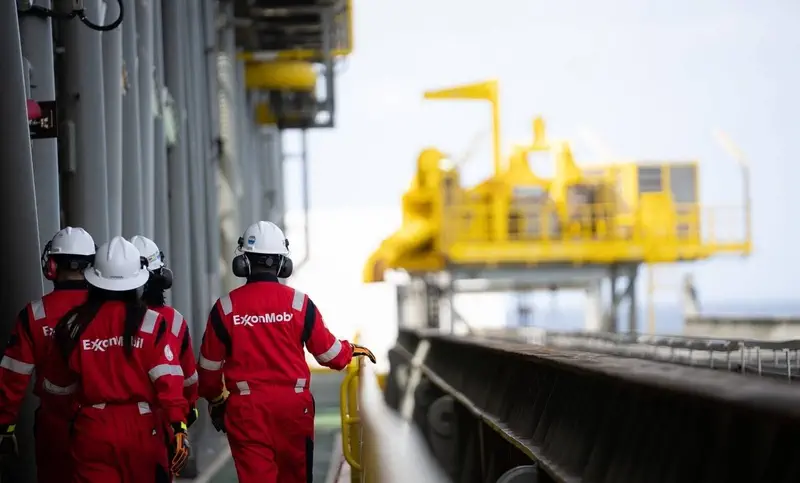
Stable offshore production in Guyana is becoming one of ExxonMobil's biggest strategic advantages
While conflict and geopolitical tensions disrupted oil production in one of the world's most volatile regions, Guyana quietly emerged as one of the assets helping ExxonMobil keep its global production engine running.
The company's second-quarter 2026 earnings presentation makes that increasingly clear.
Exxon told investors that production growth from Guyana and the Permian Basin in the United States helped deliver its highest upstream production in more than two decades, excluding production losses caused by disruptions in the Middle East.
The message is significant. It demonstrates that Guyana is no longer simply another successful offshore project. It is becoming one of the company's most strategically important producing regions—providing reliable, low-cost barrels at a time when geopolitical instability continues to threaten production elsewhere.
The global oil industry has always been shaped by geopolitics.
Wars, sanctions, civil unrest, shipping disruptions and diplomatic tensions can quickly interrupt production and send energy markets into turmoil.
Recent instability across parts of the Middle East has once again highlighted those risks.
Although Exxon did not disclose detailed figures for production losses by country, the company specifically referenced Middle East volume impacts throughout its earnings analysis, noting that geopolitical disruptions reduced upstream production during the period.
Yet despite those challenges, Exxon still recorded its strongest upstream production performance in more than 20 years.
Guyana's rise from newcomer to cornerstone
Only seven years ago, Guyana had never produced a commercial barrel of oil.
Today, it has become one of the fastest-growing oil producers anywhere in the world.
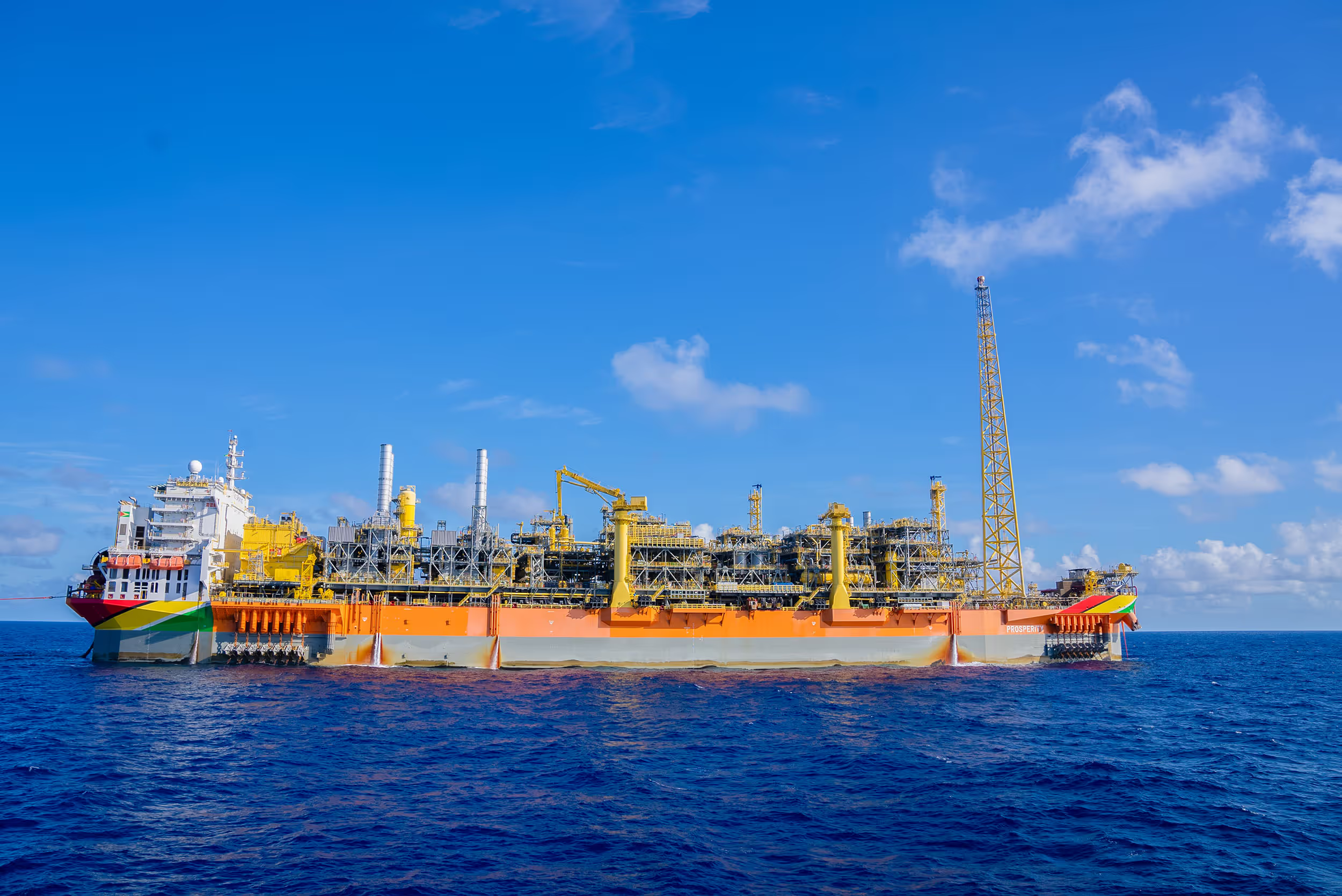
Publicly available operational data indicate offshore production averaged approximately 900,000 barrels per day during the second quarter of 2026 from four producing FPSOs:
Liza Destiny
Liza Unity
Prosperity
ONE GUYANA
Those developments have rapidly transformed the Stabroek Block into one of Exxon's highest-performing upstream assets.
Unlike many mature producing provinces, Guyana combines: exceptionally large discoveries; high well productivity; relatively low development costs; modern production infrastructure; and continued exploration success.
Those advantages are increasingly valuable in an industry facing growing geopolitical uncertainty.
One reason Guyana is becoming strategically important is consistency.
Exxon disclosed that its first four Guyana FPSOs have achieved 98 per cent reliability so far this year while continuing to exceed their original investment expectations.
For a global oil company, reliability is just as important as production volumes.
Every unexpected shutdown means deferred production, delayed cargoes and lost revenue.
By maintaining exceptionally high operational uptime, Guyana provides Exxon with a dependable source of production that is largely insulated from many of the geopolitical risks affecting other parts of its portfolio.
Throughout its earnings presentation, Exxon repeatedly referred to "advantaged volume growth" from Guyana and the Permian Basin as a key driver of improved financial performance.
One notable slide in Exxon's earnings presentation illustrates how geopolitical events continue to influence corporate planning.
The company estimates that a full-quarter closure of the Strait of Hormuz would reduce its Middle East production by approximately 750,000 oil-equivalent barrels per day compared with 2025 levels.
While that scenario is hypothetical, it highlights why geographically diversified production has become increasingly important.
Although no single country can fully replace production from the Middle East, Guyana's rapid growth is giving Exxon another dependable source of supply within its global portfolio.



.png)