
















.png)
Oil prices have surged in recent weeks amid the escalating conflict involving the United States, Israel and Iran. For producers like Guyana, higher prices mean greater revenues and other spinoff benefits. However, local officials remain cautious about the broader impact of global shocks on the domestic economy.
In an interview with Fueled, Guyana’s Finance Minister Dr. Ashni Singh described this situation as a “mixed blessing” for Guyana.
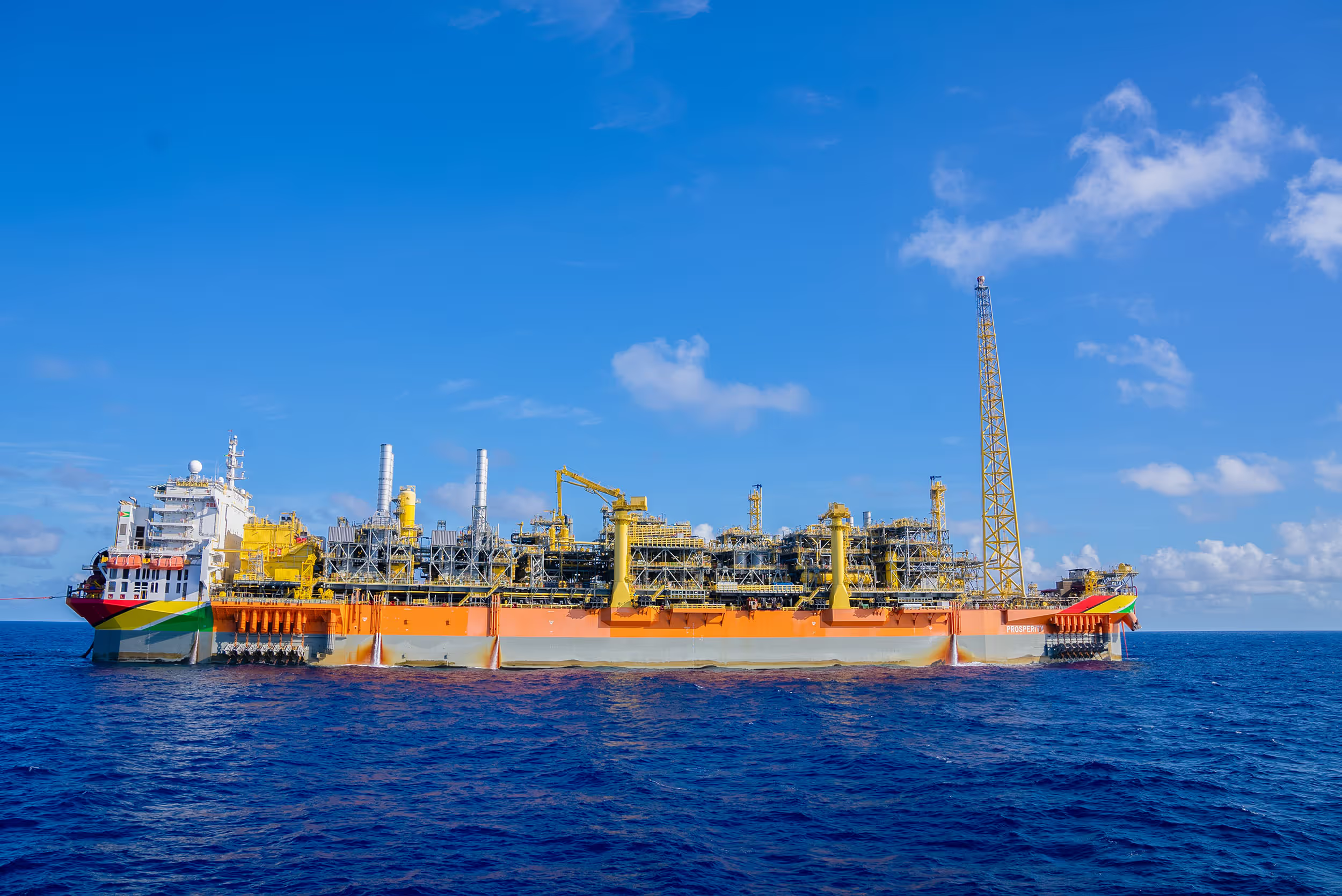
He explained that Guyana will get more earnings for the oil it exports because of the higher global prices, and thus, more deposits into the Natural Resource Fund (NRF) are expected. The situation also translates to greater incentives for companies to accelerate sizable investments in exploration and production ventures.
However, there is another side to the coin.
“Guyana is still and will always be part of the global economic system and global trading system. We still import commodities including refined fuel products— gasoline and diesel— and fertilisers, and considering that we import these products, there is inevitably the potential for the pass through of price pressures as we are witnessing,” he said.
Shipping costs have risen alongside commodity prices, making imported goods more expensive still.
The spike in prices is being felt on the ground. At a consultation with rice farmers Thursday, Vice President Dr. Bharrat Jagdeo acknowledged that higher fuel and fertiliser costs are cutting into production margins.
“We are aware that, on top of a low [global] price for rice, you’re now going to be faced with an additional cost,” he told the farmers gathered at the Arthur Chung Conference Centre, Liliendaal, Georgetown.
At that same event, President Dr. Irfaan Ali announced that the government is setting aside over $3 billion to support rice farmers. Those farmers cultivating under 50 acres will receive $15,000 per acre; those cultivating more will receive $10,000.
"We continue to support different segments of our population," Ali said. "We are facing global shocks exacerbated because of the Iran war that is ongoing, and there is a tremendous impact on input costs, including fertilisers, transport, fuel, and all of these things."
On the fuel side, the government continues to forego excise. This decision was taken since 2022, when global conflict then drove up prices.
However, the Finance Minister emphasised that the response cannot stop at short-term relief. The forthcoming Gas-to-Energy project and a planned fertiliser plant, he posited, will reduce Guyana's exposure to the kind of external shocks now impacting the economy.
Prudent management of oil revenues, he added, remains the foundation of that longer-term resilience.



.png)