
















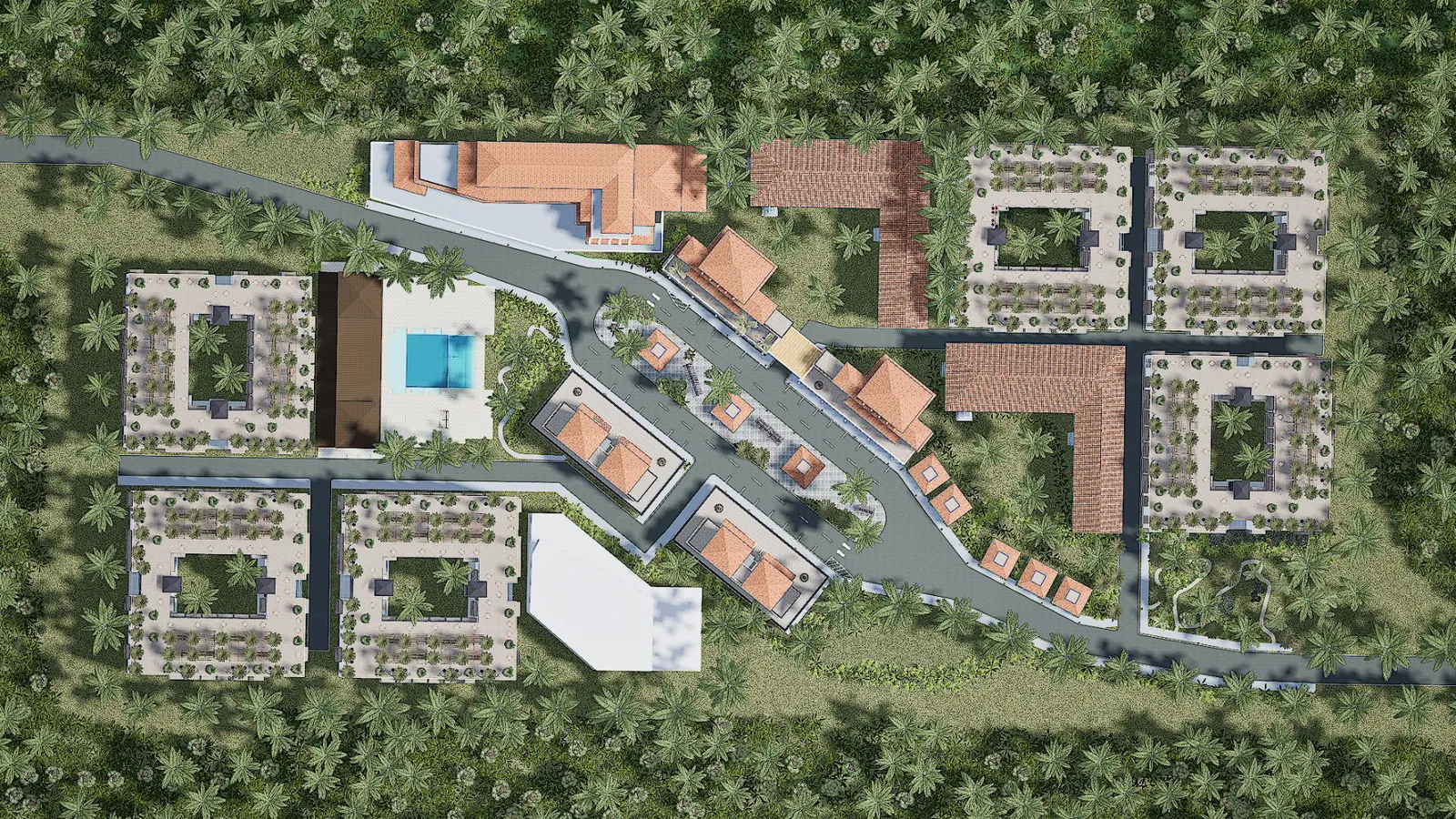
Guyana’s oil boom is changing more than the country’s production figures and government revenues. It is rapidly redrawing where people live, where developers are willing to invest and how far the boundaries of Georgetown’s metropolitan area is beginning to spread.
The clearest evidence is emerging along the East Coast of Demerara, where large private residential developments are being built in areas that have become increasingly attractive because of their proximity to Georgetown, the airport, commercial centres and the growing concentration of oil and energy businesses.
US-based developer Coastal Rim Properties Inc. is advancing two master-planned communities in Ogle and Diamond with a combined 1,218 residential units and an investment value exceeding US$500 million.
TAJ Dream Ogle, a planned 1,000-unit community, and TAJ Diamond, a 218-home project are among the largest private residential investments now taking shape in Guyana.
The Ogle development alone is planned to include more than 1,000 condominium units, a retail town square and a five-star hotel with a hospitality training institute. The first residential buildings and initial retail phase are targeted for completion in spring 2027.
At TAJ Diamond, construction has already moved into the vertical phase, with foundations, slabs, steel columns and beams being installed on the first houses.
The projects are significant not simply because of their size, but because of where investors are putting them.
TAJ Dream Ogle sits close to Ogle International Airport, ExxonMobil’s Guyana headquarters, major commercial centres and the wider East Coast corridor.
That geography reflects a broader shift in Guyana's housing market.
As the offshore petroleum industry has expanded, so too has the concentration of workers, businesses, expatriates, contractors and supporting industries around Georgetown and the East Coast.
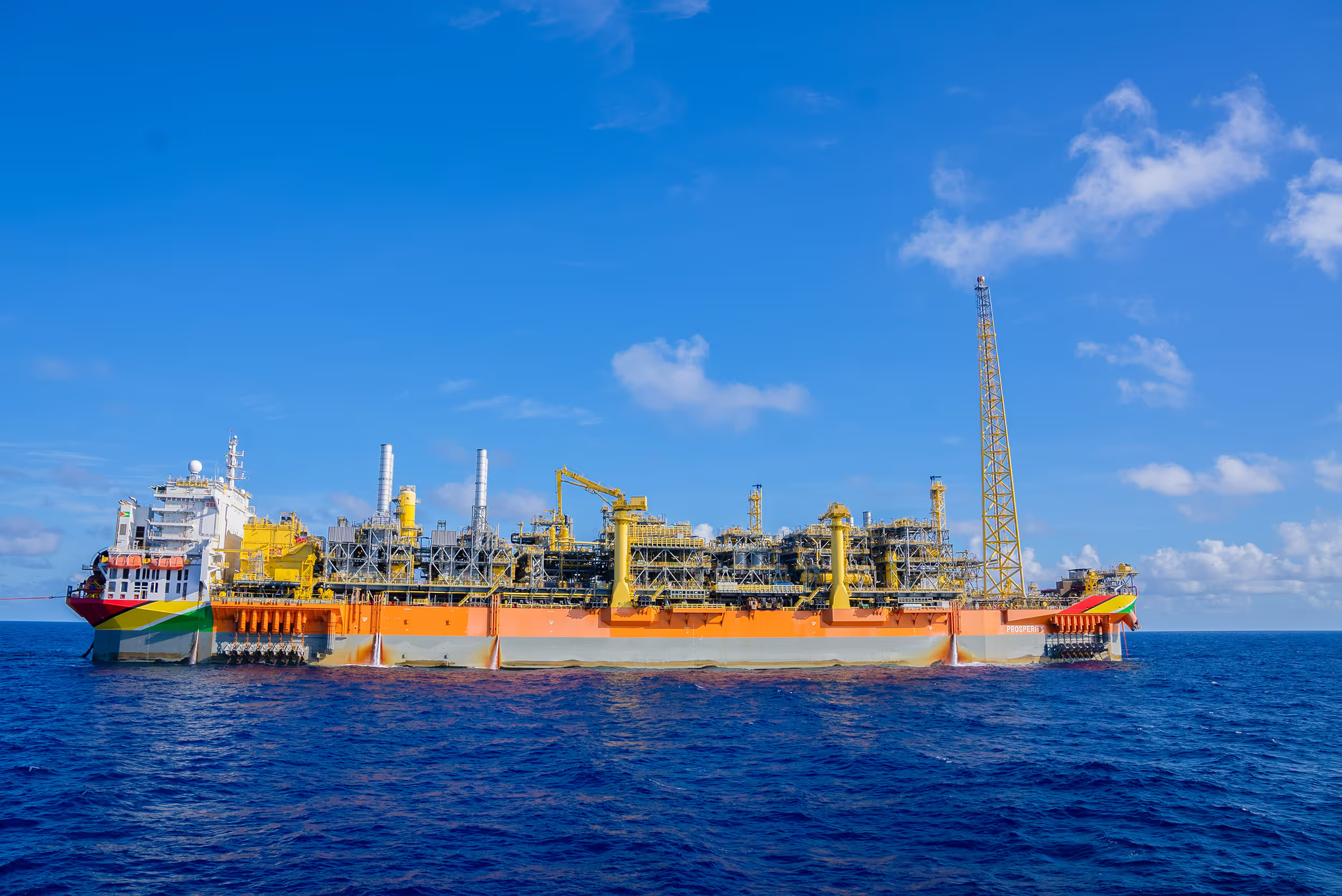
Guyana's oil production has risen from the start-up phase in 2019 to almost 900,000 barrels per day in 2026. Government data show production from the ExxonMobil-led consortium reached 895,000 barrels per day in May and 869,000 barrels per day in June.
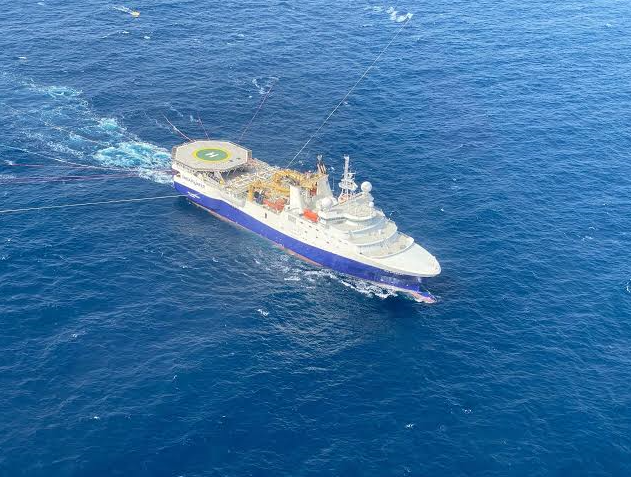
The fifth FPSO, Errea Wittu, is now in Guyana and is expected to begin production later this year, adding another 250,000 barrels per day of capacity.
That expansion has consequences on land.
More production requires more people offshore and onshore, more contractors, more logistics, more offices, more restaurants, more retail space and more accommodation.
The housing market is therefore being pulled by two forces at once: a rapidly expanding private economy and a population seeking to live close to the jobs and services that economy is generating.
And the demand is not being created solely by oil workers.
The new developments are being marketed to a much broader market that includes Guyanese families, professionals, diaspora investors and people seeking modern residential communities.
That distinction is important because it shows how the oil economy is beginning to produce second-order economic activity.
Oil companies may be producing offshore, but the demand they generate is being felt by architects, engineers, construction companies, banks, real-estate developers, retailers, landlords and a growing network of service providers.
The private sector is increasingly responding with projects designed around that new demand.
But the numbers from the public housing system show just how large the underlying need remains.
Region Four — which includes Georgetown and the rapidly developing East Coast and East Bank corridors — had 50,375 pending housing applications as of December 2025, according to the government.
By the end of April 2026, 1,569 lots had been allocated, reducing the revised backlog to 48,806 applications.
There were another 1,090 lots available for allocation, but President Irfaan Ali has acknowledged that even the land currently being acquired in Region Four would address only about half of the existing backlog by the end of 2027.
That is perhaps the most important number in the housing story.
Guyana is not dealing simply with a shortage of houses. It is dealing with a demand for urban and suburban space that is growing faster than the public housing programme can currently satisfy.
The government has responded with an enormous expansion of its housing programme.
The 2026 Budget allocated G$159.1 billion to housing, with plans to develop 15,000 house lots and construct 8,000 homes during the year.
The government has also set a target of constructing 40,000 new homes during its current term, while supplementary funding of G$17.5 billion was approved in July to accelerate housing infrastructure and related programmes.
The scale of the public investment is unprecedented.
But it is increasingly being matched — and in some areas complemented — by private capital.
That may be one of the more important changes taking place in Guyana's housing market.
For years, residential development was dominated by individual homeowners, small contractors and government housing schemes. Guyana is now seeing the emergence of large-scale, master-planned private communities with substantial foreign investment, professional development teams and infrastructure built around the concept of a complete neighbourhood rather than simply individual houses.
The transformation is particularly visible around Ogle, Providence, Diamond and other areas along the East Bank and East Coast corridors.
These areas are not officially “oil towns”.
But their development is difficult to separate from the economic expansion that oil has triggered.
The same proximity that makes Ogle attractive to a residential developer also makes it attractive to companies that need access to the airport, Georgetown, offshore logistics, commercial centres and the expanding network of oil-and-gas service providers.
And infrastructure investment is reinforcing that trend.
Government has been opening new land for development through major road projects, while housing schemes are being planned farther from the traditional Georgetown core because land within and immediately around the capital is increasingly constrained.
The result is the gradual formation of a wider metropolitan corridor.
Georgetown is no longer the only centre of economic activity. Ogle, Providence, Diamond and other communities along the East Bank and East Coast are increasingly becoming residential and commercial extensions of the capital.



.png)
.jpg.jpeg)