

















Guyana’s offshore gas is being brought ashore to help solve one of the country’s biggest economic problems, but the value of the gas could extend well beyond cheaper electricity.
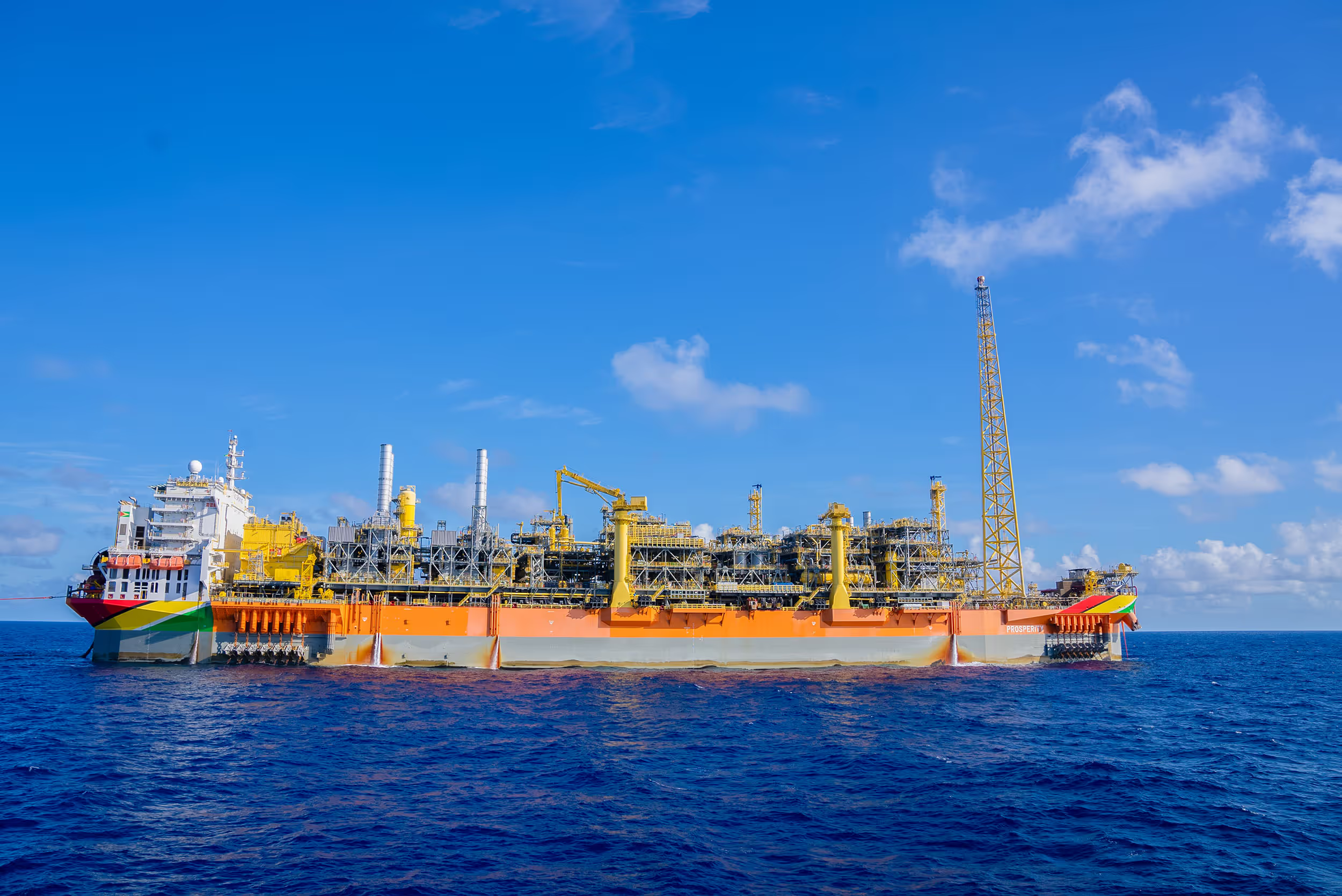
The 300-megawatt Gas-to-Energy project at Wales is being built around the use of natural gas from ExxonMobil’s Liza field to generate electricity and produce natural gas liquids.
The first turbine is now expected to undergo initial firing and testing in December, with the first unit designed to add about 57 megawatts to the national grid. The full project consists of four gas turbines and two steam turbines, with combined generation capacity of 300 megawatts.
But electricity is only one part of the equation.
The project includes an integrated Natural Gas Liquids facility that will separate components of the gas stream into commercially valuable products.
Government estimates that the two phases of Gas-to-Energy will eventually use about 120 million cubic feet of natural gas per day. Alongside electricity, the project is expected to produce nearly 10,000 barrels per day of NGLs, including products such as propane and butane.
Those products give Guyana another possible economic use for its gas.
Propane and butane can be used in LPG. Other components of the NGL stream can serve as feedstock for industrial activity.
That is where the Wales Development Zone becomes important.
Government has identified the area as a potential industrial and manufacturing hub, with plans and proposals involving fertiliser, data centres, agro-processing and light manufacturing.
The government's objective is to cut electricity costs by 50 per cent. The project is also intended to reduce Guyana's dependence on imported heavy fuel oil, which has exposed the country to international fuel-price movements and supply disruptions.
But the bigger test will be what happens after the power plant starts operating.
A gas resource does not automatically create a gas industry.
Guyana would still need companies willing to invest in fertiliser, petrochemicals, LPG distribution, manufacturing and other downstream activities.
Those businesses need competitive prices, infrastructure, skilled workers, financing and markets.
That is why the gas project is more significant than the 300-megawatt headline suggests.
Guyana is effectively trying to create a chain.
There is also a second phase.
Government's 2026 Budget says Phase Two is expected to add another 300 megawatts and another NGL facility, with the wider objective of supporting downstream industries such as fertiliser and glass manufacturing.
That would take the project beyond an electricity-generation programme and closer to the foundation of a domestic gas-based industrial sector.



.png)