
















ExxonMobil expects its free cash flow from Guyana to more than double between 2025 and 2030, even as its entitlement to oil from the Stabroek Block falls by approximately 100,000 barrels per day following the recovery of more than US$55 billion in investment and costs.
ExxonMobil Senior Vice President and Chief Financial Officer Neil Hansen made the disclosure during a fireside chat at the Barclays 40th Annual Energy and Power Conference, describing the change as an inflection point for the company’s Guyana business.
“What that means going forward, obviously, is slightly lower entitled volumes. I think we said 100,000 barrels a day starting in the third quarter,” Hansen said.
“But more importantly, what it means is double the amount of free cash flow between 2025 and 2030. So, really, this is about value, it’s not about volume.”
The approximately 100,000-bpd reduction refers to ExxonMobil’s entitlement to production, rather than a reduction in the amount of oil being produced offshore Guyana.
Exxon had already disclosed in July that the co-venturers had recovered more than US$55 billion invested in exploration and development since 2014. The company said faster project delivery, higher production and strong reliability accelerated investment recovery by approximately two years compared with its original investment basis at constant prices.
Exxon also said that stronger performance relative to its investment basis generated more than US$13 billion in incremental revenue and cost savings.
Once the major investment costs have been recovered, a larger portion of production and cash flow is allocated to Guyana, while the contractor group’s entitlement volumes decline.
Guyana’s government has said the change has already increased the country’s share of production to approximately 39.8 barrels out of every 100 barrels produced, before considering the separate two per cent royalty.
The Natural Resources Ministry subsequently clarified that the 39.8 per cent figure should not be described as Guyana’s profit share. Under the 2016 Production Sharing Agreement, profit oil continues to be split 50-50 between Guyana and the contractors. The 39.8 per cent figure represents Guyana’s share of total production after the portion allocated to cost recovery is taken into account.
Hansen said the accelerated recovery of Exxon’s investment was not unexpected in principle, but occurred roughly two years earlier than the company had anticipated, even after adjusting for oil-price effects.
He attributed the faster recovery to the execution of the projects and the performance of the existing floating production, storage and offloading vessels.
“That is a reflection of, I think, the execution of the projects. It’s a reflection of operations and being able to run the existing FPSOs really well,” Hansen said.
The company’s July disclosures provide further context. Exxon said the Guyana FPSOs have been delivered on tight schedules and at industry-leading costs, while operating performance has remained strong. It said the assets have been running at above 98 per cent reliability and production has been above the original investment basis.
The change in entitlement therefore comes as Guyana’s offshore production continues to expand.
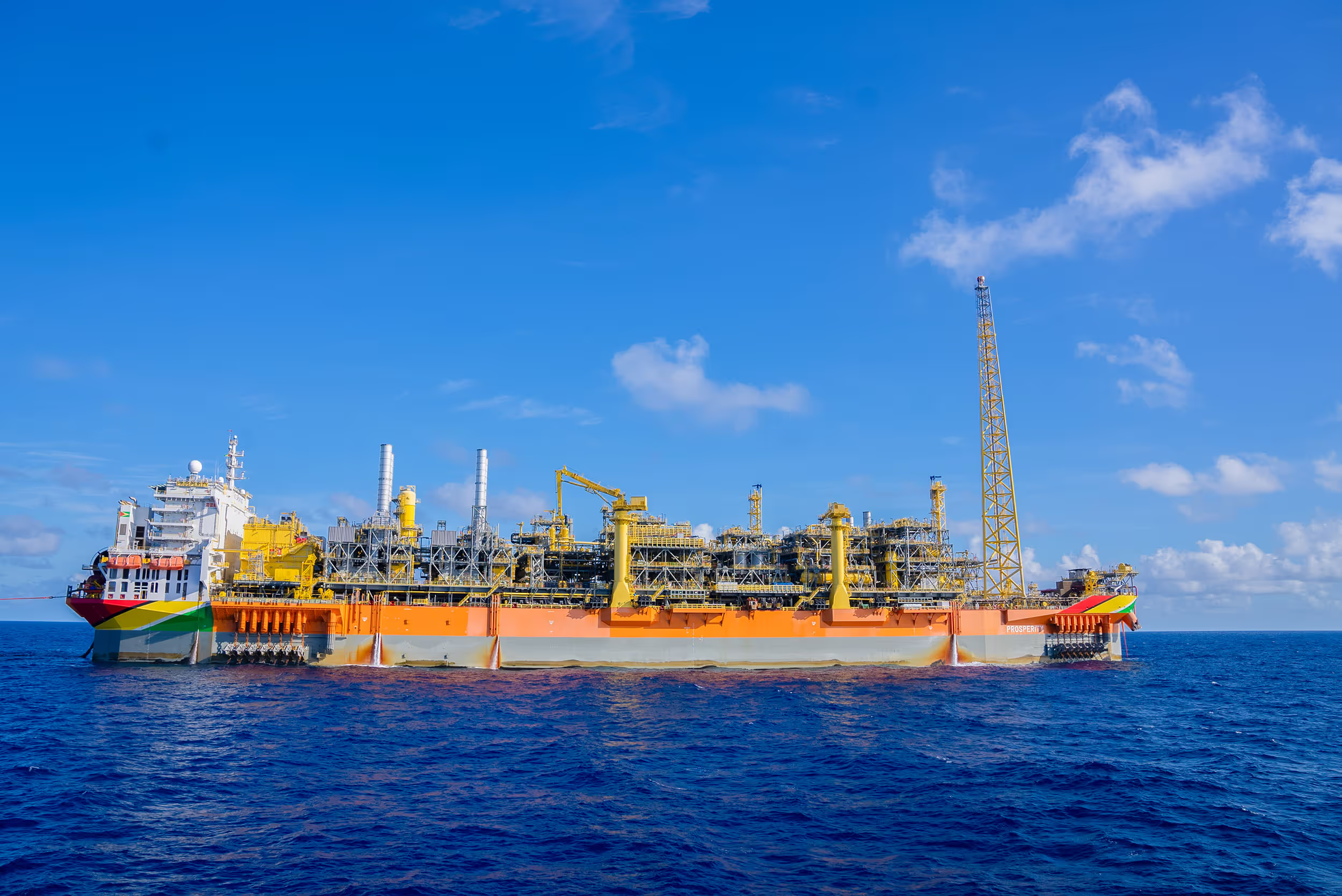
Exxon said in July that Guyana was producing approximately 900,000 barrels per day gross during the second quarter, while its fifth FPSO, Errea Wittu, had sailed for Guyana and remained on track for start-up by the end of 2026. The company has also said it is evaluating a ninth FPSO.
Hansen told the Barclays conference that the fifth FPSO was already in Guyana’s waters and progressing, while Exxon was “looking at advancing the ninth FPSO.”
He said the company’s Guyana business had therefore reached a point where the reduction in Exxon’s entitlement should be viewed alongside the increase in cash flow generated from the asset.
“This is about value, it’s not about volume,” Hansen said.
Exxon’s July disclosure similarly stated that it expected Guyana free cash flow attributable to ExxonMobil to more than double between 2025 and 2030 at constant prices. The company said the increase would be supported by additional developments, continued strong reliability and rising gross production capacity.
The company has also said the 2030 production outlook remains unchanged despite the change in entitlement.



.png)