

















There are few sights that capture the contradictions of modern Guyana quite like a horse-drawn cart moving slowly along a road as SUVs, minibuses, trucks and even the latest imported electric vehicle rush past.
Guyana is building highways, bridges, ports and oil infrastructure at a pace that would have been difficult to imagine a generation ago. The country is becoming wealthier, faster and more technologically connected.
And yet, on those same roads, horses are still pulling carts loaded with scrap metal, wood, garbage, furniture and other goods.
To some, it is an embarrassment, a relic of another era that has no place in a rapidly modernising economy.
To others, it is something much more complicated, a cheap mode of transportation, a source of income, a part of Guyana's history and, for some families, the difference between earning a living and going without.
The horse cart is therefore not simply a question about animals.
It is a question about poverty, opportunity, tradition, transportation and what happens when a developing country modernises faster than some of its people can afford to.
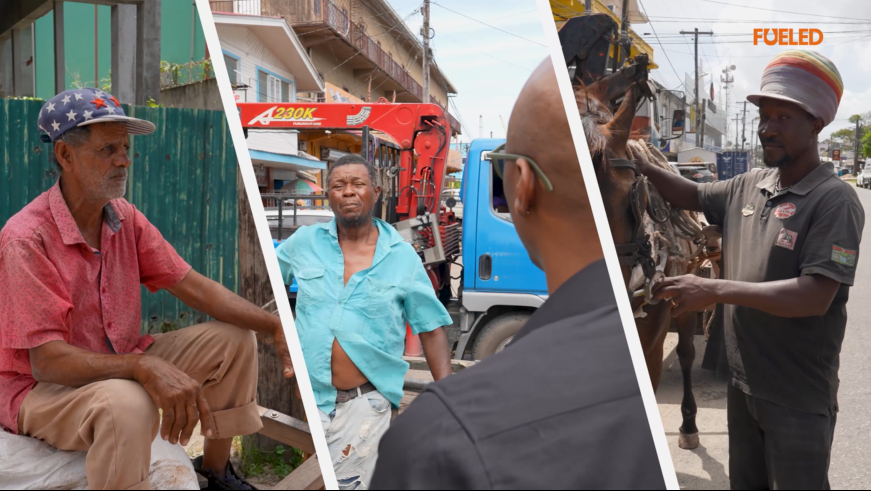
For coachmen such as Neil Valet and Ramesh Singh, the horse cart is not a hobby.
It is work.
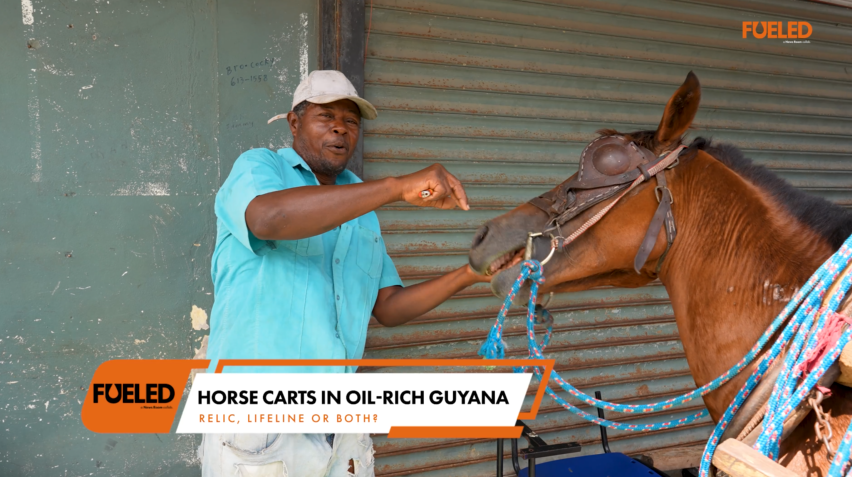
Valet, 59, says he has spent decades doing the job. His argument is that people use horse carts because they are affordable, and he uses one because it is what he can realistically afford.
A truck costs more. Fuel costs money. Maintenance costs money. Licensing and other expenses add up.
For a customer who simply needs a load moved from one place to another, a horse cart can offer a cheaper alternative.
And that matters in a country where not everyone has benefited equally from economic growth.
Singh’s own circumstances underline the point. He says he has limited options for other forms of employment and cannot simply go out and buy a truck to replace his horse.
“If they pull it off now, at my age now, I going back into factory? But I can't work,” is the reality behind the argument.
Remove the horse cart without creating an alternative, he suggests, and the problem does not disappear.
It simply moves from the road to the household.
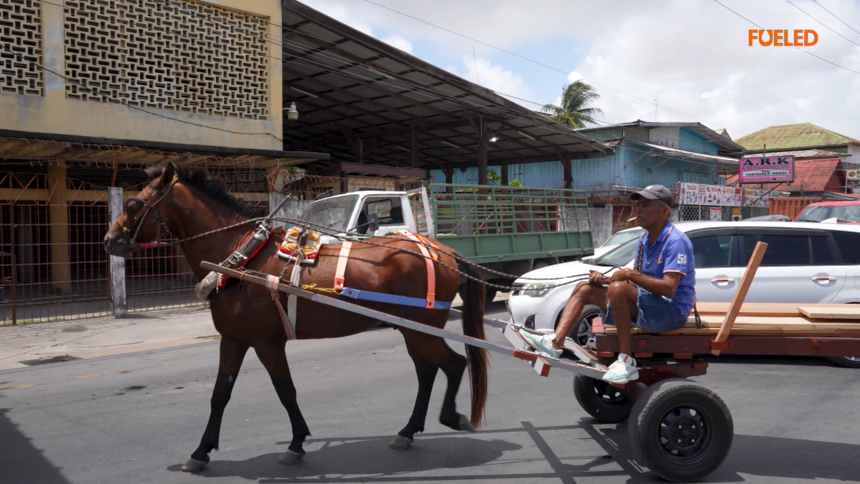
Horse-drawn carts are deeply woven into Guyana's history.
Long before modern trucks and pickups became commonplace, animal power was fundamental to moving people and goods. Carts and wagons helped transport agricultural produce, construction materials and other goods, connecting communities before today's road network existed.
The coachmen interviewed for this story speak of a time when Georgetown's transportation system looked dramatically different—when boats, steamers, carts, animals and human labour were essential to getting goods from one place to another.
The horse cart belongs to that Guyana.
It survived colonialism, independence, changing transportation systems and the arrival of motor vehicles.
And it survived because it remained useful.
That is perhaps the uncomfortable part of the debate.
Guyana did not keep horse carts simply because people were nostalgic.
It kept them because they continued to solve an economic problem.
Singh argues that the practice has also become part of Guyana's cultural identity. He points to visitors who are interested in seeing horse carts and experiencing something that has existed here for generations.
There is even a tourism dimension.
For a country attempting to sell its history and culture to visitors, the horse cart can simultaneously be viewed as a living piece of heritage—or as evidence of poverty and underdevelopment.
Which one it becomes depends largely on how Guyana chooses to manage it.
But the horse does not get a vote
This is where the argument becomes considerably more difficult.
The coachmen can explain why they need the carts.
The horses cannot explain what they endure.
Veterinarian Anurama Ramgobin says the welfare concerns are real.
He describes seeing working horses with untreated hoof injuries and horses being beaten to pull excessive loads. He also questions whether animals receive adequate water and shade while working in Guyana's tropical heat.
Another uncomfortable reality is having a weight limit on paper means little if there is inadequate enforcement.
A horse does not know the legal maximum load.
It only knows the weight being placed behind it.
And when economic desperation meets an animal that cannot complain, welfare can become an afterthought.
This is the strongest argument against simply romanticising the horse cart as Guyanese heritage.
Tradition does not automatically make a practice humane.
Poverty does not give humans unlimited rights over animals.
And economic necessity cannot be allowed to become an excuse for cruelty.
So should Guyana ban them?
That sounds simple.
It isn't.
Ramgobin himself argues against simply removing the horses from the roads without providing alternatives.
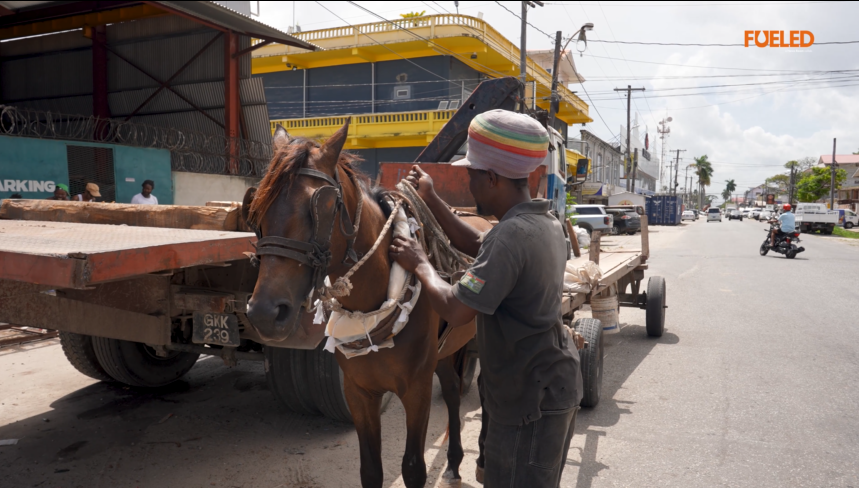
If Guyana decides tomorrow that horse carts are no longer permitted, what happens to the people who depend on them?
Do they receive grants to purchase small trucks?
Can they access affordable financing?
Are they trained and licensed to operate alternative vehicles?
What happens to older coachmen who cannot realistically enter another industry?
And who absorbs the additional transportation costs for low-income families who currently depend on horse carts because they are cheap?
A ban without a transition plan could turn an animal-welfare policy into a poverty policy.
But allowing the status quo to continue indefinitely is not necessarily acceptable either.
There has to be another way.
The uncomfortable middle ground
Perhaps the real question is not whether horse carts should exist.
It is whether Guyana is prepared to make them safer for people and better for horses while creating a realistic path toward alternatives.
That could mean stronger enforcement of existing animal-welfare and load requirements.
It could mean mandatory access to water, shade and proper rest periods.
It could mean regular veterinary and hoof-care inspections.
It could mean penalties for beating animals or forcing them to pull excessive loads.
It could also mean creating a transition programme for coachmen who want to move from horse carts to small motorised vehicles.
Government could explore low-interest financing, trade-in programmes or grants that allow owners to gradually replace horse carts with small trucks or other appropriate forms of transport.
And perhaps the most important reform is recognising that the people in this industry should be part of the conversation.
Because if modernization means simply telling poor people that their way of earning a living is no longer acceptable, without giving them another way to survive, then modernization becomes exclusion.
The horse cart is a mirror
There is something almost poetic about the horse cart surviving in the middle of Guyana's transformation.
The country is talking about billions of dollars in oil revenues, world-class infrastructure, new industries and a future built around modern energy and technology.
But alongside that future are people still trying to make a living with a horse, a cart and a day's work.
That contrast should make us uncomfortable.
Not because the coachmen should be ashamed of what they do.
And not because the horses should be sacrificed for the sake of appearing modern.
It should make us uncomfortable because both realities exist at the same time.
The horse cart represents a Guyana that was built largely through manual labour, agriculture, animals and basic transportation.
It also represents a segment of today's Guyana that cannot yet afford to leave that world behind.
So perhaps the question is not:
“Do horse carts belong in modern Guyana?”
The harder question is:
“What does a modern Guyana owe to the people who still depend on them—and what does it owe to the animals pulling them?”
If Guyana wants to modernise responsibly, it cannot simply make the horse cart disappear.
It has to make sure the people behind the cart are not left behind with it.
And it has to ensure that the horse is no longer treated as merely another piece of equipment.
Because if the country is wealthy enough to build billion-dollar infrastructure, it should eventually be wealthy enough to find a humane alternative to making an animal carry the burden of poverty.



.png)
.jpg.jpeg)