

















Guyana’s ambition to become a regional natural gas exporter is facing a potential setback, with ExxonMobil indicating that more offshore gas than previously expected may be needed to sustain oil production, potentially leaving less available for liquefied natural gas exports.
Reuters reported on Tuesday that Guyanese officials are weighing whether to scale down a proposed floating LNG project or abandon gas exports altogether in favour of using available supplies for domestic electricity generation and industrial development. The report, citing people familiar with the discussions, said no final government decision has been made.
The ExxonMobil-led consortium estimates that it will require approximately 2 billion cubic feet of gas per day for reinjection into oilfields to meet production targets at its government-approved projects, according to the sources cited by Reuters.
Gas reinjection involves returning gas to an oil reservoir to help maintain pressure and support crude production. The gas used for that purpose cannot simultaneously be supplied to an LNG export facility or a domestic power plant.
The projected requirement could therefore constrain the volume available for other uses, including a floating LNG facility proposed by US developer Fulcrum LNG, which Guyana selected in 2024 to develop and operate gas infrastructure.
The project was initially planned with capacity of six million metric tonnes of LNG annually. Reuters reported that it could instead begin at up to three million tonnes annually and expand later, although the final scale and timing remain uncertain.
ExxonMobil has been assessing how much gas its fields can produce and supply, as well as the associated costs and timelines. Natural Resources Minister Vickram Bharrat had previously told Reuters that the government was seeking greater clarity from the company on available gas supplies. He declined to comment on the status of the discussions this week.
An ExxonMobil spokesperson told Reuters that the company was working with the Guyana Government on development plans intended to maximise resource recovery and value to the country. The spokesperson also said gas development requires supply and demand to be developed simultaneously.
Fulcrum LNG did not respond to Reuters’ request for comment.
The uncertainty comes as Guyana seeks to turn its natural gas resources into a source of cheaper electricity and a platform for new industries.
The government has prioritised its Gas-to-Energy project at Wales, West Bank Demerara, which is intended to use offshore gas to generate electricity and produce natural gas liquids. The project is expected to reduce dependence on fuel-based power generation, lower energy costs and improve competitiveness, according to the International Monetary Fund’s latest assessment of Guyana.
The government has also pursued a wider vision for gas-based development, including potential fertiliser production, petrochemicals and LNG exports. However, if the volume available for new projects is lower than expected, authorities may have to decide which uses should take priority.
Reuters reported that other proposed industrial developments, including a bauxite-to-alumina refinery, fertiliser production and large data centres, could be delayed while the government focuses on getting the gas-fired power plant operating.
That would create a difficult policy choice. Domestic power generation could help address Guyana’s electricity costs and support industrial activity, while LNG exports could provide an additional route to monetising the country’s gas reserves. Both ambitions depend on the availability, cost and timing of reliable gas supplies.
The issue is not simply how much gas Guyana has underground. It is how much can be produced at commercially viable rates, how much must be reinjected to support oil production, and how much remains available for other projects.
Guyana’s oil and gas development is expanding rapidly. The Exxon-led consortium is pursuing additional offshore projects, including Longtail and Haimara, which are expected to develop non-associated gas and condensate rather than relying solely on gas produced alongside oil.
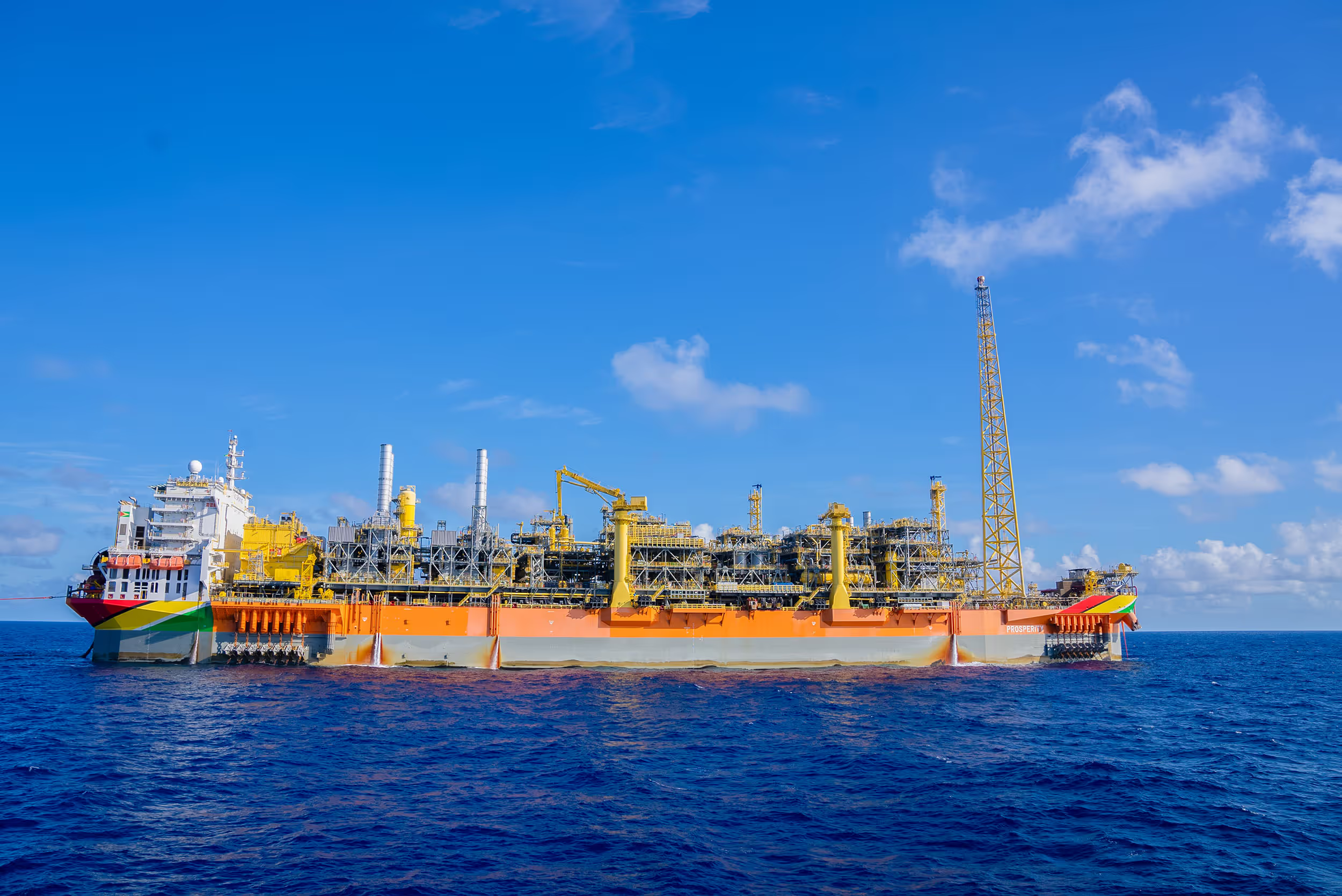
Reuters reported that Exxon’s fifth floating production facility arrived in Guyana in August and was expected to begin operations before the end of 2026. The consortium had also applied for government approval for the Haimara development, its ninth proposed project in the country.
The development of new gas-focused fields could eventually improve the supply picture. But the immediate question remains whether the consortium can provide sufficient volumes, at an acceptable cost and on a workable schedule, to support the government’s plans.
For Guyana, that information is critical before major decisions are made on LNG infrastructure and other gas-dependent industries.
The government has not announced a final decision to abandon exports or reduce the proposed LNG facility. For now, the options remain under consideration as ExxonMobil continues its assessments.
The outcome will help determine whether Guyana’s gas strategy can accommodate oil production, domestic electricity and export ambitions at the same time—or whether some of those plans will have to wait.



.png)