
















Guyana is increasingly being grouped with Brazil as one of the major deepwater oil markets shaping the future of Latin America's offshore industry.
The latest assessment comes from MODEC, which says Latin America remains one of the strongest regions globally for deepwater and ultra-deepwater floating production projects.
In its latest investor presentation, MODEC identified Latin America, West Africa and Southeast Asia as the leading regions in the global FPSO pipeline.
The company specifically identified Guyana and Brazil as key regions for deepwater and ultra-deepwater developments.
The contrast between the two countries is striking.
Brazil has decades of experience developing offshore oil fields, particularly in the deepwater and ultra-deepwater pre-salt region.
Guyana, by comparison, only became an oil-producing nation in 2019.
Yet in just a few years, Guyana has moved into the ranks of the world's fastest-growing offshore oil producers.
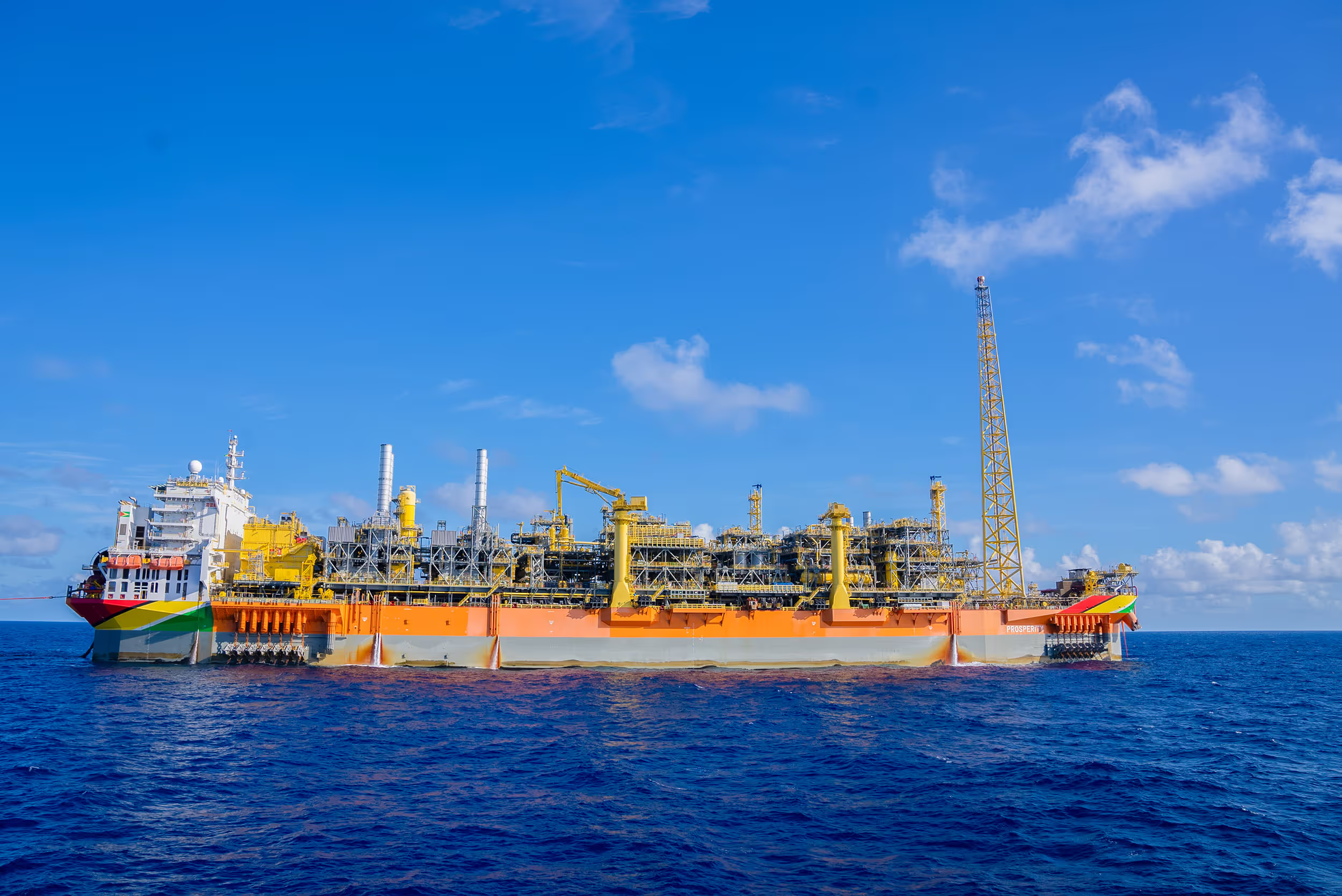
ExxonMobil's first production from Liza Phase One began in December 2019. Since then, additional FPSOs have been deployed on the Stabroek Block.
The company says production reached approximately 900,000 barrels per day following Yellowtail's ramp-up, while production capacity from eight developments is expected to reach 1.7 million barrels per day by 2030.
MODEC is positioned directly within that expansion.
The company's current Guyana work includes Uaru and Hammerhead.
The Uaru FPSO, Errea Wittu, is designed for approximately 250,000 barrels per day. Hammerhead's FPSO is designed for approximately 150,000 barrels per day.
MODEC's broader financial performance also demonstrates the scale of the offshore market it is positioning itself to serve.
The company's first-half 2026 revenue reached US$2.447 billion, an 18% increase over the first half of 2025, while its backlog stood at US$25 billion.
The company says its global FPSO pipeline remains strong, particularly in deepwater and ultra-deepwater regions.
For Guyana, that means the country is not developing its offshore sector in isolation.
It is part of a wider global investment race for deepwater resources, with Guyana increasingly competing for engineering capacity, specialised vessels, contractors and technical expertise alongside established offshore producers such as Brazil.



.png)
.jpg.jpeg)