















ExxonMobil is relying on a repeatable development model to accelerate Guyana’s offshore oil projects, using lessons, engineering approaches and design elements from one FPSO development to help deliver the next.
The strategy, described by Exxon as “design one, build many”, has become a central feature of the company’s approach to the Stabroek Block and is being used to deliver successive large-scale developments at a pace Exxon describes as industry-leading.
The results are already visible.
Guyana moved from first oil in December 2019 to four producing FPSOs by 2025. The fourth, ONE GUYANA, started production at Yellowtail in August 2025, four months ahead of schedule, taking installed production capacity on the block to more than 900,000 barrels per day.
The fifth and sixth developments—Uaru and Whiptail—are expected to bring two more FPSOs into operation in 2026 and 2027 respectively, each designed for approximately 250,000 barrels per day.
The basic idea is rather than approaching every offshore development as a completely new engineering exercise, Exxon can carry forward experience from previous projects.
That does not mean the FPSOs are identical or that every component is simply copied from one vessel to the next.
Instead, the company can reuse proven engineering concepts and incorporate lessons from earlier projects into subsequent developments.
Exxon says its Guyana projects demonstrate how the approach can deliver large-scale developments with greater efficiency. Its 2026 climate report specifically identifies the “design one, build many” model as a factor in the company's delivery of its fourth deepwater development in Guyana.
The effect is cumulative: each completed project gives engineers, contractors, suppliers and operators another set of lessons that can be applied to the next.
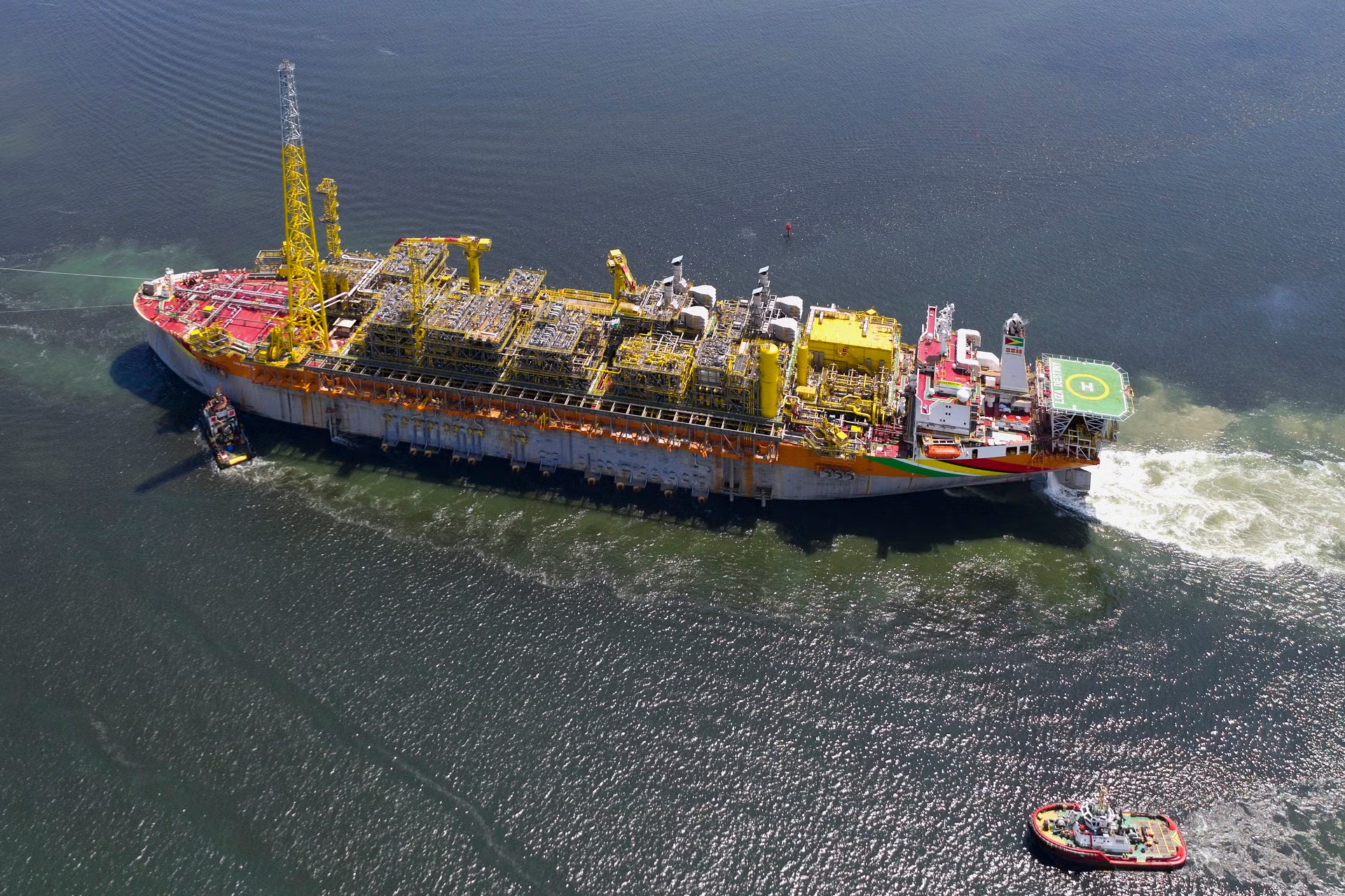
The sequence began with Liza Destiny, which started producing in December 2019.
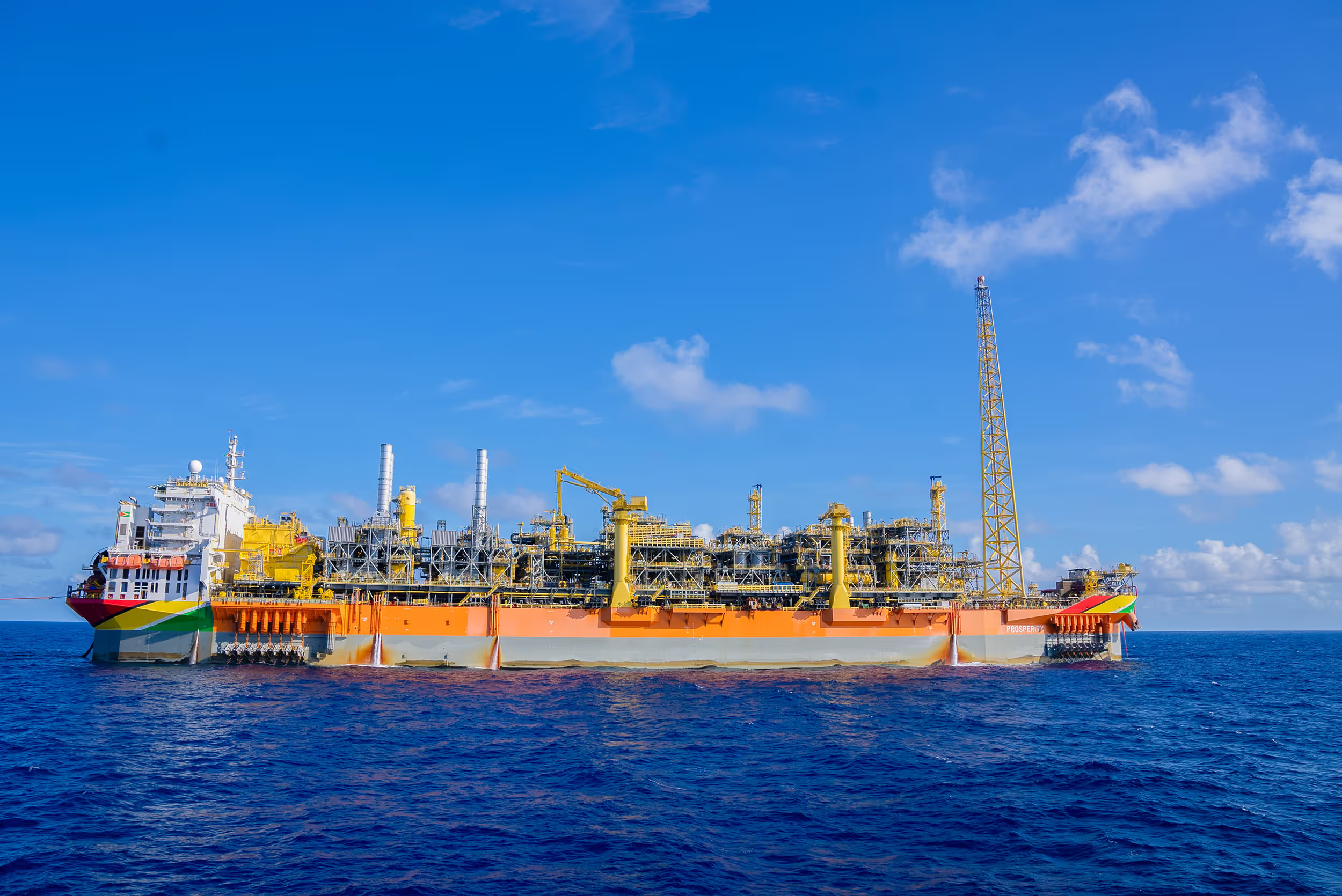
Liza Unity followed in 2022, with the Prosperity FPSO starting production in November 2023.
The fourth development, Yellowtail, brought ONE GUYANA into operation in 2025. ONE GUYANA has an initial production capacity of about 250,000 barrels per day and storage capacity of approximately two million barrels.
Exxon has repeatedly pointed to the pace of that sequence as evidence of the model's effectiveness.
The company said Yellowtail was delivered four months ahead of schedule and under budget, while describing its first four Guyana developments as having been started up under budget and ahead of schedule.
Deepwater projects involve thousands of engineering, procurement, construction and installation decisions.
Repeating proven approaches can reduce the amount of work required to solve problems that have already been encountered on earlier projects.
It can also give contractors and suppliers greater familiarity with equipment, systems and installation requirements.
For Exxon, the objective is not simply to build another FPSO. It is to create a development process that becomes more efficient with every project.
The approach is now being applied to the next phase of Stabroek Block development.
Uaru, Guyana's fifth offshore development, is being developed with the Errea Wittu FPSO and has a targeted production capacity of about 250,000 barrels per day.
Whiptail, the sixth project, is expected to add another approximately 250,000 barrels per day by the end of 2027.
Beyond those projects, Hammerhead has received approval as the seventh Stabroek Block development. It is designed for approximately 150,000 barrels per day and is expected to start production in 2029.
Exxon has also been advancing Longtail, although that project has been subject to regulatory review.
The company's current development plans therefore create a pipeline in which experience from each project can potentially feed directly into the next.
The significance of the model goes beyond engineering.
For a producing country, bringing an offshore development online earlier means production begins sooner. That can translate into earlier royalty and profit-oil revenues for Guyana, while giving the companies earlier access to cash flow from their investments.
Exxon has also said the first four Guyana FPSOs are exceeding their original investment expectations, while reporting high operational reliability. That performance is important because a development that is delivered quickly but operates poorly would undermine the economics of the entire model.
The company has instead positioned Guyana as a demonstration of how standardized development can combine speed, cost discipline and operational performance.



.png)
.jpg.jpeg)