

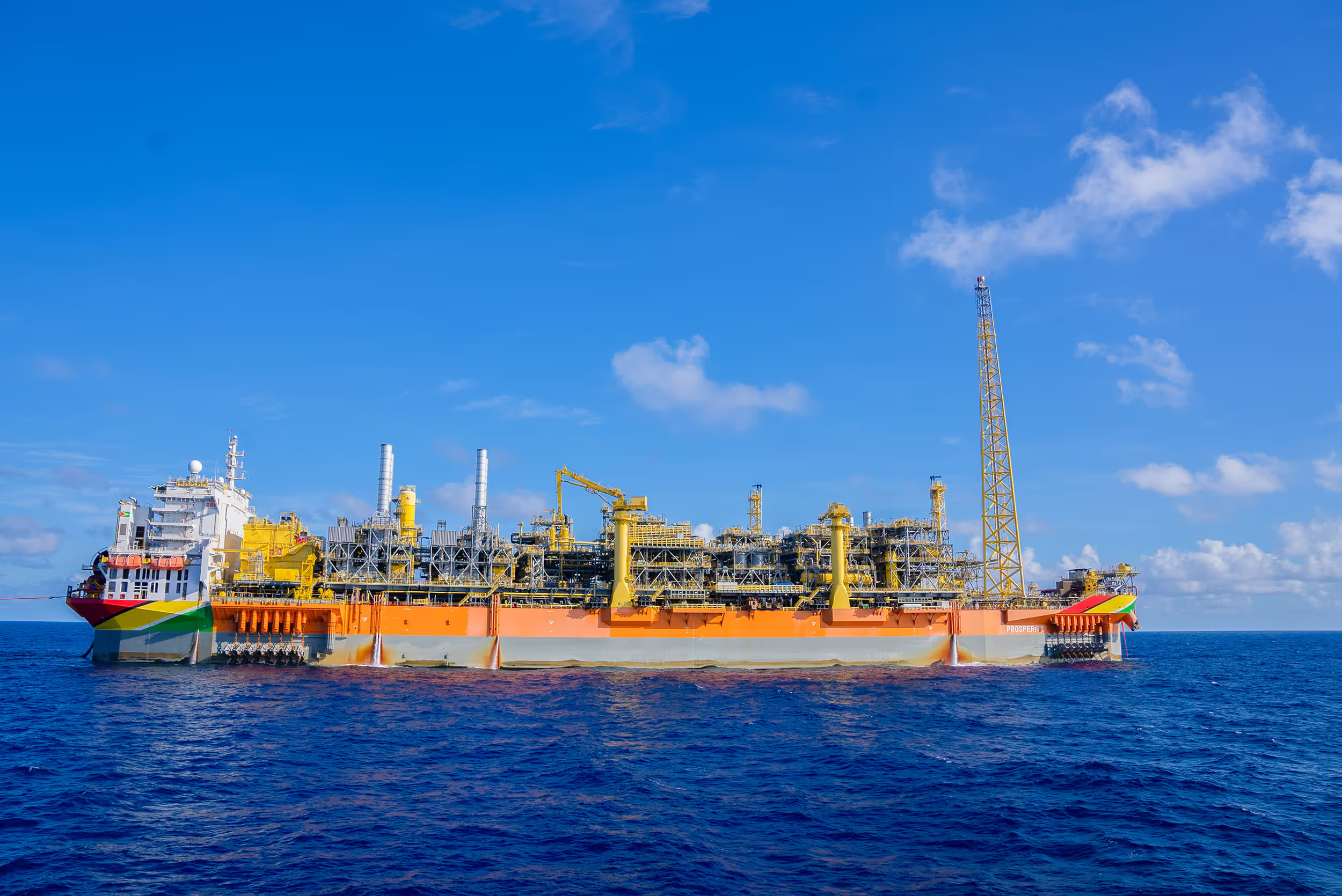















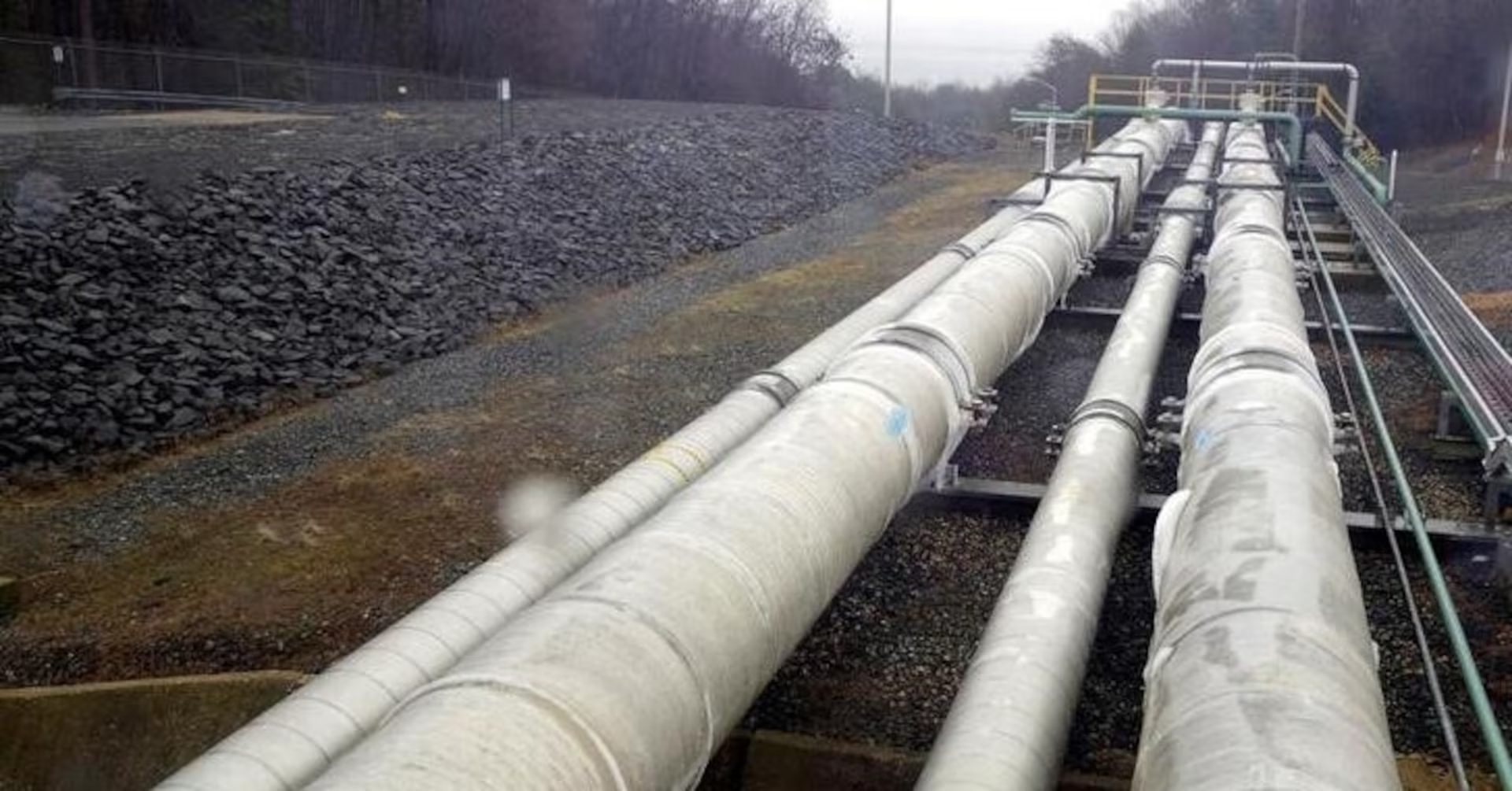
With Guyanese anticipating cheaper electricity and the government targeting December for the startup of its first gas turbine at Wales, ExxonMobil Guyana has disclosed that it permanently replaced more than 200 metres of the Gas-to-Energy pipeline following the discovery of a nitrogen leak earlier this year.
The cause of the leak remains unknown, and sections of the removed pipeline are being sent to laboratories in the United States for further examination.
ExxonMobil Guyana President Alistair Routledge made the disclosures on Tuesday during a press conference at the company's headquarters at Ogle, East Coast Demerara.
He revealed that the inspection and repair activities have already cost several million US dollars, requiring the mobilisation of specialised equipment, contractors and vessels.
Earlier this year, Exxon discovered what it initially described as an anomaly along the pipeline. Following preliminary inspections, a clamp was installed to maintain the integrity of the affected section.
In recent weeks, however, the company returned with additional equipment and replacement pipe to undertake a permanent repair.
“We took out just over 200 metres worth of pipe,” Routledge said, explaining that the removed section included both the affected area and additional material needed for laboratory analysis.
The replacement pipe was manufactured to the same specifications and welded into place.
Pressed on the nature of the anomaly, Routledge confirmed that nitrogen had leaked from the pipeline.
“There was a leak of nitrogen from the pipe,” he said, explaining that the substance posed no danger to people or the environment.
However, he acknowledged that the same condition would be unacceptable once natural gas is introduced.
The pipeline has not yet entered commercial service and remains filled with inert nitrogen. Consequently, Exxon said there were no production or revenue losses arising from the incident.
The investigation is now focused on determining why the leak occurred and ensuring that similar problems do not arise during the operational life of the pipeline.
December startup
Despite completing the physical replacement, ExxonMobil is not yet giving an unequivocal assurance that all outstanding inspection and analytical work will be completed in time for the government's December startup target.
“Until we've completed all the analysis of the data we've been collecting and the samples that we've taken from the pipeline, we won't have full assurance on that,” Routledge said.
He confirmed that additional inspection work is planned along the pipeline.
Asked directly whether those activities would be completed in time for December, Routledge said Exxon was coordinating its operations with the government but deferred to the authorities to provide an update on the overall project timeline.
“What I can assure you is we are confident that we will deliver a pipeline that is safe to operate for the long term,” he said.
Exxon is working with the government and the various companies responsible for the construction, operation and commissioning of the power plant and natural gas liquids facility, as well as GPL, which will distribute the electricity.
Routledge said the inspection and repair expenditure is being tracked and reported to the government.
Although he characterised the activities as part of normal infrastructure inspection and maintenance, he explained that because the pipeline has not yet entered service, the expenditure flows into capital costs from an accounting standpoint.
Among the contractors involved was Van Oord, alongside a specialised inspection company.
The exact cost of the intervention and the quantity of nitrogen that escaped were not disclosed.