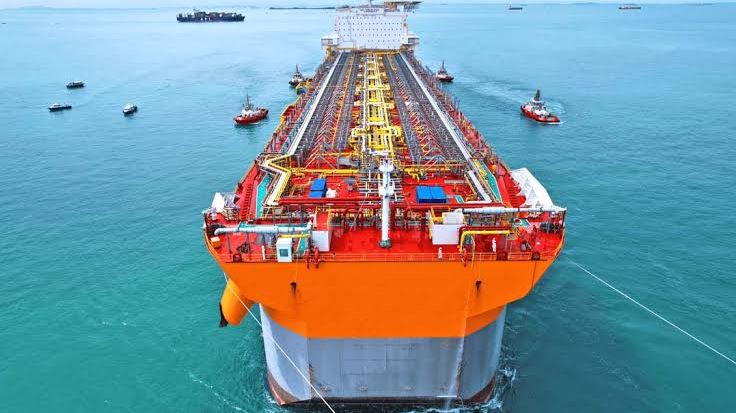


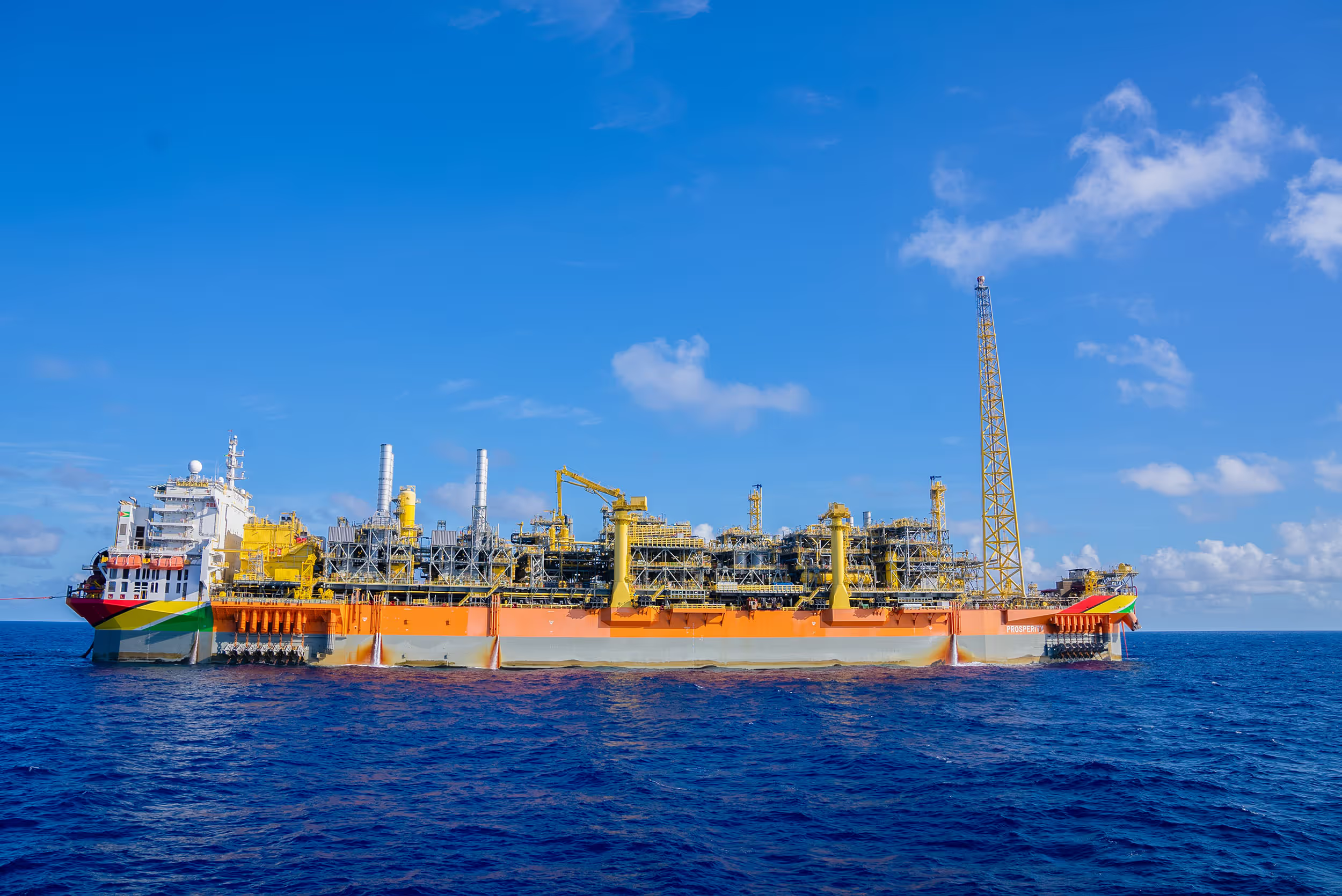











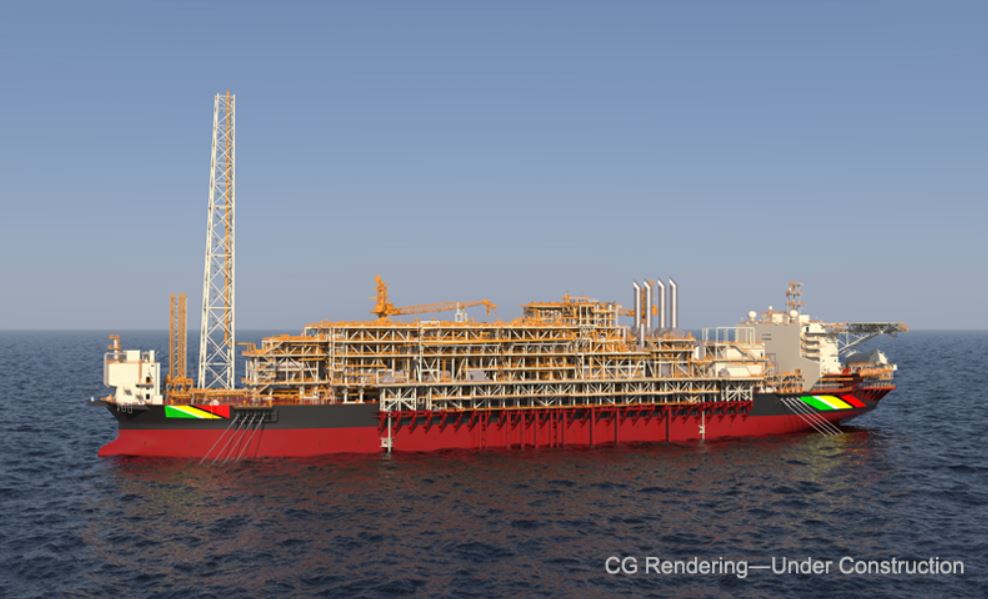
Construction of the Essequibo 1899, the floating production, storage and offloading (FPSO) vessel being built for ExxonMobil Guyana’s Hammerhead development, progressed into its second year during the third quarter of 2026, according to Japanese company MODEC.
In its third-quarter investor presentation, MODEC identified Hammerhead as an active engineering, procurement, construction and installation (EPCI) project. ExxonMobil awarded the company the full EPCI contract in September 2025, following an earlier agreement for design work.
The vessel is expected to have an initial production capacity of 150,000 barrels of oil per day, with first oil targeted for 2029.
Beyond construction, MODEC is also expected to provide operations and maintenance services for the FPSO under a 10-year contract beginning when production starts.
That longer-term arrangement means MODEC's involvement will extend beyond delivering the vessel, with continued responsibility for operational support and maintenance throughout the contract period.
The arrangement could also create opportunities for Guyanese companies and workers in areas such as engineering, equipment supply, maintenance, marine services and other technical support. However, MODEC's presentation does not detail the specific services to be provided under the contract or indicate where the maintenance work will be performed.
It also does not disclose how many Guyanese companies have secured contracts for the construction phase, the value of work awarded to local businesses or the number of Guyanese employed directly or through subcontractors.
Those details would help establish how much of the project's economic activity is reaching local businesses and workers, and whether Guyanese companies will be positioned to participate in the longer-term maintenance phase.
MODEC's presentation also identifies Uaru as another ExxonMobil project in its portfolio, with a 10-year operations and maintenance term.
The Essequibo 1899 therefore represents more than another FPSO being built for Guyana's offshore industry. Its construction and subsequent maintenance requirements could sustain demand for specialised services over several years, but the extent of the benefits to local businesses will depend on the work available and how much of it can be delivered in Guyana.